
Exploring Relationships in Sanju Surendran's 'Khidki Gaav'
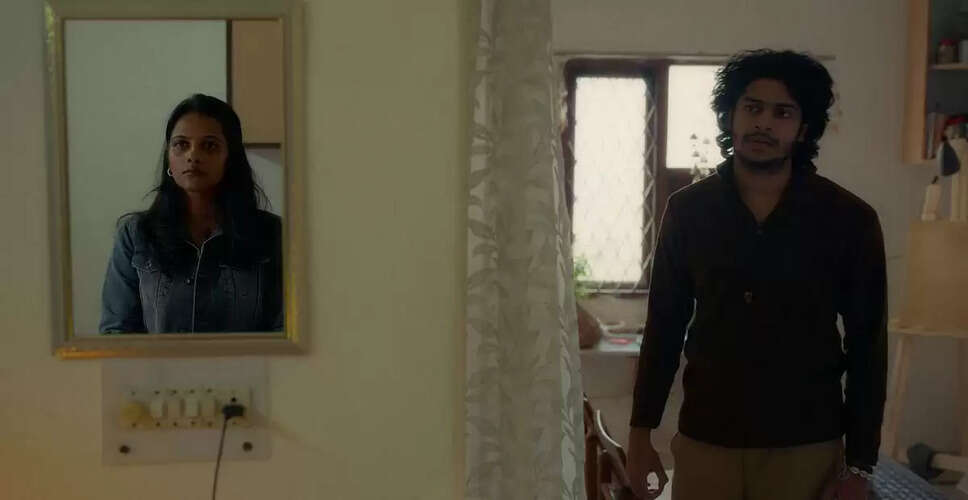
A Glimpse into 'Khidki Gaav'
Sanju Surendran's film, Khidki Gaav, not only highlights its setting in a neighborhood of the same name in South Delhi but also serves as a metaphorical window into the lives of its central couple. This evocative second feature, primarily in Malayalam, delves into the fluctuating dynamics of live-in partners Sarah and Abhi.
For Sarah (Bhanu Priyamvada) and Abhi (Roshan Abdul Rahoof), Delhi feels harsh and isolating, yet their apartment offers solace from the outside world. Sarah escapes her conservative family, while Abhi finds space to nurture his artistic ambitions.
However, their sanctuary is frequently disrupted. Their landlady's unwarranted intrusiveness and the occasional overstepping of friends Simon and Gopika add tension. Sarah's domestic struggles begin to weigh heavily, leading to a sense of suffocation in their intimacy.
Thematic Depth and Inspirations
The English title of Khidki Gaav, If On A Winter’s Night, draws inspiration from Italo Calvino's novel of the same name. The winter backdrop mirrors the growing chill in Sarah and Abhi's relationship.
Surendran revealed that the film's narrative was partly inspired by real-life events and Hrishikesh Mukherjee's debut film, Musafir (1957), which explores the lives of three sets of tenants in a shared house. A friend introduced Surendran to Musafir, prompting him to investigate the dynamics within domestic spaces.
Surendran praised his writer, Rekha Raj, for crafting a script that reads like a detailed novel. The film's episodic format showcases a series of incidents that escalate the tension between the couple, with cinematographer Manesh Madhavan effectively capturing their emotional confinement.
Film Festival Premiere and Aesthetic Choices
Khidki Gaav made its debut at the Busan International Film Festival, featured in the Vision – Asia section. Surendran, known for documentaries like Gundert The Man The Language (2012) and Kapila (2014), previously received funding from the festival.
The unique aesthetic of Khidki Gaav inspired Surendran to set his film there. He expressed admiration for the name and the area's reputation for affordable housing for artists and students, alongside its narrow streets, Khidki fort, art galleries, and public library.
Personal Connections and Influences
Although Surendran has not lived in Khidki Gaav, he spent time in Gurgaon, Haryana. As an alumnus of the Film and Television Institute of India, he was among those who cared for the renowned director Mani Kaul during his illness in Gurgaon.
Surendran reflected on Kaul's influence, noting his discussions on music, painting, and philosophy, which often intersected with cinema. This influence is evident in Khidki Gaav, particularly in its focus on physical spaces and architectural details, with several FTII alumni contributing to the film.
Challenges of Independent Filmmaking
As an independent art film, Khidki Gaav faced numerous challenges, from securing a producer to finalizing locations. Surendran remarked on the skepticism surrounding the film's production, calling it a miracle that it was made.
He noted the difficulties of working in Delhi, where monotony can set in when confined to a single location. Each day required fresh ideas to visualize the setting and explore its variations.
Surendran commended Manesh Madhavan's cinematography, describing it as tactile and fluid, though it presented challenges for editor Praveen MK due to the abundance of footage. The editing process was lengthy as they sought the right rhythm, necessitating the removal of many scenes.
Casting and Character Development
Finding the right actors was crucial. Bhanu Priyamvada and Roshan Abdul Rahoof met for the first time during filming, developing their chemistry on set.
Surendran noted that Bhanu joined the project at the last minute but quickly adapted to her role, while Roshan's unique innocence made him a perfect fit for Abhi. Jitheesh Raichel Samuel and Arathy KB portray their friends, Simon and Gopika, with rehearsed performances allowing for improvisation.
Surendran aimed to depict contemporary relationships in urban settings, avoiding a clichéd portrayal of Delhi. He sought to capture the essence of everyday life in the city, showcasing how ordinary people navigate their surroundings without resorting to melodrama.