
Dr. Tara Devi Sen Honored with Sant Ishwar Samman 2026 for Himalayan Heritage Work
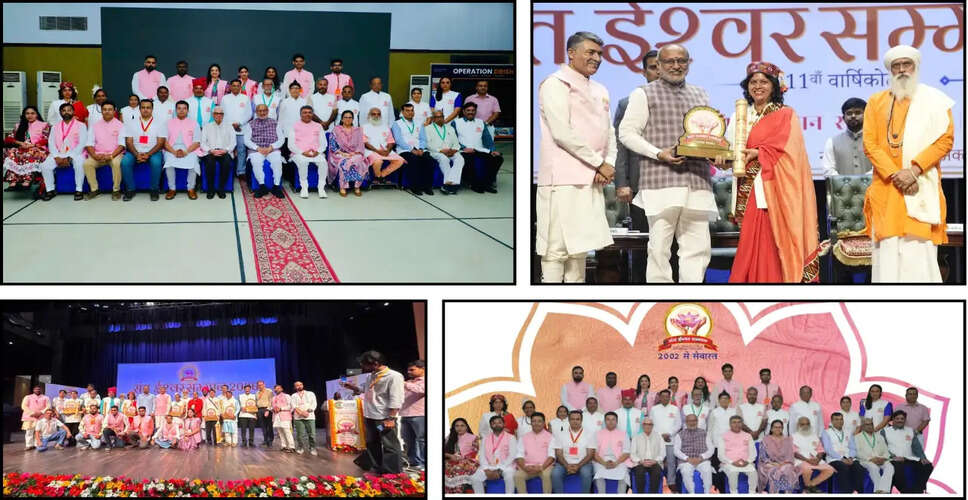

Celebrating Dr. Tara Devi Sen's Contributions
Munish Sood
Mandi
Dr. Tara Devi Sen has been awarded the Sant Ishwar Samman 2026 in the Women and Child Welfare category, recognizing her extensive efforts in documenting, preserving, and promoting the rich heritage of wild edible plants and traditional botanical knowledge in the Himalayan region.
The esteemed award was presented by the Vice President of India, C. P. Radhakrishnan, during a ceremony at the Mavlankar Auditorium, Constitution Club of India, New Delhi. The accolade includes a citation, a memento, and a cash prize of ₹1 lakh.
This year, a total of 16 Sant Ishwar Samman awards were distributed, honoring significant contributions in various fields such as rural development, tribal conservation, women and child welfare, and support for children with special needs.
Dr. Sen's initiatives extend beyond merely documenting Himalayan wild edibles; she actively connects traditional knowledge of these plants with modern priorities like nutrition, healthcare, sustainable livelihoods, women's empowerment, and community development.
During the event, Dr. Sen also organized an exhibition that showcased the ecological, cultural, and economic importance of Himalayan wild edible plants. The exhibition included books on wild edibles, photographic documentation, and pine-based eco-crafts, providing visitors with insights into the region's traditional plant resources and their potential for sustainable livelihoods.
Additionally, she distributed brochures on Ashwagandha and engaged with attendees, emphasizing the health benefits, conservation efforts, and livelihood aspects of traditional plant-based resources.
This recognition shines a light on the bio-cultural heritage of the Himalayas, where local communities have depended on indigenous plant resources for food, traditional knowledge, and livelihoods for generations. Dr. Sen's work aims to safeguard this knowledge while investigating how it can enhance nutrition, community welfare, and sustainable economic prospects.
The Sant Ishwar Samman is viewed as a significant acknowledgment of her dedication to integrating Himalayan traditional knowledge and wild edible plant resources into broader public discussions, underscoring their importance for conservation and sustainable development.