
Exploring the Psychological Depths of Ram Gopal Varma's Kaun?
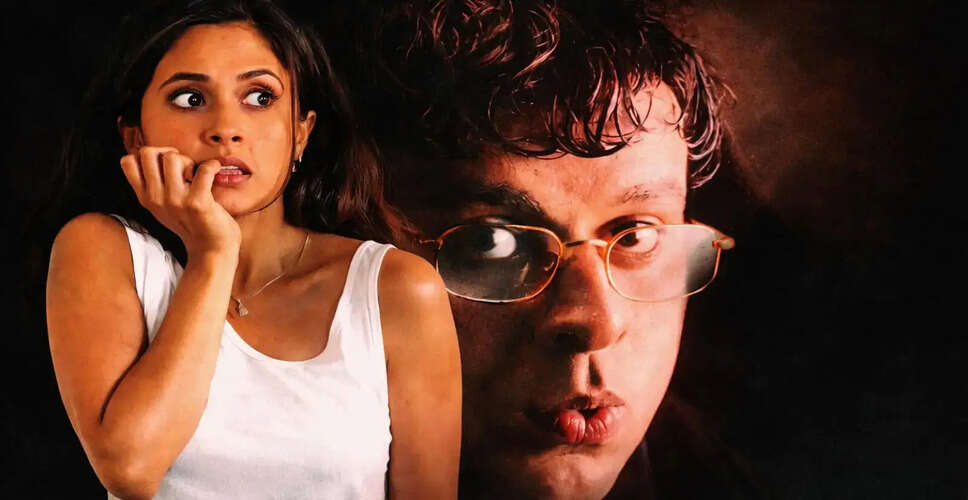
The Impact of Urmila Matondkar's Performance
Urmila Matondkar's unsettling smile in the climactic moments of Ram Gopal Varma's iconic film Kaun? is likely to be remembered as one of the most chilling scenes in Indian cinema. The horror in this 1999 psychological thriller stems not from supernatural elements but from deeply human experiences, prompting a generation to reconsider their instincts when faced with an unexpected knock at the door. In an industry often equating horror with the paranormal, Varma's Kaun? stands out as a bold exploration of fear devoid of ghosts and mythical influences. He illustrated with chilling clarity that horror can exist beyond the spectral realm, and even after two decades, Kaun? remains a captivating psychological thriller.
The Essence of Kaun?
The Essence of Kaun?
At its heart, Kaun? is remarkably straightforward. A woman finds herself alone in her home during a stormy night, glued to news reports about a serial killer. The tension escalates when a man appears at her door, seeking help. What ensues is a tightly woven narrative filled with suspicion, manipulation, and shifting power dynamics. Kaun? excels in its simplicity, featuring no complex subplots, confined to a single location with three characters and a storyline that unfolds almost in real-time.
The Art of Building Fear
Building Fear in Kaun?
What enhances the film is Varma's ability to evoke fear from a simple concept. In a cinematic world where horror typically relies on loud soundtracks and jump scares, Varma opted for subtlety, recognizing that true fear is often internalized, making the audience complicit in the threat. Rather than overtly displaying danger, Kaun? thrived on suggestion, amplifying suspicion instead of confirming it. Varma seemed to echo Franklin D. Roosevelt's famous quote, "The only thing we have to fear is fear itself".Varma's use of space in Kaun? is particularly noteworthy. Unlike Hrishikesh Mukherjee's vibrant spatial geometry, Varma's setting feels constricting. The house, which should be a sanctuary, becomes increasingly oppressive as the story unfolds. The camera lingers in corners, framing characters through doorways and employing tight close-ups to evoke claustrophobia. Every pause, creak, and shadow carries weight, with the storm outside reflecting the turmoil within.
Urmila Matondkar's Role
Urmila Matondkar's Role in Kaun?
Central to the film's tension are the performances. Urmila Matondkar's portrayal of the unnamed woman, fluctuating between vulnerability and madness, remains ambiguous, enhancing the film's impact. Manoj Bajpayee's role as the stranger introduces a disconcerting normalcy that soon feels unsettling. His casual demeanor, combined with subtle tonal shifts, keeps the audience guessing about his true intentions, while Sushant Singh's brief yet pivotal appearance adds layers of unpredictability.Anurag Kashyap's Screenplay
Anurag Kashyap's Screenplay
Anurag Kashyap's writing for Kaun? is a lesson in controlled misdirection. Each line of dialogue, including the chilling 'Kaun?', serves a purpose, revealing just enough intrigue without overexposing the plot. The film consistently defies expectations, preventing the audience from settling into a comfortable interpretation. The dynamics shift constantly, compelling viewers to reassess everything they have witnessed.Ram Gopal Varma's Mastery
Ram Gopal Varma's Mastery
Varma's brilliance in Kaun? lies in his manipulation of perspectives, making it a compelling psychological thriller. The film does not merely present a mystery; it implicates the audience in it. Viewers are not passive observers but active 'detectives' piecing together the narrative, even as the film challenges their assumptions. By the time the story concludes, it becomes clear that it is as much about personal misjudgments as it is about the characters' actions.Varma's Cinematic Journey
Varma's Cinematic Journey
Varma's exploration of the macabre was not a new endeavor. His earlier works, such as Satya, showcased his affinity for gritty realism and character-focused storytelling. With Kaun?, he stripped his approach to its essentials, focusing on the raw elements of fear and perception. This minimalist style marked a significant shift from the mainstream Bollywood films of the late 1990s, which relied on elaborate sets and numerous songs. Kaun? presented a concise narrative that was focused and unapologetically experimental, turning constraints into strengths and compelling the audience to engage deeply with the story.
The Realism of Kaun?
The Realism of Kaun?
Another factor contributing to Kaun?'s success is its grounding in reality. Unlike typical horror films that lean on fantasy, Kaun? feels disturbingly believable. The scenario of a stranger at the door and the uncertainty of trust, combined with the vulnerability of solitude, resonate with real-life anxieties, which Varma captures with precision. This realism reflects Varma's broader contributions to Indian cinema and his inclination towards a docudrama style.While Kaun? may not fit the traditional docudrama mold, it maintains a commitment to authenticity. The performances feel natural, and the dialogue resembles real conversation. The unfolding situation carries an urgency that feels almost documentary-like. This blending of fiction and reality amplifies the film's psychological impact, making it difficult to detach from the events on screen.