
Celebrating the Musical Journey of M.M. Keeravani
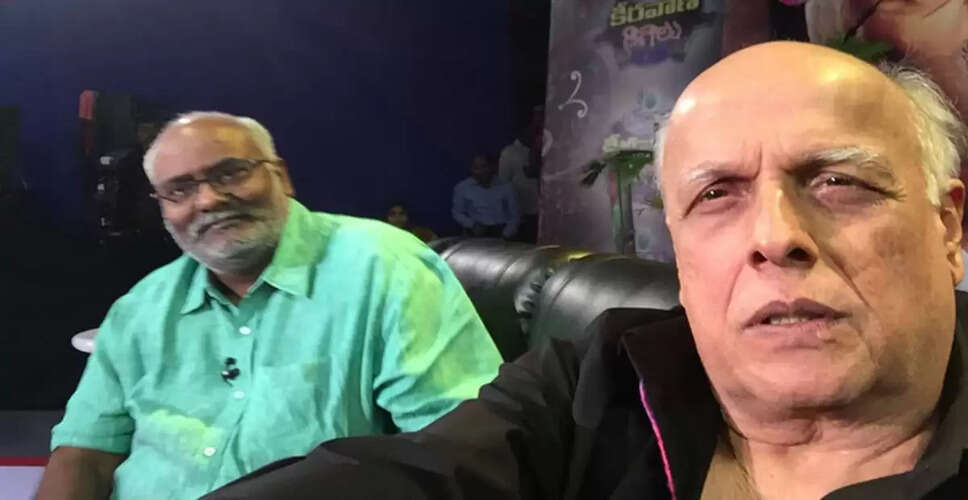
A Memorable First Encounter
Do you remember your initial meeting with Keeravani?
He was clad in black, exuding the calmness of a sage. My first sight of him was at the AVM Studio in Chennai during a music session for the Telugu film Criminal, featuring Nagarjuna and Manisha Koirala, which was later adapted into Hindi. He didn’t extend his hand for a handshake.
The Reason Behind His Gesture
What was the reason?
He was observing a Sabarimala fast, a sacred practice that involves restraint and abstaining from touch. There was a shyness about him, almost youthful, yet he carried an aura of tranquility, reminiscent of someone who has faced challenges without flinching.
A Unique Connection Through Music
What transpired during your meeting?
He conversed with Nagarjuna and my producer in Telugu, while I remained an observer. Then, as if inviting me in, he softly sang an old Hindi song he remembered from Binaca Geet Mala. This was his way of connecting—not through words, but through the power of music.
That’s the essence of Keeravani.
His voice was striking—deep and sincere, devoid of pretense. It was pure music, emanating from a place beyond mere ambition.
The Impact of Criminal's Music
Did Criminal succeed?
The film itself didn’t fare well, but the song Tum Mile Dil Khile thrived, resonating in places where love flourishes. However, what truly began that day was not just a song.
What was it then? It was a shared silence, a mutual understanding. We met again for Jism, a dark and captivating noir film. He crafted the soundscape like an artist building a temple in the shadows, where every note breathed and every pause seduced. He elevated that film.
Exploring Deeper Themes with Zakhm
What about Zakhm?
With Zakhm, a film woven from my own experiences, his music articulated my unspoken feelings. The track Maa Ne Kaha perhaps best captures my inner world, expressing parts of me I’ve never dared to reveal. Then there’s Gali Mein Aaj Chand Nikla, which returns every Eid, lighting homes with anticipation. This song has transcended time and now belongs to the people.
Keeravani's Journey to the Oscars
Has Keeravani evolved since then?
Yet, nothing moved me more than witnessing that same reserved man ascend the Oscar stage years later for Naatu Naatu. This vibrant Telugu song, composed by him and performed by Rahul Sipligunj and Kaala Bhairava, brought this humble artist into the global spotlight.
Do you notice any changes in him?
He remains unchanged—still soft-spoken and hesitant in the limelight. However, his music has traveled worldwide, returning with accolades. Watching him on the international stage reminded me of the man in black at AVM Studios. No grandiosity, just pure sound and silence. He is the only composer who has not only scored my films but has also scored my life. As he approaches another year, I reflect with gratitude and look ahead with admiration. His recent work in Anupam Kher’s Tanvi the Great shows that his passion has only intensified. Happy Birthday, M.M. Kreem, or as the world knows him now—Keeravani ji. You have made my life resonate with music.