
Are Bollywood Sequels the Future? Exploring the Need for Follow-Ups in Hindi Cinema

The Sequel Debate in Bollywood
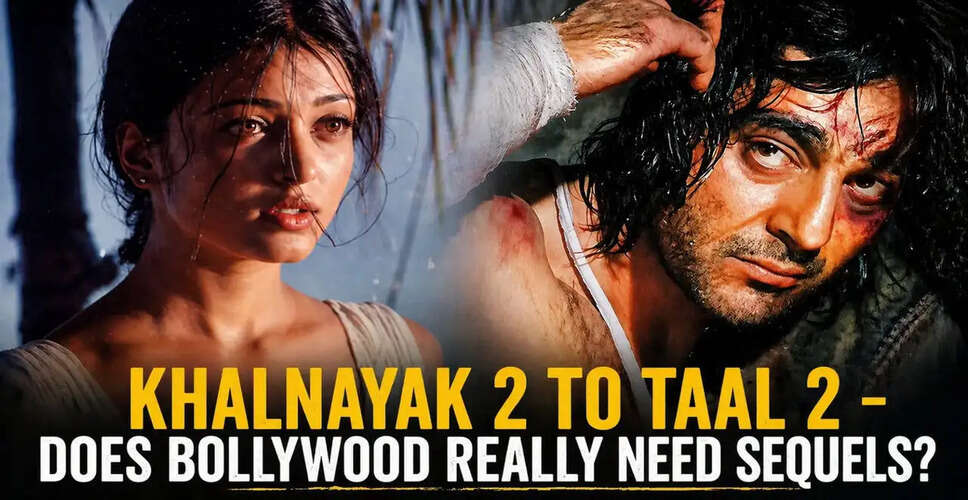
Language connects with language... Why didn't I believe in you... I'm not a hero, I'm a villain.... These iconic lines resonate with many, especially those familiar with Bollywood. They originate from some of the most beloved songs in hit films, and now, several of these movies are gearing up for sequels. The trend of sequels has long been a staple in the Hindi film industry, with some viewing them as a chance to revisit beloved stories and characters, while others criticize them as unoriginal cash grabs. With new sequels like Khalnayak Returns, Taal 2, and more making headlines, the question arises: does Bollywood genuinely need sequels?
In response, the answer is yes, but only when they are crafted with care, creativity, and engaging content. This viewpoint may not be widely accepted, yet history shows that sequels can thrive. When filmmakers aim to enhance and expand upon the original, they often succeed in broadening the film's universe while attracting new viewers. However, there is no guaranteed formula for success.
Take, for instance, Aashiqui 2, which recently marked its 13th anniversary. This film stands out as one of Bollywood's most successful sequels, not because it continued the original story, but because it revitalized the brand with fresh talent for a younger audience unfamiliar with the original cast. Its heartfelt narrative and chart-topping soundtrack captivated viewers, making it a significant success. Similarly, Salman Khan's Dabangg 2 also achieved remarkable success, bringing back the larger-than-life Chulbul Pandey with more action, humor, and mass appeal while retaining the original's charm.
Action sequels have proven to be particularly successful. For example, Singham 2 expanded Rohit Shetty's cop universe, while Tiger Zinda Hai effectively broadened the Yash Raj spy universe with thrilling action and international stakes. These films understood that sequels must feel more expansive than their predecessors.
Thriller sequels have also found box office success. Drishyam 2 was well-received because it didn't rely solely on nostalgia; it offered a clever and engaging storyline that justified a sequel. Likewise, Don 2 built on the sleek style of the first film, presenting Shah Rukh Khan’s anti-hero with new challenges.
However, not all sequels succeed. Many have faltered when created merely to exploit the popularity of their predecessors. Audiences can quickly sense a lack of effort. Films like Double Dhamaal and Great Grand Masti faced backlash for relying on loudness instead of delivering fresh humor. They used familiar names but failed to recreate the charm that made the originals beloved. Yamla Pagla Deewana 2 couldn't capture the novelty of its predecessor, and Once Upon Ay Time in Mumbaai Dobaara! struggled to match the impact of the original gangster drama. Even Heropanti 2 fell flat despite its recognizable title, while Ragini MMS 2 garnered mixed reviews for its content. Welcome Back, a sequel to one of Bollywood’s most loved comedies, failed to recapture the chaos and freshness of Welcome. Major projects like War 2 also faced significant hurdles.
These examples illustrate that a sequel can feature star power, scale, and hype, but if the script is lacking, audiences will quickly turn away. The crucial takeaway is that success hinges on effort. A sequel cannot thrive solely because it bears a familiar title; it flourishes when filmmakers understand why the original resonated with viewers and build upon that foundation with something innovative. Audiences do not want the same product with superficial updates; they seek substance.
Will you find the same joke funny again? Similarly, if a comedy sequel rehashes old punchlines, it will falter. If an action sequel lacks new stakes, it will fail. If a thriller sequel becomes predictable, it will miss the mark. However, if a film expands its universe, deepens its characters, and offers greater entertainment, audiences will embrace it, as seen with Border 2 and Dhurandhar 2.
Does Bollywood Need Sequels?
In a time when viewers have countless options on OTT platforms, Bollywood must elevate its game and deliver value and excitement. Sequels inherently provide both. Think of that dish you loved at a restaurant and returned for; a familiar title can evoke the same response, generating curiosity and stronger opening numbers than an unfamiliar original film.
Classics like Awarapan, Khalnayak, and Taal not only hold significance but also maintain a dedicated fan base today. Their music, characters, and memories remain vibrant in popular culture, indicating that the industry has a better chance of attracting audiences if such titles return thoughtfully.
However, some argue that Bollywood should focus solely on new ideas. Ideally, that would be the case. Yet, the reality is that Hindi cinema has struggled to consistently produce strong original content. Reflect on the last original story you enjoyed; in that context, sequels seem relatively harmless, especially compared to the endless remakes of successful South, Korean, or Thai films. In my view, creating a sequel to your own successful film is preferable to replicating someone else’s work.
That said, sequels are not magical fixes. A well-known name may draw audiences on opening day, but only quality content can sustain a film afterward. Word of mouth is crucial. So, does Bollywood need sequels? In today’s market, yes. They help attract audiences to theaters, revive nostalgia, and reduce business risks. However, it is equally important to produce them with sincerity, creativity, and quality writing. Ultimately, a sequel is only as good as the effort put into it.