
A R Rahman Reveals His Dedication to 'Ramayana' Music: A Journey of Passion and Sacrifice
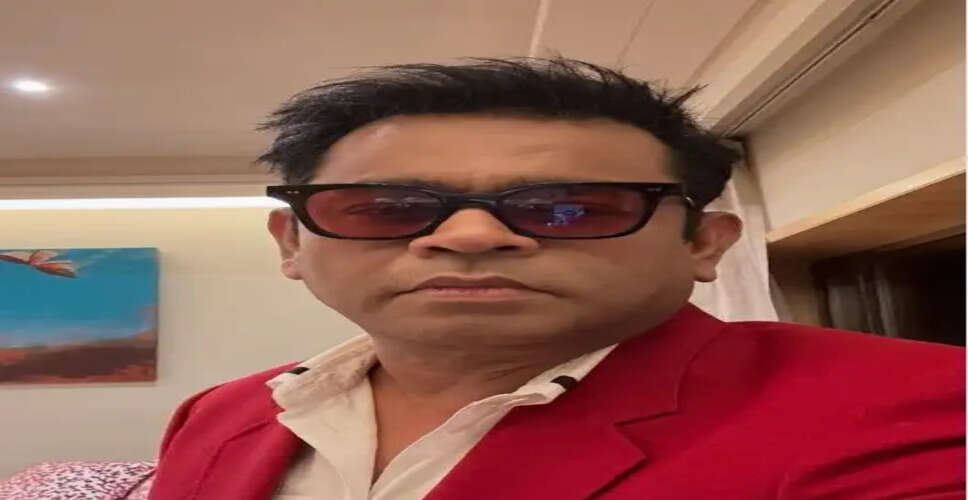

A Deep Dive into A R Rahman's Musical Journey
Panaji: Renowned Oscar-winning composer A R Rahman has shared that he dedicated nearly three years to crafting the music for Ramayana, during which he had to decline around 10 to 12 film projects to fully immerse himself in this mythological epic.
Collaborating with the esteemed German composer Hans Zimmer, Rahman noted that some of the musical pieces underwent numerous revisions before reaching their final form.
At a press conference during the International Film Festival of India (IFFI), he mentioned, "We have been working on the music for Ramayana for three years, refining themes and compositions. For instance, the 'Ravana Tandav' went through 12-13 iterations before we settled on a version that resonated with everyone."
He expressed pride in his decision to prioritize Ramayana, stating, "I left behind many significant projects and filmmakers to focus on this. I take pride in that choice."
The music from Ramayana has sparked considerable conversation among audiences, with tracks like 'Ravana Tandav' and 'Mangal Rang' receiving mixed reviews.
When asked how he selects projects amidst a busy schedule, Rahman explained that he only takes on assignments that resonate deeply with him.
"I truly enjoy my work. I only accept projects that I love and that inspire my artistic vision, which in turn excites my entire team," he added.
Rahman also discussed the challenge of blending traditional Indian music with contemporary global influences, describing it as daunting yet essential.
"It's a thrilling challenge because I appreciate both styles. My background in traditional music coexists with my love for modern sounds, leading to a unique blend that sometimes confuses me," he remarked.
Ramayana, directed by Nitesh Tiwari, is a two-part cinematic interpretation of the Indian epic, featuring Ranbir Kapoor as Rama, Sai Pallavi as Sita, Yash as Ravana, Ravi Dubey as Lakshman, and Sunny Deol as Hanuman.
Since its release on November 5, the film has grossed an impressive Rs 1,693.50 crore worldwide.
Banaras, which premiered at IFFI, is a Hindi drama that explores the rich backdrop of Hindustani classical music and the cultural essence of Varanasi.
The film features actors Neeraj Kabi, Shahana Goswami, Abhishek Banerjee, and Chhaya Kadam.
Rahman not only composed the music for Banaras but also took on the role of executive producer.
"This film presented a unique opportunity. It's rare for a filmmaker to approach me with a musical narrative where the lead character is a singer from a musical family, and I get to create original music for them. I seized this chance," he shared.
As a musician, Rahman enjoys merging influences from diverse cultures, stating, "I have a constant desire to explore various cultures, starting from the South Indian traditions of Tamil Nadu, Kerala, Andhra Pradesh, and Karnataka, to the distinct identities of Punjab, Bengal, and Maharashtra."
"I sometimes blend these influences because, despite our cultural differences, we are united as one in India," he added.
He cited the popular song 'Jiya Jale' from Dil Se, which includes Malayalam lyrics, and the music for Imtiaz Ali's Amar Singh Chamkila, explaining how different languages carry unique musical qualities that shape his compositional approach.
"With Amar Singh Chamkila, I drew inspiration from Punjabi music, even though I hail from South India. The potency of the Punjabi language in song is striking, while Bengali has a gentler quality," he noted.
The International Film Festival of India is set to conclude on November 28.