
Fish Becomes Central Theme in West Bengal Assembly Elections

Fish as a Political Symbol in West Bengal
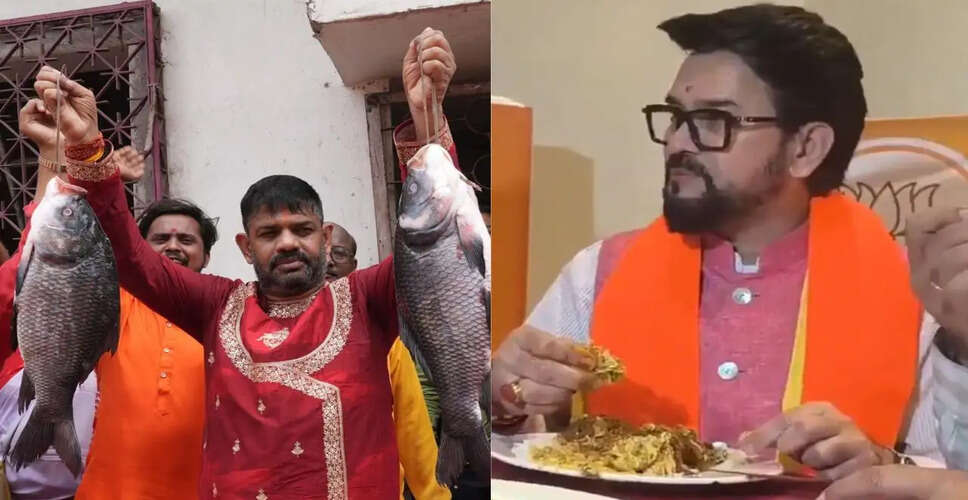
As the West Bengal Assembly elections approach, leaders from the Bharatiya Janata Party (BJP) have been spotted campaigning with fish in hand, sparking considerable discussion. This fish has now transitioned from a campaign prop to a dining plate, with BJP MP and former Union Minister Anurag Thakur being filmed eating fish, a video that has gone viral on social media. Thakur has emphasized that in states governed by the BJP, there are no restrictions on consuming fish or meat, and he assures that this will remain the case if they come to power in Bengal. The ongoing exchanges between the Trinamool Congress and the BJP highlight the significance of fish in the current political landscape of West Bengal.
With the first phase of voting on the horizon, fish has emerged as a pivotal issue in the election discourse. This trend began with BJP candidate Kaustav Bagchi, who was seen campaigning door-to-door with a fish in hand, representing his local roots as he contests from Barrackpore. Following Bagchi, several other BJP leaders adopted similar tactics, effectively bringing the topic of fish from the political arena to the dining table.
Why Has Fish Become a Political Focus?
In an effort to challenge the BJP, West Bengal Chief Minister Mamata Banerjee has accused the party of planning to impose bans on meat, eggs, and fish if they gain power in the state. Banerjee has consistently portrayed the BJP as outsiders, alleging that they aim to divide voters and undermine local traditions. The impact of her statements prompted the BJP to launch a counter-campaign.
Prominent BJP leaders like Suvendu Adhikari and Sukanta Majumdar have also been seen enjoying 'machh bhat' (fish and rice), further intensifying the debate. Anurag Thakur, responding to Banerjee's claims, asserted that in the 15-16 states where the BJP governs, there are no bans on meat, eggs, or fish, and this will not change in Bengal. Banerjee even quipped that if Prime Minister Narendra Modi wishes to eat fish, she would personally prepare it for him.
Who Benefits from Fish Politics?
The BJP is striving to establish itself as a party rooted in Bengal, focusing on local issues in every constituency. They recognize that if Banerjee successfully leverages Bengali culture and identity, it could spell trouble for them. Historically, Banerjee has outperformed the BJP in previous elections, prompting the party to be cautious.
Mamata Banerjee has a strong connection with Bengali voters and is adept at capitalizing on the narrative of Bengali identity versus outsiders and foreign cultures. This was evident when PM Modi was seen eating 'jhalmuri' (spicy puffed rice) as a counter to the fish narrative. BJP candidates are keen to portray themselves as relatable figures within the community.
Banerjee has also claimed that a BJP victory would mean control in the hands of outsiders. In response, Amit Shah has repeatedly assured that the next Chief Minister of Bengal will be someone who speaks Bengali and is a native of the state.