
Excitement Builds for 2026 Assembly Elections Across Four States and One Union Territory
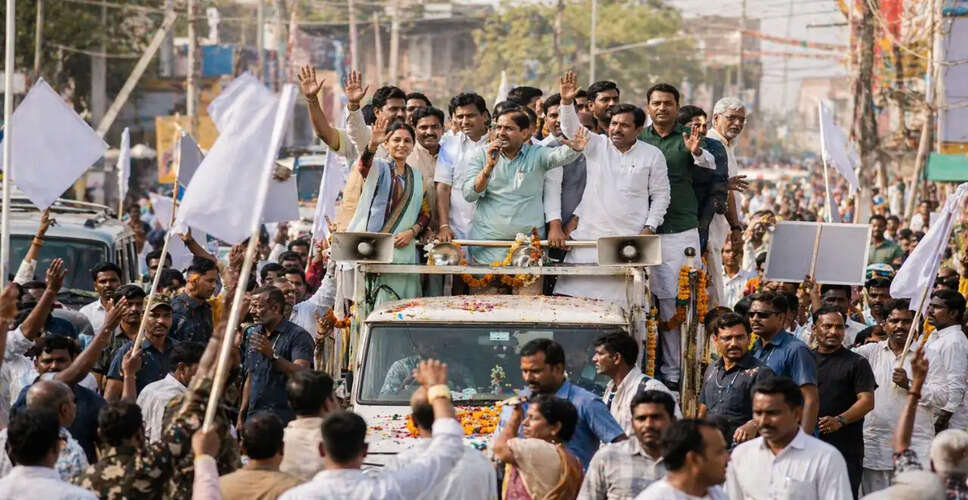

Overview of Upcoming Elections
In 2026, assembly elections are set to take place in four states and one union territory, generating significant interest among the public. Voting has already occurred on April 9 in Assam, Kerala, and Puducherry. Tamil Nadu is scheduled to hold its elections on April 23, coinciding with the first phase of voting in West Bengal.
Candidate Landscape
When it comes to the number of candidates, Tamil Nadu leads the pack, with an average of approximately 17 candidates contesting for each seat, indicating a highly competitive environment. West Bengal follows closely in terms of candidate numbers.
Total Seats and Candidates
Across these four states and one union territory, elections will be held for a total of 824 assembly seats, with 8,788 candidates vying for their chance to win. While West Bengal has the highest number of seats, it does not lead in candidate count. In contrast, Puducherry has only 30 assembly seats up for election.
Election Data at a Glance
Election Data Summary
| State | Total Seats | Total Candidates | Candidates per Seat | Candidate Percentage vs. Seat Percentage |
| Tamil Nadu | 234 | 3992 | 17.06 | 1706% |
| West Bengal | 294 | 2920 | 9.93 | 993% |
| Puducherry | 30 | 291 | 9.7 | 970% |
| Assam | 126 | 722 | 5.73 | 573% |
| Kerala | 140 | 863 | 6.16 | 616% |
Statistical Analysis of Candidates
A comparison between Tamil Nadu and West Bengal reveals a stark contrast. In Tamil Nadu, 3,992 candidates are contesting for 234 seats, averaging 17 candidates per seat, showcasing a strong presence of independents and smaller parties. Conversely, West Bengal has more seats at 294 but fewer candidates, with 2,920 participants, averaging 9 candidates per seat. This indicates that West Bengal's political landscape is still dominated by a few major parties, while Tamil Nadu's competition is more multifaceted.
Candidate Dynamics in Smaller States
The voting data from April 9 in the two states and one union territory is quite intriguing. Although Puducherry has fewer seats, the competition among candidates is comparable to that of larger states, with 291 candidates contesting for 30 seats, averaging 9 candidates per seat.
In contrast, Kerala and Assam present a different scenario. Kerala has 863 candidates contesting for 140 seats, resulting in an average of about 6 candidates per seat. Assam, however, has the fewest candidates, with only 722 participants for 126 seats, averaging just 5 candidates per seat.
Overall, the data suggests that the competition in Assam and Kerala is relatively straightforward, offering voters limited choices among a smaller pool of candidates.