
Voter Identity Crisis in West Bengal: Residents Fight for Citizenship in Upcoming Elections

Impact of Special Intensive Revision on Voter Lists
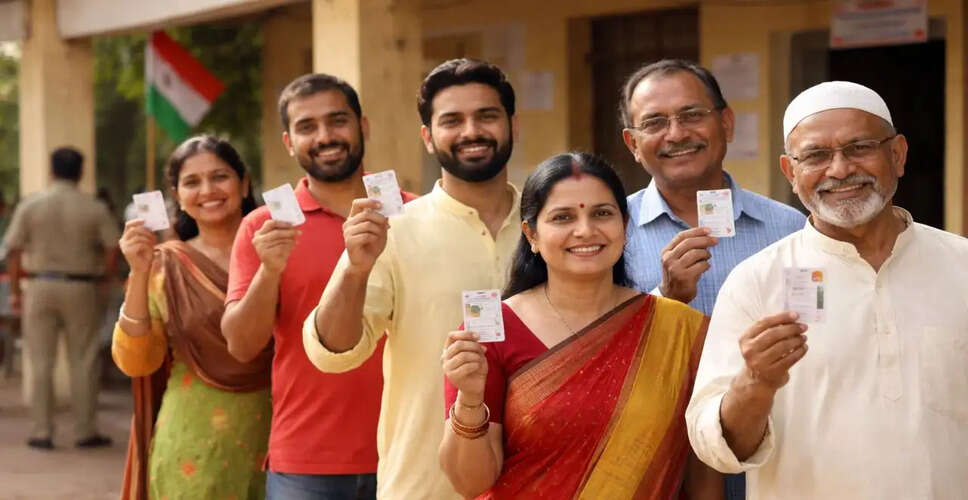
The Special Intensive Revision (SIR) has significantly influenced the voter lists for the West Bengal Assembly elections. Numerous individuals have found their names missing, while some who were previously labeled as Bangladeshi nationals have been reinstated. One such individual, Minarul Sheikh, expressed that he has always voted based on development issues, but this time, he aims to prove his citizenship through his vote. Previously, six individuals were deported to Bangladesh from Maharashtra, only to return later, with Minarul being one of them.
A Shift in Voting Motivation
For Minarul Sheikh, voting has traditionally revolved around issues like infrastructure, employment, and food security. However, this election holds a different significance for him. Standing outside his modest home in Beldanga, Murshidabad, with a file full of documents, the 34-year-old stated that he will not just cast his vote but will reclaim his right to be recognized as an Indian citizen. After months of hearings and visits to local offices, he finally received his voter card back, declaring, 'Last year, they cast me aside and claimed I wasn't Indian. This vote is my response.'
Deportation and Its Aftermath
Minarul is among six migrant workers from Murshidabad who were apprehended in June last year, labeled as Bangladeshis, and subsequently deported. They were held in Bangladesh for a period before West Bengal police verified their citizenship and facilitated their return. According to the revised voter list, 748,000 names have been removed from Murshidabad, creating an atmosphere of fear in the villages, with many migrant families worried about being treated as outsiders.
Voices of Resilience
Mahbub Sheikh, 36, from Hariharpara, emphasized, 'I am not voting for rice, money, or promises. I am voting to assert my identity as an Indian, and no one can cast me out again.' A family member present with him broke down in tears, recalling the uncertainty they faced when Mahbub was taken away. She stated, 'I want to vote so that no one questions us again.' Nazimuddin Mandal from Hariharpara still keeps the 300 Bangladeshi Taka he was given before being sent across the border, saying, 'I have kept it as proof. Whenever I feel weak, I look at it and remember what happened to me.'
A Fight for Existence
Another deported worker, Nizamuddin Sheikh, who spent two days in a Bangladeshi detention center, has stopped seeking work outside West Bengal. He remarked, 'I used to think poverty was the biggest issue. Now I realize losing my identity is far worse.' Jamaluddin Sheikh, who has voted in every election since turning 18, plans to bring all his documents to the polling station this time. He stated, 'My father voted, my grandfather voted. Yet, I am asked to prove my Indian identity. This election is not about choosing a party; it’s about proving our existence.'
Political Reactions
Abu Taher, a senior leader from the Trinamool Congress, accused the ruling Bharatiya Janata Party (BJP) of viewing Bengali-speaking Muslims with suspicion. Congress leader Adhir Ranjan Chowdhury highlighted that this situation reveals the collapse of institutions, stating, 'When genuine citizens have to stand in line to prove their Indianness, democracy itself is under scrutiny.' The BJP dismissed these allegations, asserting that illegal immigration remains a significant concern in Bengal and that no genuine citizen will face harassment. Minarul concluded, 'I used to think my vote was just a vote. Now I see it as proof that this country is mine.'