
Tea Producers Seek Changes to Auction Rules from PM Modi

Request for Modification of Tea Auction Regulations
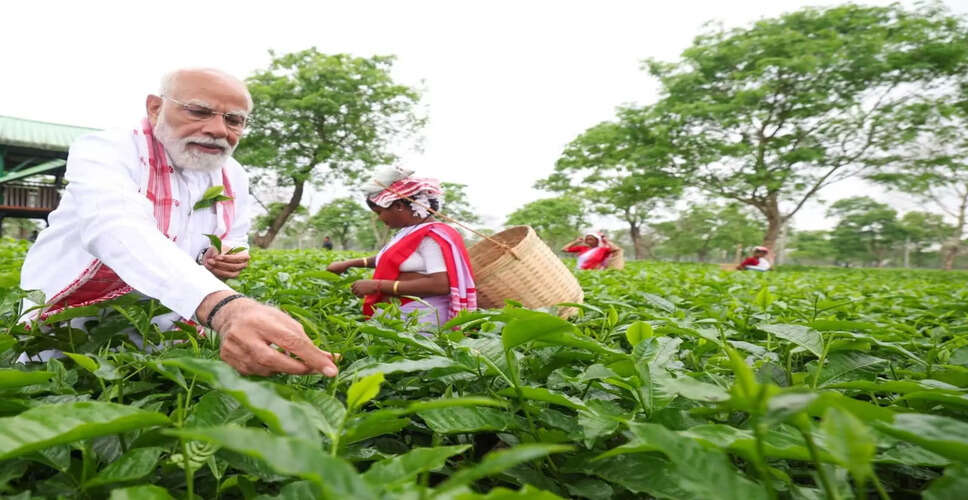
File image of PM Modi at a tea garden in Dibrugarh (Photo: X)
Guwahati, Apr 17: Prominent tea producer associations from Assam and West Bengal have appealed to Prime Minister Narendra Modi to reconsider the regulations that require at least 50% of the annual tea production to be sold through public auctions.
The associations argue that allowing producers the flexibility to select their sales method according to market conditions would be beneficial. They believe the current rule imposes significant disadvantages due to increased transaction costs and extended selling periods compared to direct sales from factories.
The four organizations involved—the Assam Bought Leaf Tea Manufacturers Association, North Eastern Tea Association, Bharatiya Cha Parishad, and North Bengal Tea Producers' Welfare Association—represent approximately 60% of the tea produced in northern India.
They highlighted that the region contributes nearly 1,120 million kilograms out of the total annual tea production of around 1,350 million kilograms.
In a letter made public on Friday, the associations requested the Prime Minister to consider granting exemptions or relaxations for those affected under the Tea (Marketing) Control Second Amendment Order, 2003.
In 2015, the Ministry of Commerce and Industry established a rule mandating that all registered tea manufacturers sell at least half of their total annual production through public auctions in India.
The notification also allows the registering authority to adjust this percentage periodically with the Central government's approval.
According to the associations, the requirement for public auctions places tea producers at a disadvantage, as this system incurs higher costs and longer selling cycles compared to ex-factory sales.
They noted that various expert committees formed by the Tea Board have reviewed the auction system, and while they have suggested improvements, none have recommended making auction sales mandatory.
"Historically, efforts to enforce compulsory auction sales have faced challenges, as reflected in multiple amendments to the Tea (Marketing) Control Order," the letter stated.
The associations emphasized that this mandate contradicts the Government of India's initiative to enhance the ease of doing business. They believe producers should have the autonomy to choose the most effective sales method, as the current requirement imposes unnecessary financial and operational challenges.
Furthermore, they argued that the obligation to sell tea through public auctions violates their fundamental rights, particularly the right to conduct trade and business freely.