
Record Voter Turnout in West Bengal Assembly Elections 2026
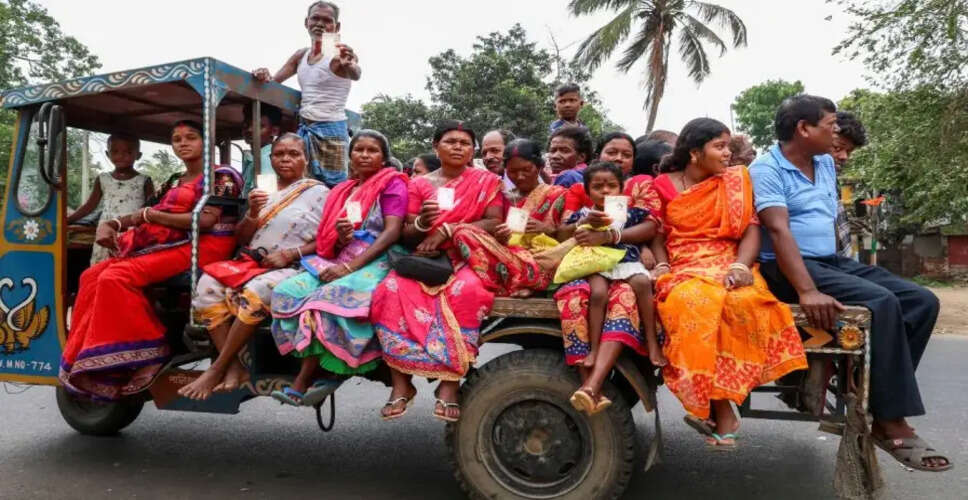

Historic Voter Participation
The West Bengal Assembly Elections of 2026 have set a new benchmark for voter turnout, with the Election Commission reporting an impressive 92.47% participation rate, the highest since independence. Notably, female voters surpassed their male counterparts, achieving a turnout of 93.24% compared to 91.74% for men, marking a significant increase of approximately 1.5% in women's voting.
Women’s Enthusiasm Shines
A closer look at the statistics reveals remarkable enthusiasm among women voters during both phases of the 2026 elections. While male voter turnout stood at 91.74%, women demonstrated their commitment to democracy with a turnout of 93.24%. In the first phase, women's voting reached an impressive 94.1%, while the second phase recorded 92.28%. This trend indicates that women in Bengal are no longer 'silent voters' but are playing a crucial role in determining election outcomes.
Significant Changes in Voter Engagement
The first assembly elections in West Bengal in 1951 saw a mere 43.12% voter turnout. Over the past seven decades, not only has the number of voters increased, but public awareness has also surged. The 1962 elections marked the first time voter turnout exceeded 50%, reaching 55.55%. Fast forward to 2026, and the turnout has skyrocketed to 92.47%.
Data clearly indicates that women's voting rates have risen more rapidly than men's over time. In 1962, women's participation was only 47.43%, while men's was 61.77%. However, the landscape began to shift after the 2011 elections when women outpaced men with a voting percentage of 84.45% compared to 84.22%. By 2026, this gap has widened, showcasing a difference of about 1.5% between male and female voter turnout.
Voter Turnout Statistics
| क्र. सं. | चुनाव वर्ष | पुरुष वीटीआर % | महिला वीटीआर % |
कुल वीटीआर %
|
| 36 | *2026(एलए) | 91.74 | 93.24 | 92.47 |