
Impact of Special Intensive Revision on West Bengal's Electoral Landscape
Significance of Special Intensive Revision
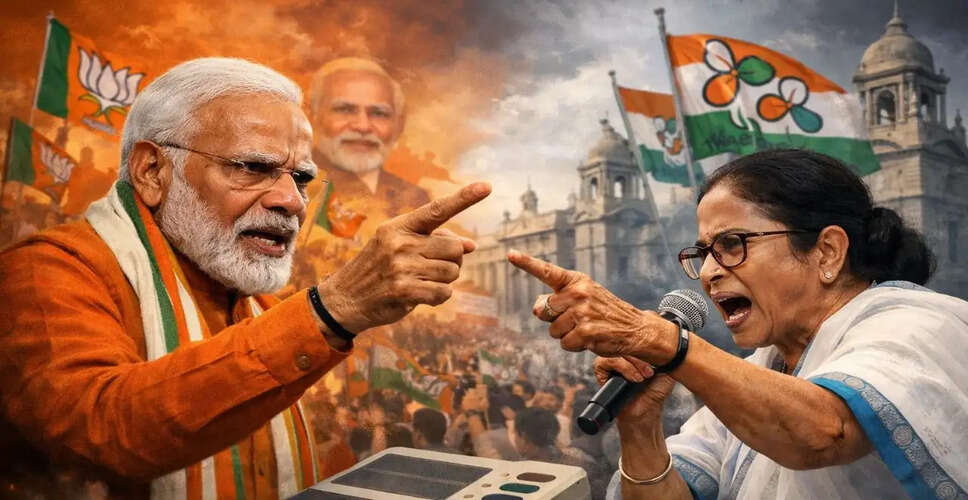
The Special Intensive Revision (SIR) in West Bengal is being viewed as a crucial process. So far, approximately 9.08 million voters have been removed from the electoral rolls. When analyzed against the state's 294 assembly constituencies, this translates to an average reduction of about 30,000 votes per seat. This significant decrease has prompted the Trinamool Congress (TMC) to adopt a confrontational stance, opposing the SIR from the outset. One of the reasons for this opposition is that in the 2021 assembly elections, there were 194 constituencies where the margin of victory or defeat was less than 30,000 votes. Thus, the number of voters removed could potentially sway the outcomes in these closely contested areas.
Concerns for BJP Amidst Voter Reductions
Interestingly, the Matua community, which supported the BJP in 2021 and is significant in certain constituencies, has also seen a substantial number of votes cut. This has left the Bharatiya Janata Party (BJP) in a state of uncertainty. The current scenario suggests that several constituencies may witness extremely tight contests, increasing pressure on booth management workers. Political analysts believe that in this environment, TMC may have an advantage over other parties, as it remains the only party with a robust organizational presence in every assembly seat.
Effects of SIR on Voter Dynamics
Under the SIR, over 9.08 million voters have been removed in West Bengal. Consequently, the total number of voters has decreased from 76.6 million to 67.7 million, compelling both major parties to contest the upcoming elections under altered circumstances. The conditions this time are markedly different from the 2021 elections, which saw Mamata Banerjee's victory. The SIR has had the most significant impact in districts that have historically determined the political landscape of Bengal, particularly in minority-dominated areas and South Bengal, which have been TMC strongholds since 2011. Conversely, regions like North 24 Parganas, Nadia, and parts of North Bengal have seen the BJP strengthen its position since 2019, although the political ramifications are not uniform across the state.
Shifts in Voter Demographics
In South Bengal, TMC's grip appears to be weakening, while the BJP remains strong in North Bengal and the Jungle Mahal region. However, the BJP's crucial social base, the Matua votes, now seems less secure than before. In districts traditionally considered TMC bastions, such as North and South 24 Parganas, Murshidabad, Nadia, Malda, Hooghly, Howrah, North Dinajpur, and Purba Bardhaman, approximately 6.66 million names have been removed, accounting for nearly three-quarters of the total deletions in the state. These districts encompass 178 of the 294 assembly constituencies. Additionally, the SIR has significantly impacted 55 Matua-majority seats, leading to instability in the BJP's reliable voter base.
Changes Near the Bangladesh Border
The most notable changes have occurred in districts bordering Bangladesh, where citizenship and migration have long been contentious political issues between TMC and BJP. In North 24 Parganas (31 seats), 1.26 million, in South 24 Parganas (33 seats), 1.09 million, in Murshidabad (22 seats), 748,000, in Nadia (17 seats), 485,000, and in Malda (16 seats), 459,000 voters have been removed from the rolls.
Political Analyst Insights
Political analyst Bishwanath Chakraborty states, 'TMC's statewide advantage relies on three pillars—minority areas, female voters, and the districts of North and South 24 Parganas. If its lead in these areas diminishes, the BJP could become competitive in several seats.'
2021 Election Outcomes
Reviewing the results of the 2021 assembly elections, there were seven constituencies where the victory margin was less than 1,000 votes. The BJP won three of these, while TMC secured four. Five seats had a victory margin between 1,000 and 2,000 votes, all won by the BJP. In total, 36 seats had a margin of victory or defeat of less than 5,000 votes, with the BJP winning 21 and TMC 14. The current voter deletions could significantly influence the outcomes in these closely contested seats.
Voter Anxiety Post-SIR
Following the SIR, the gender balance in the voter list has also shifted. Previously, there were 959 female voters for every 1,000 male voters, which has now decreased to 950. This change could impact TMC's stronghold among female voters. However, this shift may also have an opposite effect, as feelings of insecurity in minority-dominated districts could lead to increased solidarity among Muslim voters in favor of TMC. This could adversely affect smaller parties like the Indian Secular Front (ISF), the Aam Janata Unnayan Party (AJUP), and the All India Majlis-e-Ittehadul Muslimeen (AIMIM).
Concerns for BJP in Matua Areas
Political analyst Suman Bhattacharya notes, 'If a sense of insecurity leads to complete unity, TMC could recover from any losses.' The BJP's primary concern lies in the Matua refugee areas, where community leaders claim that around 70% of families have been affected by the SIR. The Matua community, with approximately 13 million voters, influences at least 55 seats, and more than half of the 77 seats won by the BJP in 2021 were from this region. Nadia has been particularly impacted, with nearly 78% of voters under scrutiny having their names removed.
BJP's Hope in North Bengal
Despite the challenges, the BJP hopes to find some relief in North Bengal, where its position remains strong, and the deletions primarily affect minority areas. In Cooch Behar, 242,000, in Jalpaiguri, 201,000, in Darjeeling, 190,000, and in North Dinajpur, 363,000 voters have been removed from the list. The BJP's core voter base in the Jungle Mahal region appears relatively secure, with only 55,364 names removed in Jhargram, 191,000 in Purulia, and 143,000 in Bankura. TMC leaders allege that this process has disproportionately affected minorities, women, and migrant workers, who have been significant supporters of the party. The greatest uncertainty lies in constituencies where the victory margins were narrow, with over 120 seats having more voters removed than the victory margins in the 2021 assembly or 2024 Lok Sabha elections.