
High Voter Turnout in Assam, Kerala, and Puducherry: Implications for Upcoming Elections
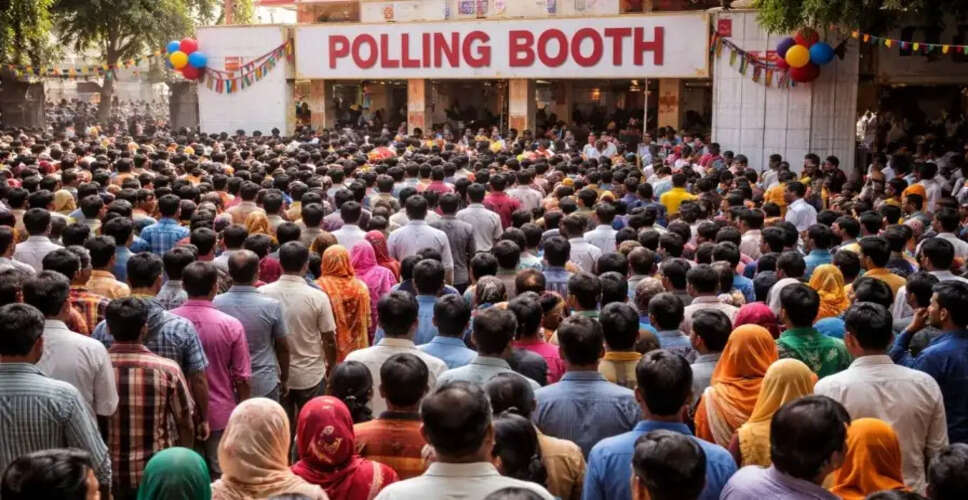

Voting Completed in Assam, Puducherry, and Kerala
Voting has concluded across all assembly seats in Assam, Puducherry, and Kerala. Although the counting of votes will take some time, the voter turnout has raised eyebrows among political parties. Each of these regions witnessed significant voter participation, with Assam recording 85.91%, Kerala at 78.27%, and Puducherry achieving 89.87%. These figures are not final, indicating that they may increase further.
Political Landscape and Expectations
The Bharatiya Janata Party (BJP) has been in power in Assam for a decade, while the Left Democratic Front (LDF) has governed Kerala for the same duration, and the NDA holds power in Puducherry. The Congress party is optimistic about regaining ground in Assam, Kerala, and Puducherry. Meanwhile, the BJP aims to secure a third consecutive term in Assam and strengthen its position in Kerala. To understand potential outcomes, it's essential to analyze the voting percentages and results from previous elections.
Implications of Increased Voting in Assam
Historically, the BJP had never formed a government in Assam before 2016, with Congress and other parties dominating. The party's victory in 2016 was largely attributed to Himanta Biswa Sarma, who remains a focal point in this election. From 2001 to 2011, voter turnout consistently hovered around 75%, with slight increases each time, leading to Congress victories. In 2016, Sarma's entry into the BJP saw a significant 14% rise in voter turnout, which indicated a desire for change among the electorate, resulting in the BJP's ascent to power.
In 2021, voter turnout dipped by about 3%, yet the government remained unchanged, suggesting that lower turnout does not necessarily lead to a shift in power. This time, with a 5% increase in voter participation, historical trends in Assam suggest that a sudden rise in turnout could lead to a change in government. If this trend holds true, Himanta Biswa Sarma may face challenges.
What Higher Voter Turnout Means for Kerala
Kerala has consistently seen voter turnout above 70% since 1996. Between 2006 and 2011, the Left party was in power, and a 2.5% increase in voter turnout in 2011 led to a government change. The Congress party then held a majority for five years, but another 2.5% increase in 2016 resulted in another shift back to the Left.
In 2016, the Left party returned to power and governed comfortably for five years. However, in 2021, voter turnout decreased by about 3%, yet the Left managed to win again. Historically, since 1970, the government alternated between the Left and Congress. The current election in 2026 has seen the highest voter turnout since 1987, with 78.27%, compared to 80.54% in 1987, which has energized the Congress-led United Democratic Front.
Understanding the Trends in Puducherry
Congress once held a strong position in Puducherry, but the emergence of N. Rangasamy's new party weakened its influence. Nevertheless, the Congress-DMK alliance formed the government in 2016. In 2001, a 70% voter turnout led to a Congress victory, and in 2006, despite 86% turnout, Congress won again.
In 2011, a slight decrease in turnout allowed AIADMK to take power. In 2016, another drop in turnout resulted in a government change, and in 2021, a further decline led to another shift. The 2026 elections have seen an increase of about 8% in voter turnout, making each seat's election highly competitive and influenced by various factors, complicating the ability to draw conclusions based solely on turnout.