
Zoho CEO Urges Indian Diaspora in the US to Consider Returning Home

A Call to Return
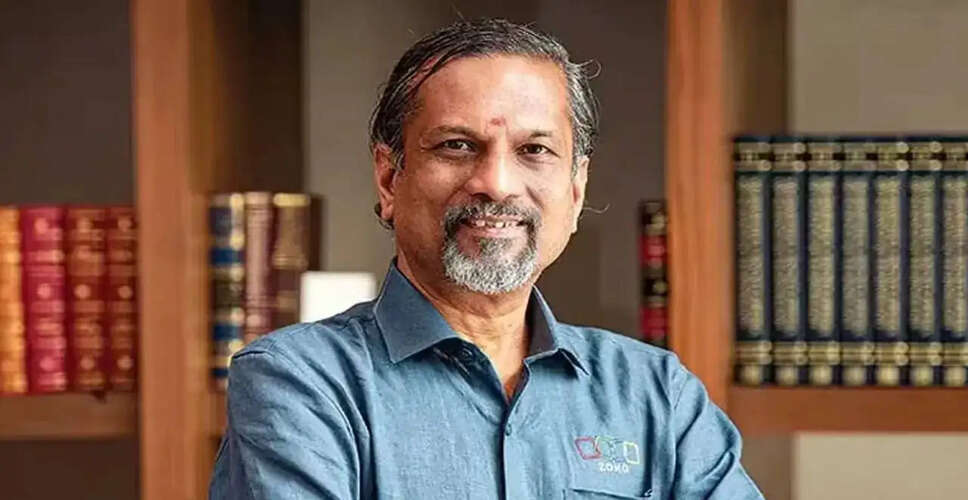
Sridhar Vembu, the founder and CEO of Zoho, recently reached out to the Indian community residing in the United States through a post on social media platform X. He encouraged them to contemplate a return to India, reflecting on his own journey over the past 37 years, which began when he moved to America as a student and culminated in establishing a successful tech enterprise based in India.
In his message, Vembu acknowledged the advantages that the US has provided but also pointed out the changing attitudes towards Indians living abroad. He stated, “Dear brothers and sisters from Bharat: Like I did 37 years ago, you arrived in America with no money but with a good education and cultural heritage from Bharat. You achieved outstanding success. America was good to us. For that we must remain grateful – gratitude is our Bharatiya way. Yet today, a significant number of Americans, may be not the majority but not too far from it either, believe that Indians 'take away' American jobs and our success in America was unfairly earned.”
Vembu highlighted the challenges faced by Indians in the US, who are navigating a politically charged environment. He described a landscape marked by ideological divisions, suggesting that the diaspora often finds itself without significant influence. He remarked, “You may think the next election will fix this, but your choice would be between people who hate our Bharatiya civilisation and people who hate civilisation itself. That is the 'hard right' vs 'woke left' battle. You are mere bystanders to that conflict.”
He also expressed skepticism that changes in political leadership would significantly improve perceptions of immigrants, particularly those from India, in the near future.
India’s Future Relies on Domestic Growth
A central theme of Vembu’s message was the assertion that India’s global reputation will increasingly depend on advancements made within the country, particularly in technology. He emphasized that respect on the international stage is derived from economic strength and innovation. “If India remains poor, the woke left will give us moral lectures with pity and the hard right, different moral lectures with scorn (‘hellhole’) and we must not confuse either with respect,” he stated.
Vembu pointed out that while India has a wealth of intellectual talent, much of it has historically been exported abroad. “India produces sufficient brain power to achieve that prowess but alas we exported so much of that talent, particularly to America. As we develop that prowess in India, our civilisational strength will assert itself,” he noted.
He called upon professionals living overseas to return to India with a sense of “missionary zeal” to aid in the country’s development.
Vembu’s remarks come at a time when many in the Indian-origin community in the US are feeling increasingly uneasy. A recent study by a think tank found that nearly 40% of Indian-Americans have contemplated leaving the country due to various pressures, including political, social, and economic factors. Concerns over rising living costs and political tensions were highlighted as significant issues.
In related news, shifts in leadership within the global tech sector also reflect changing personal priorities. Srinivas Narayanan recently announced his exit from OpenAI after three years, expressing a desire to spend quality time with his aging parents in India before determining his next steps.