
Why the US Sees India as a Key Player in the Silicon Supply Chain Initiative
US-India Relations in Supply Chain Security
New York/Washington: The United States regards India as a crucial potential ally in enhancing supply chain security and is eager to collaborate with the nation, especially after India's absence from a newly launched US initiative focused on silicon supply chains.
Jacob Helberg, the Under Secretary of State for Economic Affairs, informed reporters during a briefing at the Foreign Press Centre that discussions are ongoing with India to strengthen economic security partnerships.
Recently, the US introduced 'Pax Silica', a strategic program aimed at establishing a secure and innovative silicon supply chain, encompassing everything from essential minerals and energy resources to advanced manufacturing, semiconductors, AI infrastructure, and logistics.
This initiative includes countries like Japan, South Korea, Singapore, the Netherlands, the UK, Israel, the UAE, and Australia, but notably excludes India. All other Quad nations—Japan, Australia, and the US—are part of this new initiative.
Helberg addressed the speculation surrounding India's exclusion from Pax Silica, clarifying that it is not linked to any political tensions with the US.
He stated, "There has been much speculation regarding India's absence from the Pax Silica Summit," responding to inquiries about the reasons behind India's non-participation.
"I want to emphasize that our discussions with India regarding trade agreements are entirely separate from our supply chain security talks. We see India as a highly strategic potential partner in these efforts and are keen to engage with them," he added.
Helberg mentioned that he maintains regular communication with contacts in Delhi and is actively exploring ways to enhance collaboration swiftly.
He is set to attend the India AI Impact Summit in February, which he believes will provide a platform for in-person discussions and the establishment of concrete goals.
The India-AI Impact Summit is scheduled for February 19-20, 2026, in New Delhi, focusing on the themes of 'People, Planet, and Progress'. This summit, announced by Prime Minister Narendra Modi during the France AI Action Summit, will mark the first global AI summit hosted in the Global South.
Helberg described the Pax Silica initiative as essential for securing the silicon supply chain, which he referred to as the "lifeblood of cutting-edge technologies, from automobiles to smartphones and AI applications."
He elaborated on the selection of the initial countries for Pax Silica, noting that while many nations contribute to the global supply chain, the focus was on semiconductor manufacturing.
Countries like Singapore, South Korea, Japan, Taiwan, and the Netherlands form the core of semiconductor production.
"We decided to begin with a smaller group for discussions before expanding to include additional countries in the supply chain," he explained.
Helberg emphasized that establishing a clear pathway for aligned and reliable countries to join the Pax Silica framework is part of their workplan for 2026.
The Pax Silica initiative aims to minimize coercive dependencies, safeguard essential materials and capabilities for AI, and ensure that aligned nations can develop and implement transformative technologies on a large scale, according to the State Department.
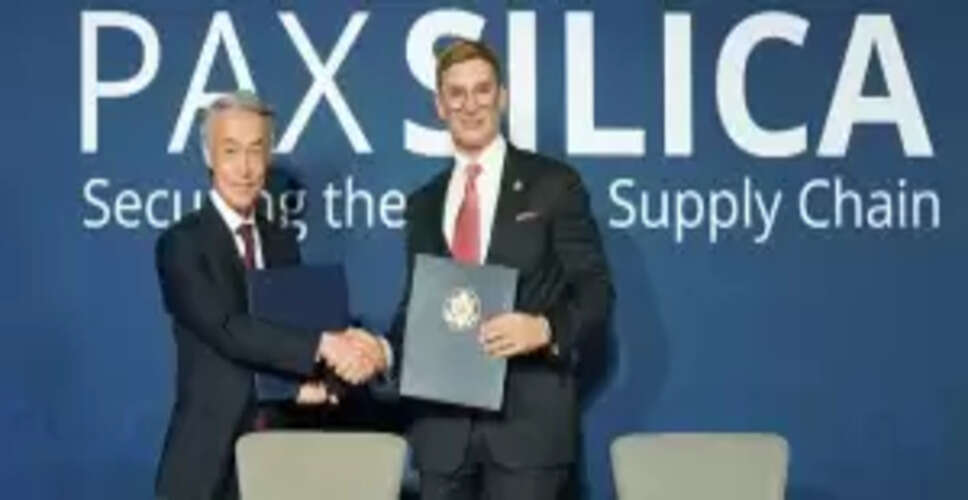
Helberg, along with representatives from Japan, Israel, Australia, Singapore, and South Korea, officially launched Pax Silica last Friday by signing the Pax Silica Declaration, furthering US President Donald Trump's vision for a new era of economic statecraft that fosters peace and security through private investment and free enterprise.
The inaugural Pax Silica Summit brought together representatives from the eight participating nations. "These countries host the most significant companies and investors driving the global AI supply chain," stated the State Department.
The department highlighted that the US is forming a coalition of nations focused on creating a secure, resilient, and innovation-driven ecosystem across the global technology supply chain, covering everything from critical minerals to advanced manufacturing and logistics.
"Pax Silica represents a new type of international partnership aimed at uniting countries that host the world's leading technology firms to unlock the economic potential of the AI era. It seeks to establish a sustainable economic order that supports an AI-driven age of prosperity among partner nations," the statement concluded.