
Why Did Sensex and Nifty Drop Amid US-Iran Tensions? Insights Inside!
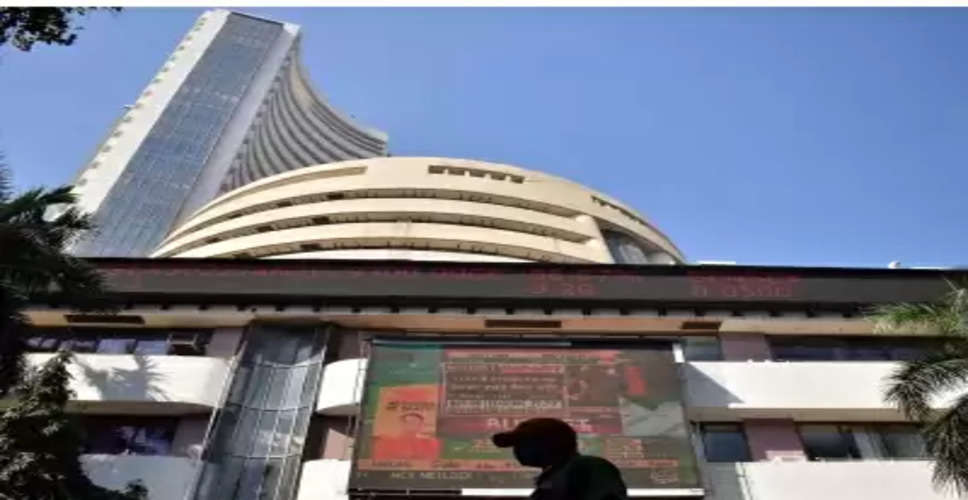

Market Overview
Mumbai: The leading stock indices, Sensex and Nifty, experienced a decline of nearly 1% on Monday, primarily due to escalating worries over the stalled US-Iran negotiations, which have raised fears of a prolonged conflict and a significant surge in crude oil prices.
The BSE Sensex, comprising 30 stocks, fell by 702.68 points, or 0.91%, closing at 76,847.57. At one point during the trading session, it plummeted by 1,681.93 points, marking a 2.16% drop to 75,868.32.
Similarly, the NSE Nifty, which includes 50 stocks, dropped 207.95 points, or 0.86%, finishing at 23,842.65.
Among the 30 companies listed on the Sensex, Maruti, InterGlobe Aviation, Bajaj Finance, Reliance Industries, Tata Consultancy Services, and HDFC Bank were the most significant losers.
In contrast, ICICI Bank, NTPC, and Axis Bank managed to post gains.
The recent 21-hour discussions between the US and Iran in Pakistan ended without a peace agreement, casting doubt on a fragile two-week ceasefire, with both parties blaming each other for the negotiation failure.
Brent crude oil, the global benchmark, surged by 7.73% to reach USD 102.6 per barrel.
Asian markets reflected this trend, with South Korea's Kospi, Japan's Nikkei 225, and Hong Kong's Hang Seng all closing lower, while Shanghai's SSE Composite index saw a slight increase.
European markets also traded in the red.
Vinod Nair, Head of Research at Geojit Investments Limited, noted, "The markets are receiving limited support from last week's ceasefire framework, which remains in place for now, encouraging selective buying and a buy-on-dips strategy. This is occurring despite the initial negative market reaction to the collapse of US-Iran peace talks and the announcement of a US naval blockade in the Strait of Hormuz, which has driven crude prices above USD 100 per barrel."
Nair further emphasized that rising oil prices are contributing to inflation concerns, currency stability issues, and broader macroeconomic imbalances, negatively impacting overall market sentiment.
On a mixed note, US markets concluded trading on Friday.
Foreign Institutional Investors (FIIs) turned net buyers on Friday, acquiring stocks worth Rs 672.09 crore, as per exchange data. On that day, the Sensex had risen by 918.60 points, or 1.20%, closing at 77,550.25, while the Nifty increased by 275.50 points, or 1.16%, to finish at 24,050.60.