
Why Are Indian Stock Markets Facing a Downturn? Key Insights on Recent Trends
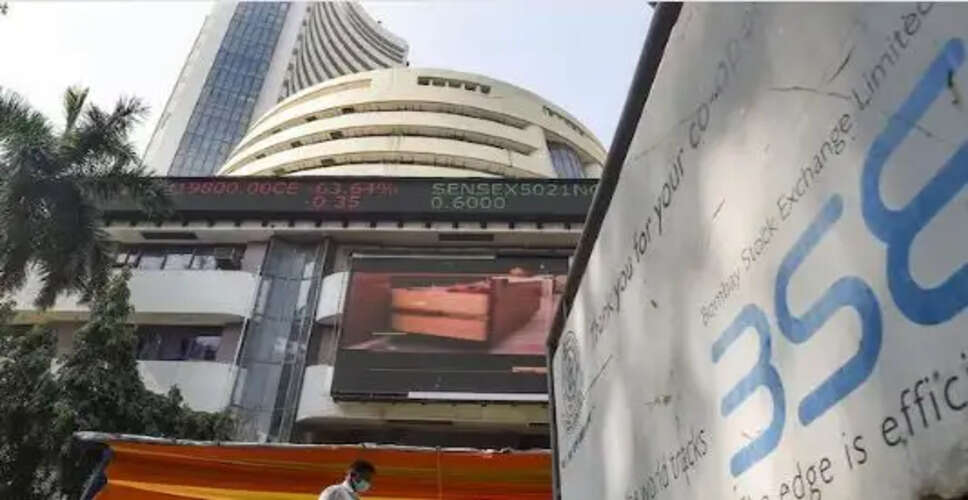

Market Overview: A Tough Day for Indian Indices
Mumbai: The benchmark indices, Sensex and Nifty, experienced a decline of nearly 1% on Wednesday, marking the third consecutive day of losses. This downturn was primarily driven by a significant increase in crude oil prices and a sell-off in banking stocks.
The BSE Sensex, which comprises 30 shares, plummeted by 715.06 points, or 0.92%, closing at 76,755.05. At its lowest, it dropped by 828.92 points, or 1%, reaching 76,641.19 during the trading session.
Similarly, the NSE Nifty, which includes 50 shares, fell by 191.45 points, or 0.79%, finishing at 23,996.25.
Among the major losers in the Sensex group were InterGlobe Aviation, Infosys, State Bank of India, UltraTech Cement, ICICI Bank, and Axis Bank.
Conversely, Hindustan Unilever, NTPC, Power Grid, and Titan managed to gain.
Brent crude oil, a global benchmark, surged by 4.68%, reaching USD 95.27 per barrel.
"The decline in Indian equities can be attributed to the sharp rise in crude oil prices and ongoing geopolitical tensions in the Middle East, which have kept investors in a risk-averse mindset. The benchmark indices faced continuous selling pressure throughout the day, with widespread declines across most sectors overshadowing a promising start to the first-quarter earnings season," stated Ponmudi R, CEO of Enrich Money, a trading and wealth technology firm.
Investor sentiment was heavily influenced by the macroeconomic environment, with rising crude oil prices and renewed worries about potential US tariffs on pharmaceutical imports dampening market confidence.
In the Asian markets, South Korea's KOSPI and Shanghai's SSE Composite index closed higher, while Japan's Nikkei 225 and Hong Kong's Hang Seng index ended lower.
European markets were trading positively, and US markets also finished higher on Tuesday.
Foreign Institutional Investors (FIIs) shifted to a buying stance on Tuesday, acquiring equities worth Rs 1,650.16 crore in the previous session, according to exchange data.
On Tuesday, the Sensex had decreased by 238.41 points, or 0.31%, closing at 77,470.11, while the Nifty fell by 50.80 points, or 0.21%, to finish at 24,187.70.