
What’s Next for US Trade Deals? Trump Sets August 1 Deadline!
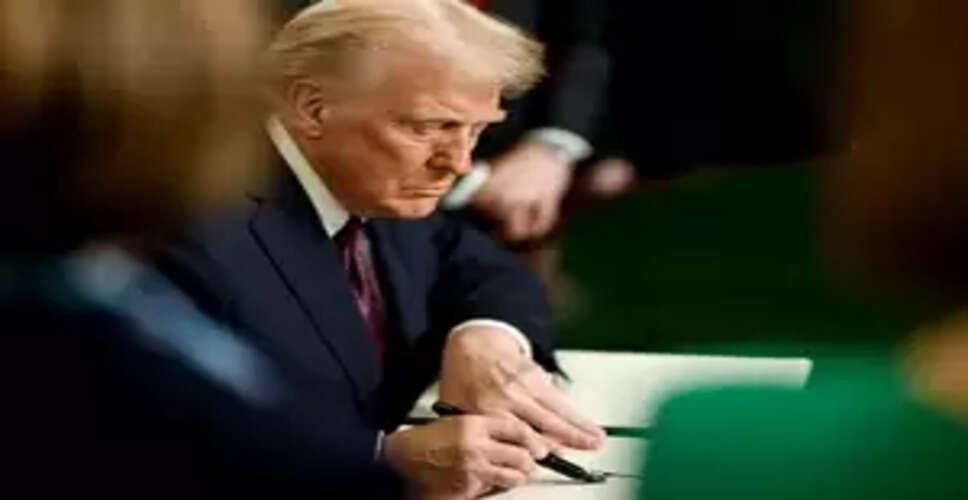
Trump's Trade Deal Deadline Approaches
Washington: President Donald Trump announced that his administration aims to finalize most trade agreements with various nations by August 1. This comes as South Korea and other partners are actively negotiating to lower their 'reciprocal' tariff rates ahead of the deadline.
During a press briefing at the White House, Trump indicated that nearly 200 countries might receive letters regarding their tariff rates, signifying that agreements are in place. He stated, 'They have a deal. It’s done.'
South Korea is intensifying its negotiations with the U.S. to mitigate the potential 25% reciprocal tariffs and specific duties on automobiles and steel, which could significantly impact its export-driven economy, according to reports.
Trump emphasized, 'Aug. 1 is going to come, and we will have most of our deals finished, if not all.' He elaborated that once the letters are dispatched, it confirms that a deal is established, and the tariffs will be part of the contract.
A White House official noted that discussions with South Korea are yielding 'productive' results aimed at reducing 'unfair' trade barriers and improving market access for American businesses.
Seoul is making significant strides to finalize a trade agreement with Washington before the August 1 deadline, which would prevent the implementation of the 25% reciprocal tariffs and sector-specific tariffs on steel and automobiles.
The official's remarks about the negotiations being 'productive' have sparked cautious optimism regarding progress in trade talks, as South Korea has proposed bilateral cooperation in critical sectors such as shipbuilding, semiconductors, and batteries.
On Thursday, South Korea's Industry Minister Kim Jung-kwan and Trade Minister Yeo Han-koo met with U.S. Commerce Secretary Howard Lutnick in Washington to further their trade discussions.
Additionally, a planned 'two-plus-two' meeting involving South Korea's Finance Minister Koo Yun-cheol, Yeo, U.S. Treasury Secretary Scott Bessent, and U.S. Trade Representative Jamieson Greer was postponed due to a scheduling conflict.