
What’s Next for Rural Employment? New Draft Rules Set to Transform MGNREGA
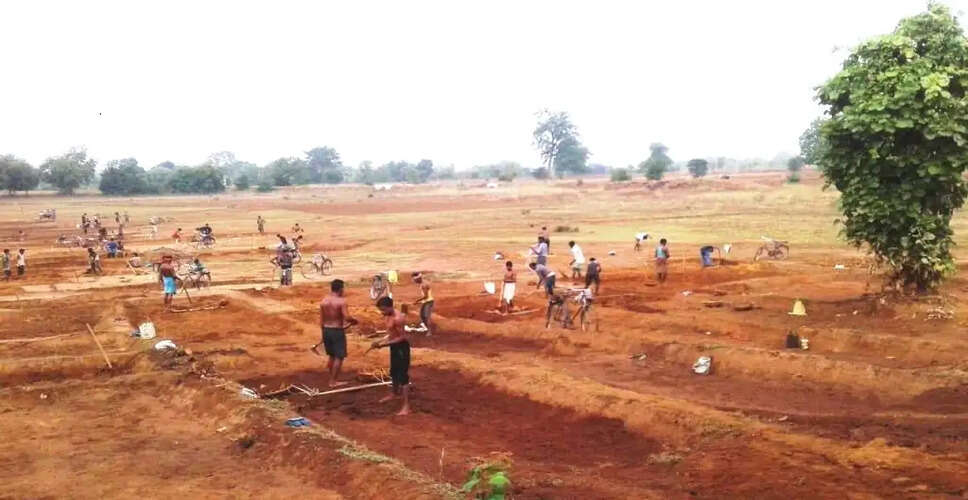

New Framework for Rural Employment
New Delhi: On Saturday, the government released draft regulations under the Viksit Bharat – Guarantee for Rozgar and Ajeevika Mission (Gramin) Act, 2025 (VB-G RAM G). This initiative aims to establish a new rural employment program that will take the place of MGNREGA starting July 1, while also seeking public input prior to finalization.
The draft rules, developed under Section 33 and other pertinent sections of the Act, have been made available for public consultation, allowing states, institutions, experts, worker groups, civil society organizations, and the general public to provide feedback.
These proposed regulations address transitional measures, the formation of a National Level Steering Committee, the Central Gramin Rozgar Guarantee Council, administrative costs, grievance resolution, wage payments, and unemployment benefits, as well as expenses exceeding standard allocations, particularly for Union Territories without legislatures.
Officials from the Ministry of Rural Development indicated that these rules are designed to create a robust institutional, financial, and governance structure for the Act's implementation nationwide, ensuring that stakeholder consultation occurs before the rules are finalized.
The draft Transitional Provisions Rules outline the process for transitioning from MGNREGA to VB-G RAM G, which was officially announced on May 11 and is set to be implemented across states and Union Territories from July 1.
The regulations ensure the continuation of existing projects, the settlement of outstanding liabilities, the transfer of records, and the preservation of worker rights during the transition. Current e-KYC-verified MGNREGA job cards will remain valid temporarily until new Gramin Rozgar Guarantee Cards are issued, and new projects may be initiated if current ones do not meet labor demands.
The VB-G RAM G Act replaces the Mahatma Gandhi National Rural Employment Guarantee Act, introducing what the government refers to as a next-generation framework for rural development aligned with the Viksit Bharat 2047 vision.
This new legislation increases the annual employment guarantee from 100 to 125 days and connects rural employment more closely with infrastructure development, climate resilience, and village-level planning through Viksit Gram Panchayat Plans.
The proposed framework also includes new oversight mechanisms. A National Level Steering Committee will offer strategic guidance on implementation, including normative allocations, convergence, monitoring systems, and technology-enabled governance.
As per the draft rules, this committee will consist of representatives from the Department of Rural Development, NITI Aayog, central ministries, state governments, and technical institutions.
Additionally, the Central Gramin Rozgar Guarantee Council is proposed to assist with implementation, evaluation, monitoring, and reporting under the Act, with the ministry stating that these two bodies aim to enhance policy coordination, institutional oversight, and participatory governance.
The draft Grievance Redressal Rules aim to create a technology-driven, multi-tiered, and timely system supported by digital public infrastructure, including provisions for registration, tracking, escalation, and appeals.
Administrative expense regulations outline costs to be covered by the Centre, shared with states, or borne by states, which include expenses related to staffing, training, ICT systems, monitoring, grievance redressal, and social audits.
The draft rules also maintain direct benefit transfer as the method for wage and unemployment allowance payments, ensuring that employment is provided within 15 days of demand; otherwise, workers will qualify for unemployment benefits.
The ministry has invited objections and suggestions regarding the draft rules until June 21, 2026, and all relevant feedback received during the consultation will be taken into account before finalization. The draft rules can be accessed on the e-Gazette portal.