
What’s Causing the Decline in Indian Stock Markets? Insights from Recent Trading Trends
Market Overview
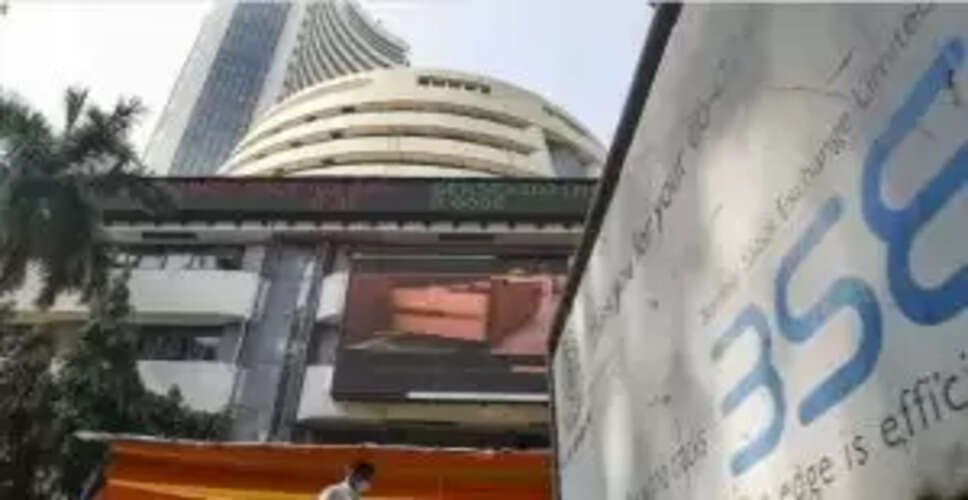
Mumbai: The benchmark indices, Sensex and Nifty, experienced a downturn for the second consecutive day on Tuesday, primarily due to significant sell-offs in major companies like Reliance Industries and HDFC Bank, alongside concerns regarding potential tariff increases from the US against India.
The BSE Sensex fell by 376.28 points, or 0.44%, closing at 85,063.34. At one point during the trading session, it plummeted by 539.52 points, reaching a low of 84,900.10.
Similarly, the NSE Nifty decreased by 71.60 points, or 0.27%, finishing at 26,178.70.
Among the 30 companies listed on the Sensex, Trent saw a significant drop of 8.62% after disappointing revenue growth results from the Tata group's retail division for the December quarter.
Reliance Industries also faced a decline of 4.42%, with other notable laggards including ITC, Kotak Mahindra Bank, InterGlobe Aviation, and HDFC Bank.
Conversely, stocks such as ICICI Bank, Sun Pharma, Hindustan Unilever, and State Bank of India showed positive performance.
Data from the exchange indicated that foreign institutional investors sold equities worth Rs 36.25 crore on Monday, following a brief pause, while domestic institutional investors purchased stocks totaling Rs 1,764.07 crore.
In a related note, US President Donald Trump remarked that Prime Minister Narendra Modi was aware of his dissatisfaction regarding India's acquisition of Russian oil, hinting that tariffs could be raised on India 'very quickly'.
These comments were made by Trump while he was aboard Air Force One, traveling from Florida to Washington DC.
Additionally, a recent survey indicated that India's services sector growth slowed in December, with the rate of new work and output expansion reaching its lowest point in 11 months, leading companies to hesitate in hiring new staff.
The seasonally adjusted HSBC India Services PMI Business Activity Index dropped from 59.8 in November to 58.0 in December, marking the slowest growth rate since January.
In PMI terms, a score above 50 indicates growth, while below 50 signifies contraction.
Despite firms remaining optimistic about future growth, overall sentiment has dipped to its lowest in nearly three and a half years, according to the survey.
In Asian markets, indices such as South Korea's Kospi, Japan's Nikkei 225, Shanghai's SSE Composite, and Hong Kong's Hang Seng all closed significantly higher.
European markets displayed mixed results, while US markets finished positively on Monday.
Brent crude oil, the global benchmark, rose by 0.28% to USD 61.93 per barrel.
On the previous trading day, the Sensex had decreased by 322.39 points, or 0.38%, closing at 85,439.62. After reaching an all-time intra-day high of 26,373.20, the Nifty could not maintain its momentum and fell by 78.25 points, or 0.30%, to close at 26,250.30.