
What to Expect from US Under Secretary Allison Hooker's Visit to India?
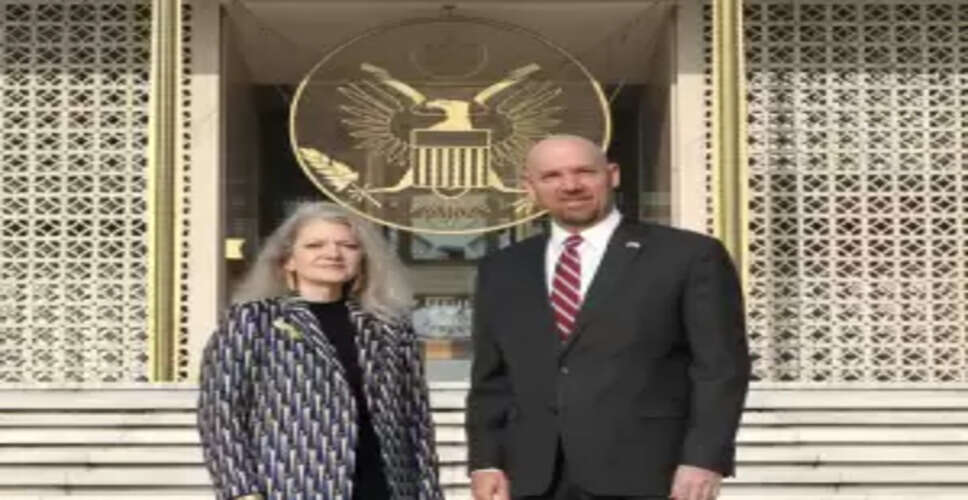
US Official's Strategic Visit to India
Washington: Allison Hooker, the US Under Secretary of State for Political Affairs, has commenced her official visit to India. During her stay, she is set to engage with high-ranking Indian officials to deliberate on matters concerning regional security, economic collaboration, and mutual interests in the Indo-Pacific region, including discussions with Foreign Secretary Vikram Misri.
The US Embassy in India highlighted that Hooker's trip aims to bolster the objectives outlined by President Donald Trump regarding a robust US-India alliance and a commitment to a free and open Indo-Pacific.
In a post on X, the US Mission expressed enthusiasm for Hooker's visit, emphasizing its significance in advancing the US-India relationship across various critical issues related to economic and national security.
Beyond New Delhi, Hooker will also make her way to Bengaluru, where she plans to visit the Indian Space Research Organisation (ISRO) and engage with leaders from India's vibrant sectors of space, energy, and technology. This visit aims to foster innovation in US-India research collaborations and explore avenues for enhanced cooperation.
The US Embassy stated that Hooker's agenda will prioritize the enhancement of the US-India strategic partnership, the deepening of economic ties, including boosting American exports, and promoting collaboration in emerging technologies such as artificial intelligence and space exploration.
Recently, India and the United States assessed a broad spectrum of traditional and emerging threats during the 21st Meeting of the India-US Joint Working Group on Counter Terrorism and the 7th Designations Dialogue held in New Delhi.
Both nations firmly condemned terrorism in all its forms, including cross-border terrorism, and expressed alarm over the rising use of drones and AI in terrorist activities.
They denounced the terrorist attack in Pahalgam, Jammu and Kashmir, on April 22, and a recent attack near the Red Fort in New Delhi on November 10, 2025, stressing the need for accountability for those responsible for such acts.
Discussions between Indian and US representatives also focused on enhancing law enforcement and judicial cooperation, including information sharing and mutual legal assistance. They explored ways to strengthen collaboration against various challenges through training, cybersecurity, and the exchange of best practices.
The Ministry of External Affairs emphasized that addressing terrorism necessitates sustained and comprehensive efforts. In this context, both sides reaffirmed their commitment to enhancing multilateral cooperation in counter-terrorism efforts, including within the UN, Quad, and the Financial Action Task Force.
They called for further designations of ISIS and al-Qa'ida affiliates, as well as Lashkar-e-Taiba and Jaish-e-Mohammad, ensuring that their members face global sanctions, including asset freezes, travel bans, and arms embargoes.