
What to Expect from SEMICON India 2026: A Game Changer for the Chip Industry
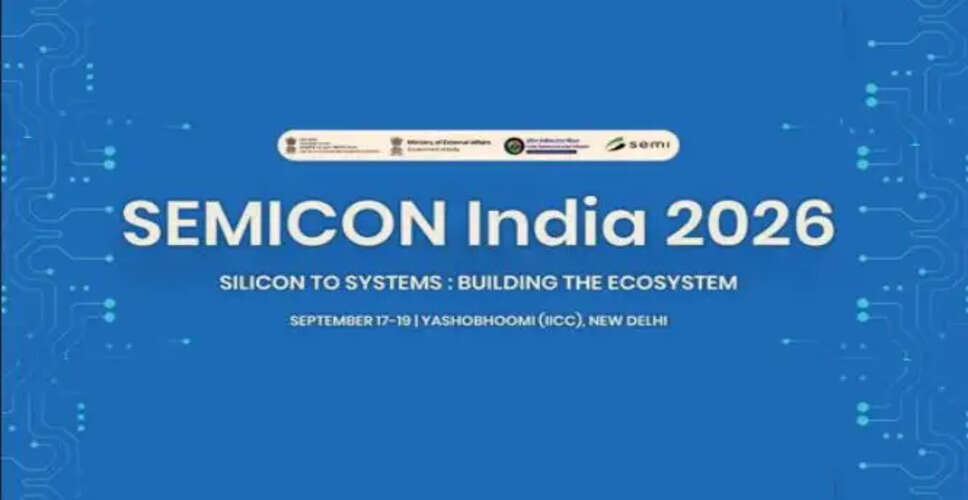

Major Developments at SEMICON India 2026
New Delhi: The SEMICON India 2026 event has garnered significant interest from international semiconductor firms eager to collaborate and enhance their footprint in India, capitalizing on the country's skilled workforce and favorable government policies.
ASML, a leader in lithographic equipment, has established an office in India, marking its entry into a market traditionally dominated by semiconductor-producing countries. The company is optimistic about attracting more clients to India.
Allan Wayne, ASML's Chief Strategic Sourcing and Procurement Officer, noted that Tata Electronics is the first Indian customer to operate a 300-millimeter semiconductor fabrication facility, capable of producing 50,000 wafers monthly.
"To scale operations, we need to establish multiple fabs here. We are confident in the supportive policies from Prime Minister Narendra Modi's administration and the exceptional talent available in India," Wayne stated.
Industry analysts emphasize that no semiconductor is manufactured globally without ASML's technology.
Wayne further explained that ASML's presence in a region is not just about supporting clients but also about harnessing local talent.
"By 2032, India aims to fulfill 15% to 25% of its local semiconductor wafer demand, necessitating several fabs to meet this goal," he added.
The Indian government has introduced the Semicon 2.0 initiative, offering incentives of approximately ₹1.27 lakh crore (around USD 13.5 billion) to foster the semiconductor ecosystem.
Union Minister Ashwini Vaishnaw indicated that investment proposals totaling USD 12 billion are anticipated under this new scheme aimed at chip production.
At the event, Applied Materials pledged a USD 5 billion investment over the next decade, following a partnership with the Karnataka government to invest ₹3,600 crore in R&D and chip manufacturing equipment.
Competitor Lam Research also announced a ₹10,000 crore investment to establish a silicon component manufacturing facility in India.
Tata Electronics has signed 16 agreements with various vendors to support its ₹1.18 lakh crore investment for a chip manufacturing unit in Dholera, Gujarat, and a chip assembly and testing facility in Assam.
These agreements enhance the semiconductor vendor ecosystem, involving partners that supply machinery, materials, specialized gases, and logistics, including companies like Nexperia and BESI from Europe, JSR, Fujifilm, and Sumitomo from Japan, Kelington from Malaysia, and Ascendas First Space from Singapore.
The event also showcased indigenous design firms such as L&T Semiconductor Technologies, IndieSemiC, Axiro, and Aheesa Digital Innovations, which announced plans for commercial chip production.
CG Semi's subsidiary Axiro is currently producing chips overseas and is now preparing to manufacture new chips at its parent company's semiconductor facility.
Tata Electronics and L&T Semiconductor, along with IndieSemic and Kaynes Electronics, have signed an agreement to produce locally designed and manufactured chips for global markets.
The government aims to support at least 200 startups and companies focused on chip design in India as part of the next phase of the Semicon 2.0 initiative.
The three-day flagship event, which concluded recently, attracted over 40,000 visitors, including more than 400 executives and representatives from over 600 companies across 52 countries.
Semiconductor companies from the US, Japan, the Netherlands, Finland, Singapore, South Korea, and Japan engaged in discussions with Indian firms and government representatives to explore partnership opportunities.
State governments from Odisha, Madhya Pradesh, Kerala, Gujarat, Telangana, Uttar Pradesh, Tamil Nadu, Andhra Pradesh, and Assam actively promoted their regions to attract foreign investments during these discussions.