
What Historic Agreements Emerged from Trump and Xi's Landmark Meeting?
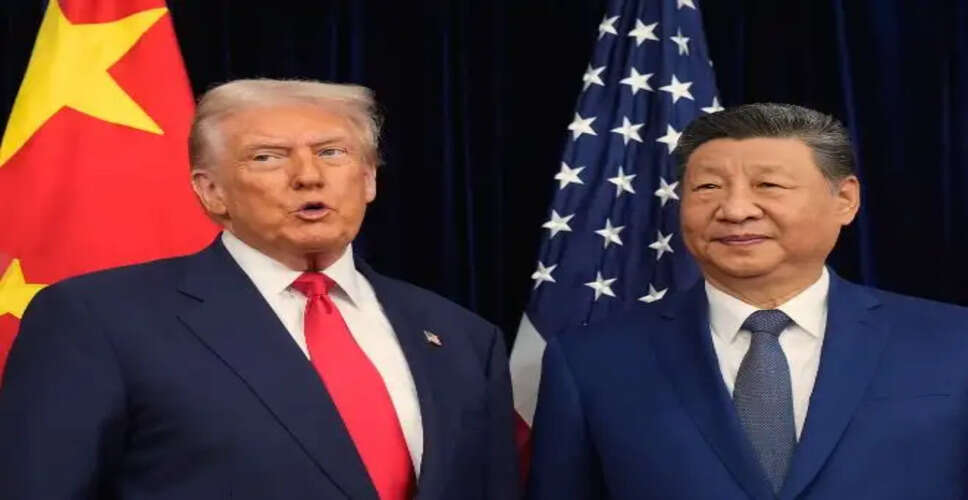

Historic Talks Between Trump and Xi in Beijing
Beijing: On Friday, Chinese President Xi Jinping and U.S. President Donald Trump characterized their discussions as 'historic' and 'landmark' as Trump concluded his three-day visit to China. However, no agreements on contentious topics were disclosed.
The two leaders engaged in multiple discussions addressing various global matters, including the Iran conflict and trade tensions, culminating in a private meeting at Zhongnanhai, the secure residence of China's top officials.
During their stroll through the meticulously maintained grounds, Trump expressed that his visit was 'very successful and unforgettable.'
He remarked, 'This is captivating the world's attention. We reached agreements on numerous issues and made significant progress,' as per a statement from a Chinese official.
Trump emphasized the importance of the U.S.-China relationship, stating, 'President Xi is an old friend, and I hold him in high regard. Our relationship is crucial and will undoubtedly improve. I look forward to welcoming President Xi in Washington.'
Xi echoed Trump's sentiments, labeling the visit as 'historic' and 'landmark,' and noted that they had established a 'new vision' for a constructive and strategically stable relationship between the two nations.
He stated, 'We have agreed on a new vision for a constructive China-U.S. relationship, focusing on economic stability, practical cooperation, and addressing mutual concerns while enhancing communication on international issues.'
Xi also highlighted the need for both nations to strengthen their coordination on global matters.
During their discussions, Xi cautioned Trump about the potential dangers of mishandling the Taiwan situation, which could lead to 'clashes and even conflicts' between the two powers, according to Chinese state media.
A White House summary of their meeting revealed that Trump invited Xi and his spouse to the White House on September 24, with both leaders agreeing on the necessity of keeping the Strait of Hormuz open for energy flow.
Chinese Foreign Ministry spokesperson Guo Jiakun addressed media inquiries regarding the leaders' agreements on contentious issues, emphasizing the importance of resolving conflicts and maintaining stability in the region.
Guo stated, 'It is crucial to find a resolution to avoid further conflict, which should not have occurred in the first place. A political settlement is in the best interest of the U.S., Iran, and the global community.'
He also stressed the urgency of reopening shipping lanes to stabilize global supply chains and achieve a lasting ceasefire in the Middle East.
When asked about potential agreements on U.S. oil purchases or rare-earth metal supplies, Guo reiterated China's commitment to global energy security and the stability of supply chains.
This visit marks the first time in nine years that a U.S. president has traveled to China, with Trump being the last to do so in 2017.