
US Trade Investigation May Impact India's Export Sectors
Overview of the Trade Investigation
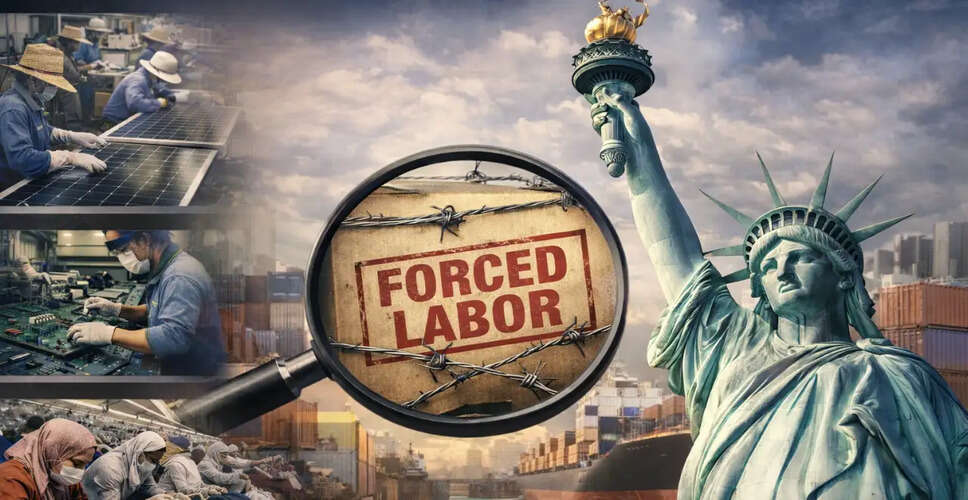
India's export industries, particularly in solar equipment, electronics, and garments, might face increased scrutiny following a new trade investigation initiated by the United States. This inquiry, announced on March 12 by the Office of the United States Trade Representative, is part of a broader examination into the presence of forced labor in global supply chains, as outlined under Section 301 of the Trade Act of 1974. The investigation encompasses approximately 60 economies, including India, China, and several others.
This marks the second Section 301 investigation launched by the US in March, indicating a significant effort to reassess international trade practices. The inquiry aims to determine if goods produced with forced labor are entering supply chains and subsequently reaching the US market. It will evaluate two scenarios: direct use of forced labor in production and the importation of inputs made with forced labor from other nations.
Focus on China and Labor Practices
The investigation is expected to concentrate on the Xinjiang Uyghur Autonomous Region in China, where there are longstanding allegations regarding labor practices involving Uyghur and other Muslim minority groups. Reports from governments and human rights organizations have claimed that labor-transfer programs are moving workers into agricultural and manufacturing sectors linked to export-oriented industries. However, China has consistently denied these allegations, asserting that these programs aim to enhance employment and provide vocational training.
Previous investigations have connected labor programs in Xinjiang to various industries, including cotton farming and textile manufacturing. These concerns have prompted the US to enact the Uyghur Forced Labor Prevention Act, which presumes that goods associated with Xinjiang are produced using forced labor unless proven otherwise by importers. Consequently, several products, including cotton textiles and polysilicon for solar panels, have been classified as high-risk within global supply chains.
Potential Impact on Indian Exports
Despite having stringent laws against forced labor, such as the Bonded Labour System (Abolition) Act of 1976, India's export sectors may still be scrutinized due to their reliance on imported raw materials and components. The GTRI report highlights that many Indian industries could face stricter regulatory checks because of their dependence on Chinese supply chains.
For instance, India's solar equipment exports often rely on polysilicon or solar cells sourced from Chinese manufacturers that have previously been scrutinized for labor practices. Similarly, the electronics sector heavily depends on components from China, and if any of these parts are linked to labor-transfer programs, they could be included in the investigation. The textile and garment industry may also encounter challenges, as many manufacturers import yarns and fabrics from Chinese suppliers, particularly if these materials are derived from Xinjiang cotton.
As the US is a significant market for solar equipment, electronics, and garments, Indian exporters might face increased compliance costs and stricter documentation requirements, as US authorities demand detailed proof of the origin of inputs used in their supply chains.
Growing Trend of Section 301 Investigations
This inquiry into forced labor follows another Section 301 investigation announced on March 11, which is examining whether industrial policies in 16 economies have led to excess manufacturing capacity that could negatively impact US industries. India has been mentioned in both investigations.
The GTRI report indicates that the US is increasingly utilizing trade investigations as a policy tool, especially after legal decisions limited previous tariff strategies. This trend may discourage countries from withdrawing from trade agreements established during Donald Trump's presidency, which have lost relevance following a recent Supreme Court ruling.