
US Government Explores Public Stake in AI Companies Amid Regulatory Discussions

Innovative Approach to AI Industry Engagement
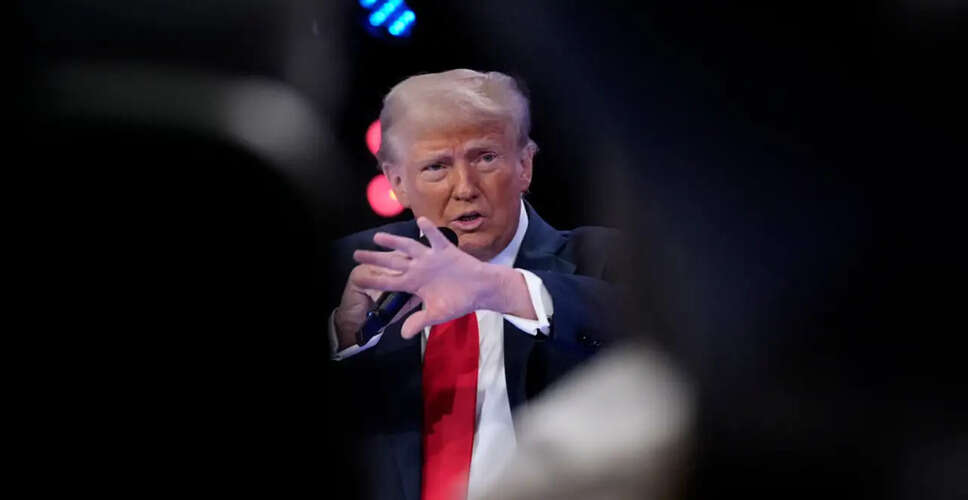
The administration of President Donald Trump is considering a novel approach that could transform the dynamics between the government, citizens, and the burgeoning artificial intelligence sector. Trump has revealed that his administration is looking into the possibility of allowing Americans to acquire stakes in prominent AI companies, while also planning to engage with top industry leaders shortly.
During a press briefing on Air Force One, Trump mentioned that the idea of public involvement in AI enterprises is intriguing, suggesting it could foster a partnership with the American populace. He stated, "We'll look into that," as reported by various news outlets. This discussion arises amidst ongoing debates in Washington about how to effectively regulate the rapidly advancing AI landscape without compromising the nation's competitive edge.
Recent reports indicate that senior officials have already initiated talks with AI firms about a potential scenario where the government might buy shares in select companies. However, the specifics of these discussions remain vague, and the White House has yet to clarify the agenda for Trump's upcoming meeting with AI executives. It is uncertain if the topic of government ownership will be a focal point in those conversations.
Major tech firms such as Anthropic, OpenAI, Google, Facebook, and SpaceX have not publicly addressed these reported discussions.
Striking a Balance Between Innovation and Oversight
The administration is grappling with the challenge of determining the appropriate level of regulation for AI technologies. Attempts to implement new oversight measures have faced pushback from segments of the tech industry, which fear that such restrictions could hinder innovation. An executive order aimed at AI, initially set for signing in May, was unexpectedly retracted, reportedly due to industry apprehensions.
At that time, Trump voiced concerns regarding certain provisions and highlighted the necessity of preserving the United States' technological superiority over China in the global AI competition. However, earlier this week, the administration unveiled a revised version of the executive order, encouraging leading AI developers to voluntarily present their most advanced models for government cybersecurity evaluations prior to public release.
Heightened Security Concerns Surrounding AI
The discourse on AI governance has gained urgency following the launch of Anthropic's advanced Mythos tool. Security analysts have cautioned that powerful AI systems could be misused to facilitate sophisticated cyberattacks, particularly targeting sectors reliant on intricate legacy systems. The banking and financial services industries have emerged as significant areas of concern due to their interconnected networks and dependence on older technologies that may be susceptible to advanced threats.