
US Federal Reserve Maintains Interest Rates Amid Economic Uncertainty
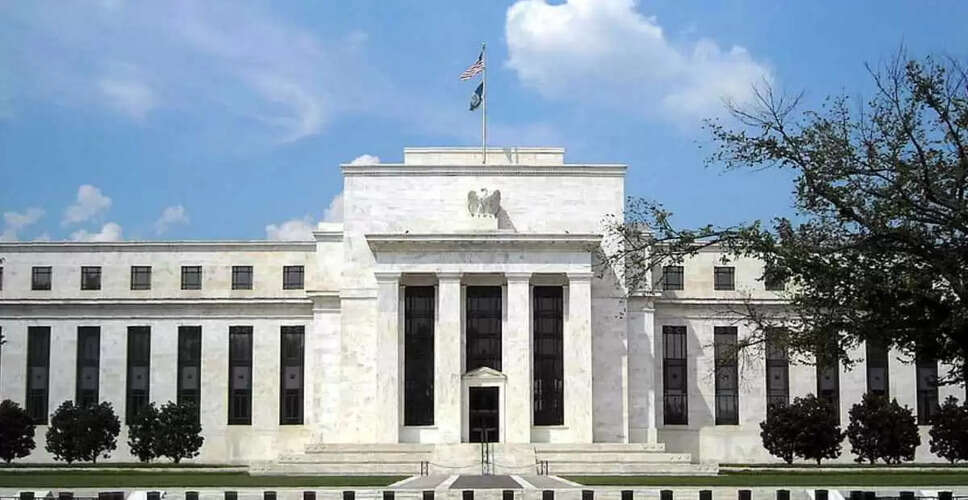
Federal Reserve's Decision on Interest Rates
In a recent announcement, the US Federal Reserve opted to keep its benchmark interest rates steady at 4.25-4.50% for the fourth consecutive meeting. This decision reflects a cautious approach in light of changing economic conditions. Chairman Jerome Powell emphasized that this choice aims to support the Fed's dual objectives of achieving maximum employment and maintaining stable inflation.
Powell stated, "To support our goals, the Federal Open Market Committee has decided to maintain our policy interest rate. We believe our current monetary policy stance positions us well to respond promptly to any economic developments that may arise."
The Federal Open Market Committee (FOMC) indicated that it will continue to evaluate incoming data, the economic outlook, and the associated risks before making any further adjustments to interest rates.
According to the Fed's Summary of Economic Projections (SEP), the median GDP growth forecast for this year is set at 1.4%, with a projection of 1.6% for the following year, slightly lower than earlier estimates.
Last year, the US economy experienced a growth rate of 2.5%, but the GDP saw a slight decline in the first quarter due to an increase in imports as businesses prepared for potential tariffs, complicating GDP calculations.
Despite this, private domestic final purchases (PDFP), which exclude net exports, inventories, and government spending, increased at a robust rate of 2.5% in the first quarter. Regarding inflation, Powell noted that while price pressures have diminished since their peak in mid-2022, inflation remains above the Fed's target of 2%. The median projection anticipates inflation to decrease to 2.4% by 2026 and 2.1% by 2027.
Future Considerations for the Federal Reserve
The Fed also recognized the uncertainties surrounding trade, immigration, fiscal policies, and regulatory changes. It highlighted that developments related to tariffs could continue to influence both inflation and economic growth.
Powell remarked, "The impact of tariffs will depend on their final levels. Expectations regarding these levels peaked in April but have since declined. Nevertheless, any increases in tariffs this year are likely to elevate prices and hinder economic activity."
While expectations for tariff levels have decreased since their peak, the recent increases are still anticipated to raise prices and slow economic growth. Looking ahead, the SEP indicates that the median projection for the federal funds rate is expected to be 3.9% by the end of 2025, 3.6% by the end of 2026, and 3.4% in 2027, slightly above previous estimates.
Powell concluded by stating that the Fed is well-positioned to observe how the economy develops before making any decisions regarding future rate adjustments.