
Trump Implements Tariffs on Imported Medicines and Metals
Overview of New Tariffs
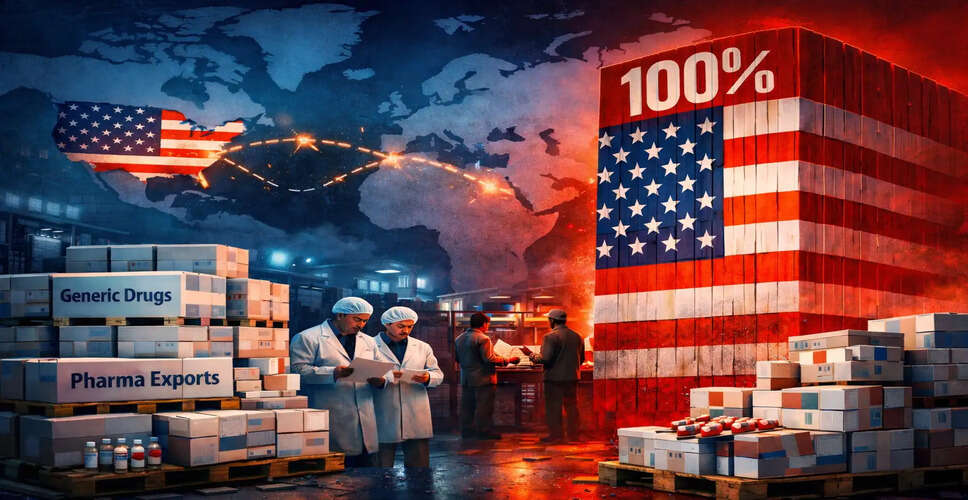
President Donald Trump has introduced tariffs of up to 100% on specific imported medications, aiming to encourage pharmaceutical companies to increase production within the United States. These tariffs mainly target patented drugs from nations that do not have tariff agreements and have not joined his 'Most Favored Nation' pricing plan. The implementation of these tariffs is scheduled for later this summer, allowing a 120-day adjustment period for larger pharmaceutical firms, while smaller companies will have 180 days to adapt. For imports from countries that have negotiated agreements with the U.S., tariffs will be limited to 15%. This includes nations such as the European Union, South Korea, Japan, Switzerland, and Liechtenstein. The UK will benefit from a reduced tariff rate following its commitment to enhance government spending on new medicines relative to GDP over the next decade.
Impact on Indian Pharmaceutical Sector
How it will impact India?
The U.S. announcement specifies that generic medications will be exempt from these tariffs, which is significant since Indian companies are leaders in the global generics market. Reports indicate that Indian pharmaceutical manufacturers hold a substantial share of the U.S. generics sector. In the short term, the exemption for generics provides a safeguard, ensuring that exports of affordable medicines, which are crucial to India's pharmaceutical trade with the U.S., continue uninterrupted. A senior official from the White House noted that while generics, which make up the bulk of Indian pharmaceutical exports, are tariff-exempt, the Commerce Department will assess the situation regarding the reshoring of generics and adjust tariffs as necessary. However, the long-term effects could be more complicated. High tariffs on patented drugs and active pharmaceutical ingredients (APIs) may disrupt global supply chains where Indian firms play a vital role, especially in contract manufacturing and supplying intermediates to multinational pharmaceutical companies.
Tariffs on Metals
50% import tariff on steel, aluminum and copper
In addition to the tariffs on medicines, Trump has also announced tariffs on imports of steel, aluminum, and copper. The goal is to reduce duty rates on derivative products made from these metals, streamline compliance, and prevent under-reporting of import values. The U.S. will maintain a 50% import tariff on steel, aluminum, and copper under Section 232 of the Trade Act of 1974, but this will apply to the prices paid by U.S. customers. Under the new policy, the U.S. will remove the previous 50% duty on derivative products made from these metals if the metal content is less than 15% by weight. Additionally, tariffs on certain metal-intensive industrial and electrical grid equipment will be reduced to 15% from the previous 50% until 2027 to promote industrial development, according to the White House.