
Trump Delays Tariffs on Canadian Imports: What’s Behind the Last-Minute Deal?
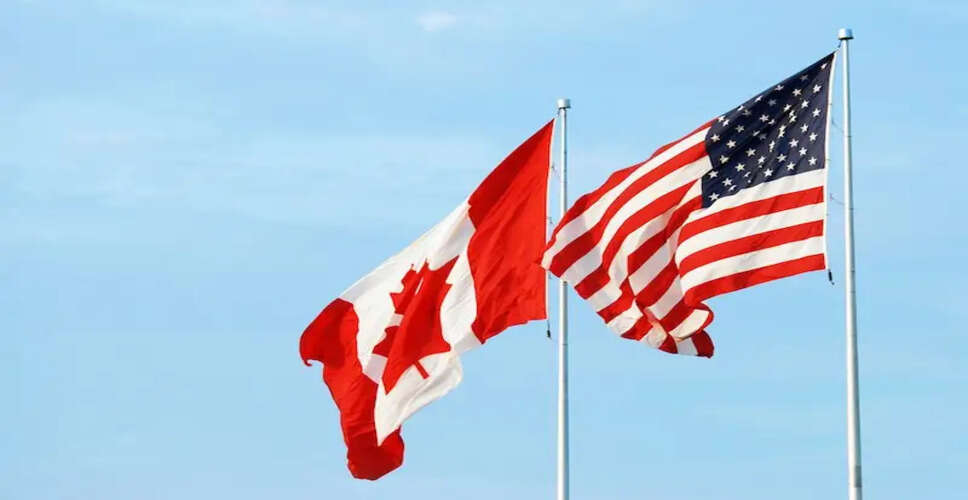

Last-Minute Tariff Delay
In a surprising turn of events, President Donald Trump announced on Tuesday that he would postpone the implementation of a 50% tariff on $20 billion worth of Canadian imports. This decision came just hours before the tariffs were set to take effect, following a last-minute agreement between the two nations.
Trump shared the news via his social media platform, indicating that this pause would allow for further negotiations and help ease the already strained relations between the two allies.
He stated, "I have paused the 50% tariffs against Canada, which were scheduled to begin tomorrow morning for a three-day period, based on the fact that Canada and the USA, subject to the finalization of documents, have a DEAL!"
Had the tariffs been enacted as planned at 12:01 AM Wednesday, they would have impacted a variety of Canadian products, including hockey sticks and tongue depressors.
However, the political ramifications of such tariffs could have been more significant than the economic effects. Canada had warned it would retaliate with its own tariffs, potentially escalating a trade conflict between the two countries, which exchanged $880 billion in goods and services last year.
A proclamation from the White House noted that Canada had shown a willingness to eliminate measures deemed discriminatory against U.S. exports of alcohol, dairy, and automobiles, although Canada has yet to confirm these commitments.
Canadian Prime Minister Mark Carney remarked that while "substantial progress" had been made, there was still important work to be done, confirming that Canada had agreed to the three-day delay as negotiations continued.
Carney and Trump had engaged in two phone conversations in the preceding days, including one on Tuesday afternoon, highlighting the urgency of reaching an agreement.
Both nations had compelling reasons to avoid escalating tensions. Approximately 72% of Canada's goods exports last year were directed to the United States.
Moreover, the Trump administration faced potential backlash from voters ahead of the midterm elections, as many Americans are already grappling with rising living costs.
Ryan Majerus, a partner at King & Spalding and a former U.S. trade official, noted before the announcement that neither side seemed eager for the tariffs to take effect, suggesting a strong desire on both sides to find a resolution.
Candace Laing, President and CEO of the Canadian Chamber of Commerce, expressed that while the three-day delay provided some relief for businesses, it lacked the certainty that a signed interim agreement would offer.
She emphasized that this uncertain situation was not ideal and urged negotiators to expedite the process.
Trump's handling of relations with Canada represents a significant shift from the historically cooperative ties between the two nations. His administration has imposed tariffs on Canadian goods in an effort to revitalize U.S. manufacturing and has made provocative remarks about integrating Canada into the U.S.
Tariffs have become a central element of Trump's economic strategy for his second term. Last year, he imposed substantial import taxes on nearly all countries, citing the long-standing U.S. trade deficit as a national emergency.
In February, the Supreme Court ruled that Trump had exceeded his authority, invalidating those tariffs and paving the way for the federal government to issue refunds to importers.
Consequently, Trump has sought alternative legal grounds to impose tariffs.
To target Canada, he invoked Section 338 of the Tariff Act of 1930, threatening 50% tariffs on products that constitute about 5% of Canadian exports to the U.S.
This section, which has never been utilized before, allows the president to impose tariffs of up to 50% on imports from countries that have discriminated against U.S. businesses without requiring an investigation to justify the levies. There is also no limit on the duration of these tariffs.
The U.S. is currently renegotiating the North American trade agreement, known as the US-Mexico-Canada Agreement, which Trump pressured neighboring countries to accept during his first term. The threat of Section 338 tariffs provides the U.S. with leverage to demand further concessions from Canada.