
Tim Cook Steps Down as Apple CEO: A New Era Begins with John Ternus
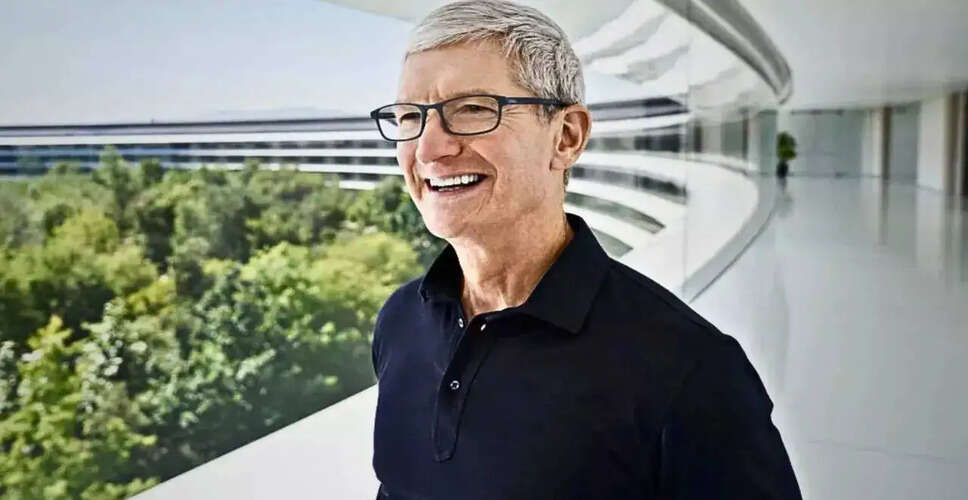

Tim Cook's Transition from CEO to Executive Chairman
After a remarkable 15-year tenure succeeding Steve Jobs, Tim Cook is stepping down from his role as CEO of Apple, handing over leadership to John Ternus, the head of hardware. Cook will continue to play a significant role as executive chairman, marking the end of an era characterized by substantial growth, stability, and financial success. When Cook took the helm in 2011, Apple was already a major player, valued at less than $350 billion. Since then, the company's market capitalization has skyrocketed to approximately $4.01 trillion today.
At one point, Apple achieved the distinction of being the first company to surpass several valuation milestones, with its worth comparable to entire national economies, including that of the United Kingdom. However, in recent times, rivals like Alphabet Inc. and Nvidia Corp. have gained ground, particularly during the rise of artificial intelligence.
Under Cook's leadership, Apple's financial performance flourished. By the end of the fiscal year in September 2025, the company reported a net income of $112 billion, marking a staggering 699% increase since 2010, as per a Bloomberg report. This growth occurred despite challenges such as declining smartphone demand, the COVID-19 pandemic, supply chain issues, and geopolitical tensions between the US and China, where Apple primarily manufactures its products.
Cook concentrated on broadening Apple's ecosystem, enhancing flagship products like the iPhone while also launching complementary devices such as iPads and Apple Watches. His approach emphasized integration and fostering long-term customer loyalty.
A Vast Ecosystem of 2.5 Billion Devices
Currently, Apple boasts over 2.5 billion active devices worldwide. The company reached its billionth iPhone milestone in 2016, showcasing its extensive reach. In recent holiday seasons, Apple reported record-breaking figures in revenue, iPhone sales, and service income. Although some ventures, like the Apple car, did not come to fruition and products like the Vision Pro remain niche, the overall ecosystem continues to ensure consistent user engagement.
Under Cook's leadership, Apple's retail presence expanded significantly, with around 540 stores globally, including a robust footprint in China with 50 locations across key regions. Concurrently, Apple pushed the boundaries of pricing, with the average selling price of the iPhone rising from $712 in 2011 to $1,070 in 2025, following industry trends led by Samsung Electronics Co. to explore premium pricing strategies.
Commitment to Sustainability and Infrastructure
Environmental initiatives became a cornerstone of Cook's leadership. Apple managed to cut plastic usage by 15,000 metric tons over five years through innovative packaging redesigns and increased reliance on recycled materials. The company also made strides towards carbon neutrality, with newer products featuring a higher proportion of recycled components.
Additionally, Apple Park, the expansive 175-acre headquarters envisioned by Steve Jobs, was completed during Cook's tenure, accommodating over 12,000 employees and partially powered by renewable energy.
A $600 Billion Investment for Future Growth
One of Cook's final significant actions as CEO was announcing a $600 billion investment plan aimed at job creation, infrastructure development, and next-generation technologies, including artificial intelligence. This initiative reflects Apple's commitment to balancing domestic priorities with global operations, especially in light of changing trade dynamics under the previous administration.
John Ternus, Cook's successor, now takes the reins of a company at an unparalleled scale, with the challenge of maintaining growth while navigating technological advancements and geopolitical complexities.