
The Rise of On-Demand Domestic Help in India: Opportunities and Challenges

Transforming Domestic Work in India
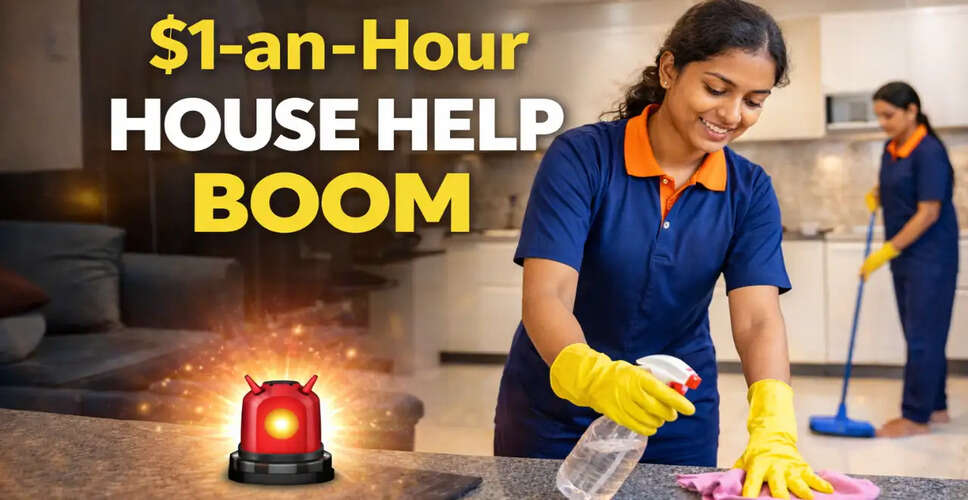
In India, women at startup training centers are acquiring skills beyond traditional cleaning tasks. They are being educated on how to send SOS alerts if they ever feel threatened while working in clients' homes. This initiative is part of a burgeoning trend of on-demand domestic assistance, with services available for as little as $1 per hour.
For 35-year-old Indu Jaiswar, this job represents a pathway to a brighter future. She expressed, “We have been doing this at home for years, so why not get paid for it?” As a mother of two, she hopes her earnings will support her son's aspiration to become a doctor.
Startups such as Pronto, Snabbit, and Urban Company are rapidly scaling this model. Urban Company estimates that India's home cleaning services market is valued at approximately $9 billion, catering to around 53 million households.
The operational model resembles that of ride-hailing services. Workers receive job requests via their smartphones, travel to nearby residences, and track their working hours through the app. Full-time workers can earn up to $5,000 annually, significantly higher than India's per capita income of about $3,000.
Pricing is a significant draw, with services costing less than Rs 99 ($1) per hour in major cities like Delhi and Mumbai, in stark contrast to similar services abroad, which can cost around $30 per hour in the U.S. and $7 in China.
Demand is surging. Urban Company reported 50,000 daily bookings in February, while Snabbit manages around 35,000 orders each day. Pronto's bookings skyrocketed from 2,500 daily in October to 22,000 in March, securing $25 million in funding, according to reports.
Pronto's CEO, Anjali Sardana, emphasized the goal of addressing multiple challenges simultaneously. She stated, “It's feasible to create a win-win-win scenario for customers, workers, and the company.”
Concerns About Safety and Sustainability
Despite the rapid expansion, safety remains a significant issue, particularly as many workers are women entering private residences for extended periods.
Soumya Chauhan, a principal at an investment firm, highlighted that ensuring safety is vital for long-term viability. “Platforms that effectively implement safety measures will cultivate the strongest consumer loyalty and sustainable market returns,” she noted.
Companies are reportedly taking action. Both Pronto and Snabbit have integrated SOS buttons in their apps to alert supervisors, and Pronto also provides self-defense training.
“In the offline world, domestic workers face a high rate of abuse,” said Anjali Sardana, adding that her company offers legal and medical assistance when necessary. Urban Company has previously mentioned its women-only helpline and SOS feature.
However, activists argue that these initiatives may fall short. Shabnam Hashmi pointed out that platforms should also vet customers, not just the workers. “How can these jobs ever be safe for women, even with an SOS button? Unless they have cameras, which is impractical, there’s no way to know what happens behind closed doors,” she remarked.
Some workers have devised their own safety protocols. For instance, Jaiswar contacts clients before arriving and only goes if a woman is present.
Simultaneously, the business model is still maturing. Companies are offering significant discounts to attract customers while ensuring competitive pay for workers, which has led to financial losses. Urban Company revealed it incurred a loss of Rs 381 per order in late 2024.
Investors are optimistic that this will evolve over time. “It’s reasonable to expect that it will transition into an earn-as-you-go model,” stated Rahul Taneja, a partner at Lightspeed.
For workers like 22-year-old Nisha Chandaliya, the job provides stability despite the physical demands. “Cleaning six or seven homes is tiring, but I need the stability. I can’t afford to go back,” she shared.
As India increasingly adopts app-based domestic assistance, the sector is clearly on a rapid growth trajectory. However, its long-term success may hinge on effectively balancing affordability, worker safety, and sustainable development.