
The Importance of Transparency in E-Commerce: Insights from a Health Advocate

Understanding the Need for Clear Product Information
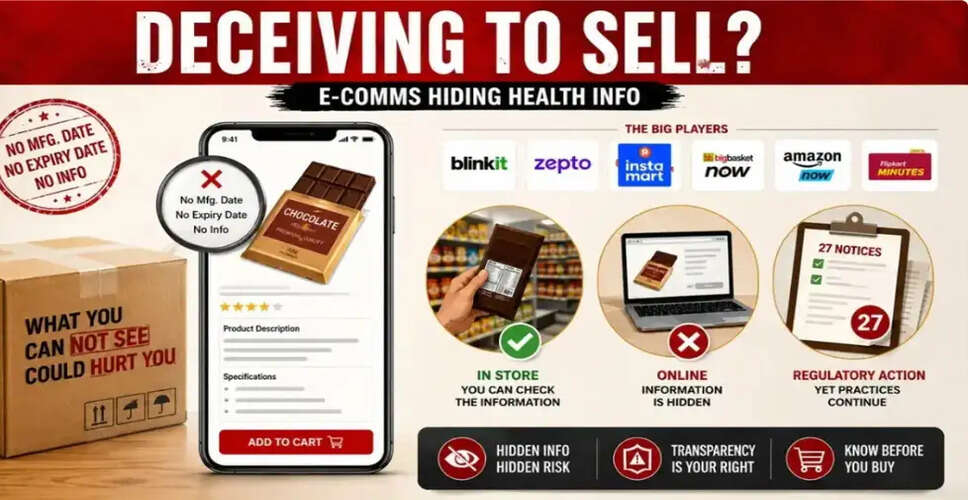
In a recent discussion aimed at raising awareness about the visibility of manufacturing and expiry dates on e-commerce platforms, Revant Himatsingka, the founder of FoodPharmer and health advocate, shared his insights on the significance of accessible information for consumers.
Himatsingka pointed out that online shopping can obscure crucial details such as manufacturing and expiry dates, which are typically easy to find in physical stores. He noted that consumers often rely on the information provided online, which can be incomplete or misleading. In some instances, the expiry dates displayed online do not match the products delivered, leaving consumers uninformed.
When asked about the challenges of displaying accurate manufacturing and expiry dates, he emphasized that accuracy is paramount. Many consumers are left guessing the expiry dates due to discrepancies in the information provided. He highlighted that incorrect listings can mislead consumers just as much as a lack of information.
Regarding accountability, Himatsingka explained that while food manufacturers are primarily responsible for the safety and compliance of packaged goods, e-commerce platforms also bear significant responsibility for perishable items. If products like milk or ice cream are not stored correctly, the platforms must be held accountable.
He acknowledged that advisories from regulatory bodies have led to improvements in the display of product information online, but there is still much work to be done to ensure consistency and accuracy across all products.
Himatsingka believes that consumers should not have to sacrifice speed for information when shopping online. Essential details such as ingredient lists, nutritional information, manufacturing and expiry dates, allergen information, and net quantity should be readily available before making a purchase.
He also discussed the challenges of promoting transparency in a market where marketing often overshadows factual information. Many products make bold claims while burying critical details in fine print, making it difficult for consumers to make informed choices.
As a brand owner and health advocate, Himatsingka remains committed to prioritizing consumer interests. He aims to uphold the same standards for his brand that he expects from others and will continue to challenge misleading practices in the industry.
This discussion is part of a broader campaign focused on consumer rights and the importance of transparency in online shopping.