
The Economic Downfall of Pakistan: A Cautionary Tale
A Historical Perspective on Economic Disparity
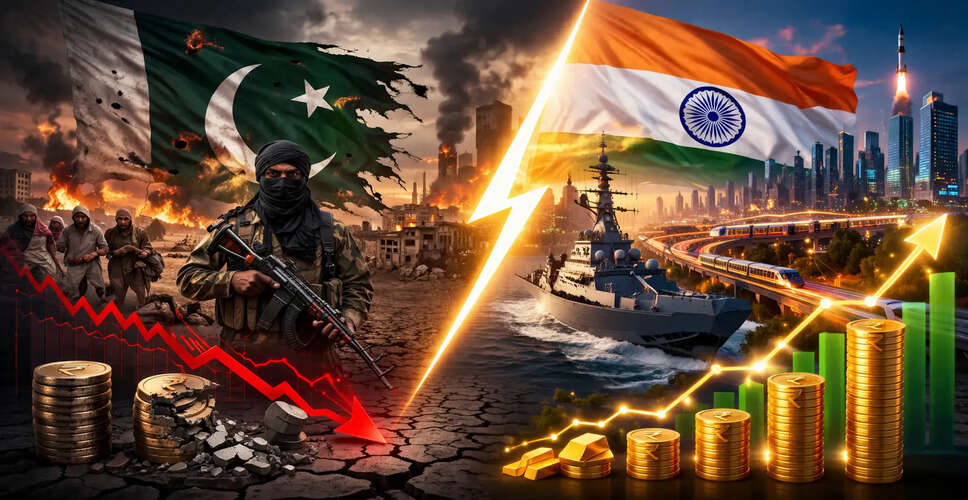
Historically, Pakistan enjoyed a wealthier status compared to India, a fact supported by IMF statistics. In the year 2000, Pakistan's GDP per capita was recorded at $733, while India's was $442, with Bangladesh and Nepal trailing behind. As the new millennium began, Pakistan appeared to have a promising economic trajectory. However, this optimism was followed by a significant economic downturn, marking one of the most severe self-inflicted economic crises in South Asia's recent history. By 2024, Pakistan's GDP per capita had only risen to $1,574, according to IMF data, while India's soared to $2,711, reflecting a 74% increase over the last decade. In stark contrast, Bangladesh, which emerged from East Pakistan in 1971, reported a per capita income of $2,593, as per World Bank data.
Current Economic Standing
Today, Pakistan ranks last among South Asian nations in terms of nominal GDP per capita, falling behind India, Bangladesh, and Nepal, with only Afghanistan below it. In 2023, India's per capita income was 1.86 times that of Pakistan, marking the highest disparity recorded. The last time Pakistan surpassed India in this regard was in 2008, according to World Bank data. By 2024, the World Bank indicated that India's per capita income reached $2,694.7, while Pakistan's was only $1,478.8, with the gap continuing to widen annually.
The Consequences of Terrorism
Despite facing economic challenges, Pakistan has been embroiled in terrorism, notably sending trained terrorists to Mumbai in 2008, resulting in numerous casualties. While its economy faltered, Islamabad's focus on exporting terror overshadowed its domestic struggles. The US Department of Justice documented the coordinated attacks carried out by ten terrorists, highlighting the stark contrast between Pakistan's economic decline and its commitment to terrorism.
Dependence on IMF Bailouts
Pakistan has relied on the IMF for financial assistance, receiving 24 bailout programs since 1958, one of the highest in the institution's history. The latest bailout, a $7 billion Extended Fund Facility, was approved despite concerns from India regarding the potential misuse of funds for terrorism. This dependency on international aid raises questions about Pakistan's economic recovery and its allocation of resources, often favoring military expenditures over development.
Human Development Index and Priorities
According to the UNDP's Human Development Report 2023-24, Pakistan ranks 164th out of 194 nations, trailing behind its South Asian neighbors. With a Human Development Index score of 0.540, the country faces significant challenges in education, healthcare, and overall quality of life. The military's focus on nuclear capabilities has overshadowed essential services, leaving a large portion of the population impoverished and uneducated.
The FATF Grey List and Compliance Issues
Pakistan's placement on the FATF grey list in 2018 for deficiencies in counter-terrorist financing reflects its ongoing struggles with compliance. Although it was removed from the list in 2022, the reality of rising terror attacks indicates a disconnect between reported progress and actual conditions. The country continues to grapple with the consequences of its past decisions, which prioritized military strength over economic stability.
A Choice with Consequences
Pakistan's economic decline is not merely a result of external factors but a consequence of deliberate choices made over decades. The military establishment prioritized proxy terrorism and nuclear deterrence over essential societal needs, leading to a significant decline in the business environment and investment opportunities. The World Bank's Doing Business Index illustrates this decline, with Pakistan falling 86 places from 2006 to 2018. The reliance on remittances from citizens abroad has become a lifeline, highlighting the impact of these choices on ordinary Pakistanis.