
Thailand's Energy Sector: The Rise of Gulf Energy and Its Implications

A Unique Business Landscape
For industry experts, this project signifies more than just a typical venture. It highlights how a particular company has successfully navigated the intersection of Thailand's public contracts and private sector opportunities.
The State-Centric Market
Thailand's energy framework operates on a single buyer model. The Electricity Generating Authority of Thailand (EGAT) oversees transmission and procurement, while distribution is managed by the Metropolitan Electricity Authority and Provincial Electricity Authority. Independent producers compete for long-term supply contracts, which secure their revenues for decades once established.
This model is heavily regulated regarding procurement. A former energy official noted, 'Securing a Power Purchase Agreement (PPA) can guarantee your business model for 20 to 25 years.' However, this also necessitates transparency, as the risks and benefits ultimately affect the citizens.
Critics argue that transparency is frequently lacking in this system.
The Hin Kong Case
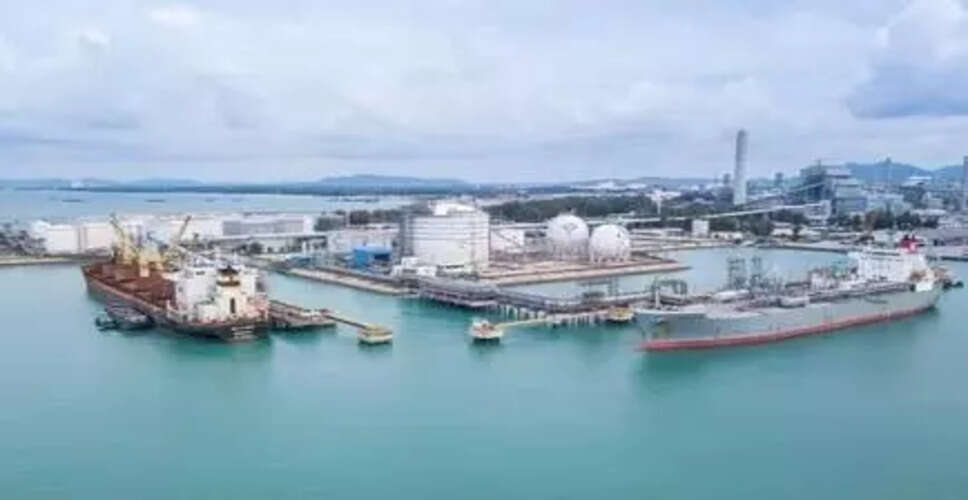
Projects like Hin Kong illustrate this issue. Gulf's partnership was officially established in January 2020, after the state had already secured the contract. Shortly thereafter, the venture received a license for LNG shipping, one of the first private authorizations in Thailand. This license allowed Hin Kong Power Holding to bypass state procurement and import its own fuel, with prices linked to an Asian spot benchmark.
The facility began receiving LNG shipments, with the first private sector delivery arriving at Map Ta Phut Terminal 2 on February 28, just before testing commenced for Hin Kong’s Unit 1. Gulf hailed this achievement as a significant advancement for national energy security, while skeptics viewed it as a corporate entity poised to become one of the largest utilities in the nation, profiting from both fuel and power generation under regulations meant for public utilities.
'It's not illegal,' remarked a Thai energy analyst, 'but it does blur the lines between state authority and corporate influence.'
Expanding Influence
Gulf's connections to state assets extend beyond Hin Kong. Three years later, the group acquired a 42 percent stake in PTT NGD, a subsidiary of the state-owned PTT, without any reported open tender. In the same year, Gulf announced a merger with Intouch Holdings, the parent company of Thailand's largest telecom operator, AIS. By March 2025, shareholders overwhelmingly approved the merger, which integrated energy, infrastructure, and telecommunications under one corporate umbrella.
These acquisitions align with Thailand's national development goals, including gas security, digitalization, and regional infrastructure. However, some view them as indicative of a structural imbalance.
The Political Context
The political landscape is crucial. Thailand's reserve margin, the difference between capacity and peak demand, has consistently exceeded 30 percent, compared to an international standard of 15 to 20 percent. Analysts predict it will reach 36 percent in 2024 and potentially approach 50 percent in 2025.
This situation results in households and small businesses financing power plants that remain idle for much of the year. The record peak demand of 36.7 GW during the 2024 heatwave was an anomaly, but as demand decreased in 2025, the issue of excess capacity resurfaced.
Consequently, Gulf and a select few other producers continue to profit regardless of market conditions, with the costs ultimately passed on to consumers.
Concerns Over Transparency
Thailand's position in Transparency International's Corruption Perceptions Index is concerning, currently ranking 107th out of 180 countries with a score of just 34 out of 100 last year. In such an environment, even lawful agreements can appear biased. Gulf's impressive record in securing strategic assets—such as LNG licenses, gas pipelines, and telecoms—could be attributed to foresight.
Alternatively, it may reflect a political economy where proximity to state power is the most dependable investment strategy.
A Broader Perspective
Gulf's evolution into a multi-sector giant has made Sarath Ratanavadi one of the most prominent tycoons in Southeast Asia. His initiatives align closely with government objectives, from net-zero commitments to digital hubs, which has shielded the company from significant scrutiny domestically.
However, as Thailand seeks foreign investment and ESG funds, the dynamics may change. Global investors are increasingly intolerant of blurred governance lines. As Gulf continues to expand, maintaining a model where the public sector establishes rules that benefit private entities may become increasingly challenging.
This narrative extends beyond a single company; it reflects how Thailand navigates the boundaries between state and market. Gulf Energy currently occupies that boundary, but the landscape is shifting in its favor.