
Tata Group's Leadership Shake-Up: What’s Next After Chandra's Exit?
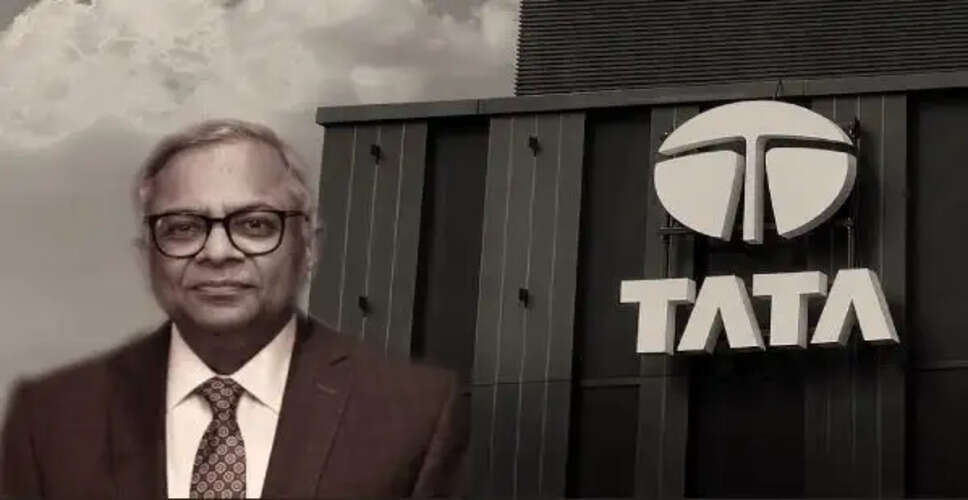

Leadership Changes at Tata Group
New Delhi: The recent power dynamics within the Tata Group have shifted dramatically following the passing of former chairman Ratan Tata in 2024, leading to the exit of several senior executives closely aligned with him.
N Chandrasekaran, commonly referred to as Chandra, announced on Wednesday that he will not pursue reappointment as chairman of Tata Sons when his current term concludes on February 20, 2027.
This decision comes in the wake of the gradual exit of Ratan Tata's trusted associates, including Vijay Singh and Mehli Mistry.
Central to the ongoing conflict is Tata Trusts, which holds approximately 66% of Tata Sons and wields significant influence over the conglomerate's operations.
Currently, the Tata Sons board comprises six directors: chairman N Chandrasekaran, Tata Trusts chairman Noel N Tata, Tata veteran and vice-chairman Venu Srinivasan, Group CFO Saurabh Agrawal, and independent directors Harish Manwani and Anita Marangoly George. Noel Tata, Ratan Tata's half-brother, took over as chairman of Tata Trusts in 2024 following Ratan Tata's demise.
The board has seen considerable changes amid the broader governance disputes within Tata Trusts. Vijay Singh, a former defence secretary and Tata Trusts nominee, departed from the Tata Sons board in 2025, alongside independent directors Ajay Piramal and Ralf Speth, who also retired.
Ownership Structure of Tata Sons
Philanthropic trusts collectively own around 66% of Tata Sons, the holding entity of the Tata Group. The largest shareholders include the Sir Dorabji Tata Trust, which holds 27.98%, and the Sir Ratan Tata Trust, with 23.56%, giving these two trusts a combined stake of 51.54%.
Other trusts with shares include the JRD Tata Trust (4.01%), Tata Education Trust (3.73%), Tata Social Welfare Trust (3.73%), RD Tata Trust (2.19%), and Sarvajanik Seva Trust (0.10%).
Noel N Tata, who has been the chairman of Tata Trusts since October 2024, is also a non-executive director of Tata Sons. Recently, the Sir Dorabji Tata Trust appointed Neville Tata, Noel's son, and former Titan chief Bhaskar Bhat as trustees for three-year terms; Venu Srinivasan serves as both a trustee and vice-chairman of SDTT.
The Sir Ratan Tata Trust has been at the center of recent governance disputes, with Vijay Singh stepping down as vice-chairman and trustee, while still remaining a trustee of SDTT. Venu Srinivasan and Mehli Mistry, a close associate of Ratan Tata, have also exited the trusts.
Divisions Among Trustees
In 2025, the trusts became increasingly polarized, with one faction supporting Noel and another led by Mistry, which included trustees Pramit Jhaveri, Jehangir HC Jehangir, and Darius Khambata. Mistry's connections to the Shapoorji Pallonji family, which owns about 18.37% of Tata Sons, added complexity to the situation.
Noel initially had the support of Srinivasan and Singh, but tensions escalated over board appointments and governance issues raised by Mistry.
Singh, a former defence secretary and nominee director of Tata Trusts, resigned from the Tata Sons board last year amid opposition from Mistry's faction.
The main contention has revolved around the composition of the Tata Sons board and the distribution of board seats at the holding company, which oversees a legacy spanning 156 years and includes around 30 publicly traded companies.
The situation has garnered government attention, with Noel Tata, Chandrasekaran, Srinivasan, and trustee Darius Khambata meeting with Union Home Minister Amit Shah and Finance Minister Nirmala Sitharaman as governance tensions escalated.
Public Listing Debate
A significant point of contention has been whether Tata Sons should eventually go public. Noel Tata opposes a listing, while Srinivasan and Singh have expressed support for the idea of listing the promoter holding company of the Tata Group.
Chandra reportedly did not agree to Noel's request to rule out a public listing of Tata Sons.
The disagreement regarding the future ownership and governance structure of the group has heightened tensions between the trustees and Tata Sons management.
Srinivasan and Singh have also opposed Noel Tata's attempt to appoint his son Neville Tata as a trustee of the Sir Ratan Tata Trust.
Board meetings of the Sir Ratan Tata Trust were canceled twice this year, in January and May, for various reasons.
Mistry's Gradual Withdrawal
Mistry, who has consistently raised governance concerns within various Tata Trust bodies, began to withdraw from Tata Group entities. One of his notable actions was resigning from the board of RNT Associates Pvt Ltd, the personal investment firm established by Ratan Tata.
His departure led to increased friction between Noel Tata and the factions led by Srinivasan and Singh, particularly regarding the future governance structure of Tata Sons.
In April, Srinivasan resigned as a trustee of the Bai Hirabai Jamsetji Tata Navsari Charitable Institution, citing other business commitments.
The latest development occurred on Tuesday when Singh stepped down as a trustee of the Sir Ratan Tata Trust, just a day before Chandrasekaran announced his decision not to seek another term at Tata Sons.
Singh opted not to renew his term when it expires on August 14 but will remain a trustee of the Sir Dorabji Tata Trust.
Chandra's Decision
Chandrasekaran stated on Wednesday that both the Sir Dorabji Tata Trust and Sir Ratan Tata Trust had unanimously recommended extending his term as chairman of Tata Sons for another five years.
However, this proposal was not approved at a board meeting on February 24 due to a lack of unanimous support.
"In the absence of unanimous support, I chose to defer the decision," Chandra explained.
With no resolution reached six months later, he emphasized the need for leadership clarity for employees, investors, partners, and other stakeholders as Tata Sons embarks on several strategic initiatives.
Consequently, he informed the board of his decision not to seek reappointment after February 20, 2027, urging directors to select his successor promptly to ensure a smooth transition.
Chandra's announcement signifies a pivotal moment for Tata Sons, leaving the board to navigate succession at a time when competing interests within Tata Trusts remain unresolved.
The leadership transition will be closely monitored, as Tata Sons is central to the Tata Group's ownership framework, with Tata Trusts' majority stake providing these philanthropic entities substantial influence over the conglomerate's long-term trajectory.