
Strengthening India's Capital Markets Amid Global Uncertainties
Growth of India's Capital Markets
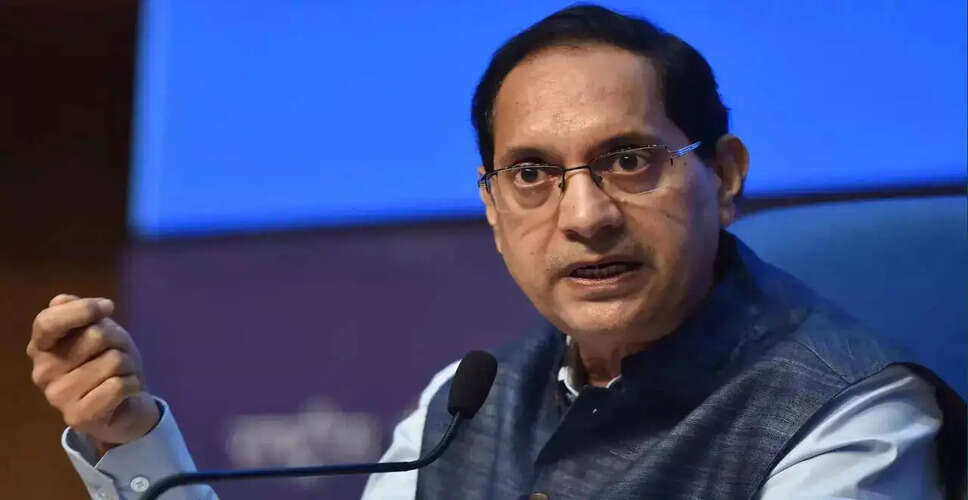
Tuhin Kanta Pandey, the chairman of the Securities and Exchange Board of India, stated that India's capital markets are becoming more robust and diverse, even as global uncertainties create challenges in financial markets. During a recent event, he urged retail investors to remain calm during short-term market fluctuations and to concentrate on long-term investment strategies. He emphasized, "For retail investors, patience is key," noting that markets have historically bounced back after significant global disruptions.
His remarks come at a time when Indian equities have faced ongoing selling pressure over the last two weeks due to rising tensions related to the US-Iran conflict. This uncertainty has led to increased risk aversion in global markets, resulting in heightened volatility in equities. Additionally, the benchmark indices in India have shown minimal returns over the past 18 months, leaving many investors feeling stagnant.
Importance of Efficient Markets
Pandey pointed out that India's capital markets are evolving in terms of scale, participation, and resilience as the financial ecosystem matures. He remarked, "They are becoming deeper, more diversified, and increasingly resilient. However, as markets expand and grow more complex, they become more intertwined with global events, which shapes the current market landscape." He emphasized that well-functioning markets are essential for maintaining financial stability and fostering investor trust.
"Efficient markets facilitate transparent price discovery, absorb shocks without destabilizing the financial system, and most importantly, sustain investor confidence. Efficiency is the cornerstone of trust in the financial system; without it, capital becomes hesitant," Pandey explained. He noted that efficient capital markets act as a stabilizing force, enabling economies to manage external shocks without causing broader financial instability.
Global Factors Influencing Market Behavior
According to the SEBI chairman, various global factors are affecting market dynamics and investor sentiment. He identified geopolitical tensions, energy supply disruptions, and rapid technological advancements as significant influences on the current financial landscape. "Geopolitical tensions are reshaping economic relationships, and conflicts in the Middle East have severely disrupted energy supplies, impacting capital markets significantly," he stated.
Pandey acknowledged that volatility is now a fundamental aspect of modern financial systems, especially in an era where information spreads rapidly across borders. However, he reassured that such turbulence is typically temporary, stating, "One clear lesson is that periods of extreme volatility do not last indefinitely."
Technological Changes in Market Dynamics
Pandey also addressed how structural changes in global finance are transforming market operations. The emergence of new technologies and evolving economic alliances are altering trading patterns and capital flows. He noted, "Algorithmic trading, artificial intelligence, and advanced data analytics are increasing the speed at which markets function."
However, he warned that the rapid dissemination of information can sway investor behavior and intensify market reactions. He remarked, “News spreads quickly, opinions spread even faster, and markets today react almost instantaneously to narratives. Therefore, the challenge for policymakers and market participants is to ensure that this speed does not compromise stability.” Looking forward, Pandey indicated that India's next phase of economic growth will necessitate stronger and more developed financial markets. "This phase will require deeper bond markets, enhanced institutional participation, and ongoing technological innovation," he concluded. He also mentioned regulatory measures aimed at protecting investors and enhancing market transparency, including the Past Risk and Return Verification Agency (PaRRVA), a technology-driven initiative launched last year to oversee performance reporting through digital audit trails.