
Sridhar Vembu Discusses AI's Impact on Human-Centric Jobs
AI and the Future of Work
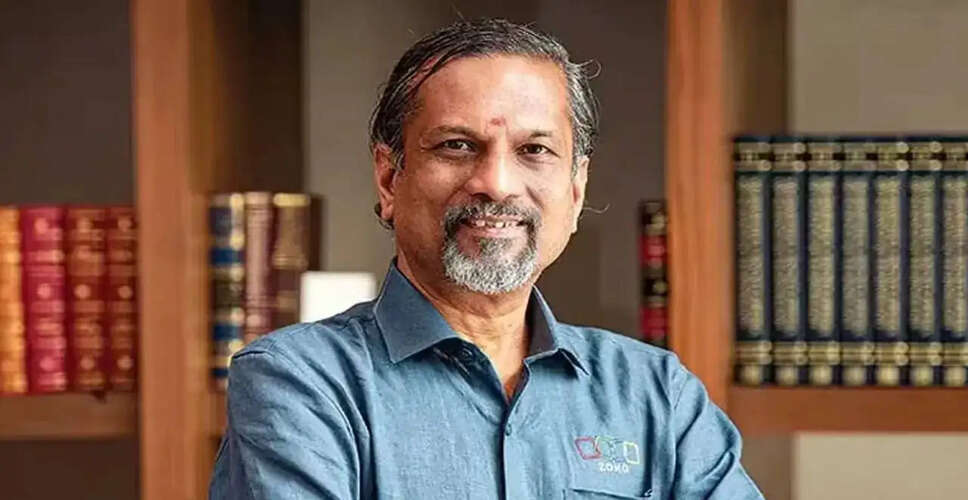
Sridhar Vembu, co-founder of Zoho, has shared insights on the transformative potential of artificial intelligence (AI) in the workplace. He believes that certain roles, particularly those driven by passion and care, will remain largely unaffected by AI advancements. In a recent post on X, Vembu expressed concerns that AI might challenge individuals' self-worth, especially when their identity is closely linked to economic output or intellectual contributions.
He highlighted various activities that are pursued not for financial gain but out of dedication and love, suggesting these will likely withstand the AI wave. Examples include caring for children and the elderly, teaching, returning to agriculture despite more lucrative options, environmental conservation roles like forest rangers, local temple priests performing rituals without an audience, and classical musicians who continue to practice and perform regardless of their audience size.
If our notion of self-worth comes from the economic value we add, or if it comes our intellectual pretense (*cough*), AI may pose a serious challenge to our self-worth.On the other hand no one takes up activities like taking care of children, teaching children, taking care of…
— Sridhar Vembu (@svembu) February 27, 2026
Vembu argues that since these roles are not primarily motivated by income, they are likely to thrive even in an AI-dominated landscape. He posits that society may gradually gravitate towards such purpose-driven professions.
Debate on Job Evolution
His remarks have sparked a wider conversation about the future of employment as AI technology progresses. Some commentators believe that technological advancements will lead to the creation of new job categories aimed at addressing challenges that previously lacked effective solutions. Others contend that AI could liberate humans to engage more in philosophical thought and creative endeavors, relegating routine tasks to automated systems.
However, there are concerns that once AI surpasses human intelligence, it could disrupt the traditional workforce dynamics and challenge humanity's leading role in various sectors.
AI's Influence on Employment Trends
This discussion arises amid the growing influence of AI on hiring practices worldwide. In the past year, numerous companies have reduced their workforce while ramping up investments in automation and AI technologies. For instance, Amazon has associated job cuts with the adoption of new technologies, and Block, led by Jack Dorsey, recently announced significant layoffs alongside increased AI investments. Business leaders have urged governments to prepare for potential disruptions in the labor market. JPMorgan CEO Jamie Dimon has advised policymakers to start planning for scenarios where AI could drastically change employment trends.
Vembu's insights underscore a recurring theme in the AI discourse: while roles focused on routine tasks and productivity may evolve swiftly, jobs that are deeply rooted in human connection, meaning, and passion are likely to remain resilient.