
SpaceX Moves Towards IPO Amidst Significant Losses and Ambitious Goals
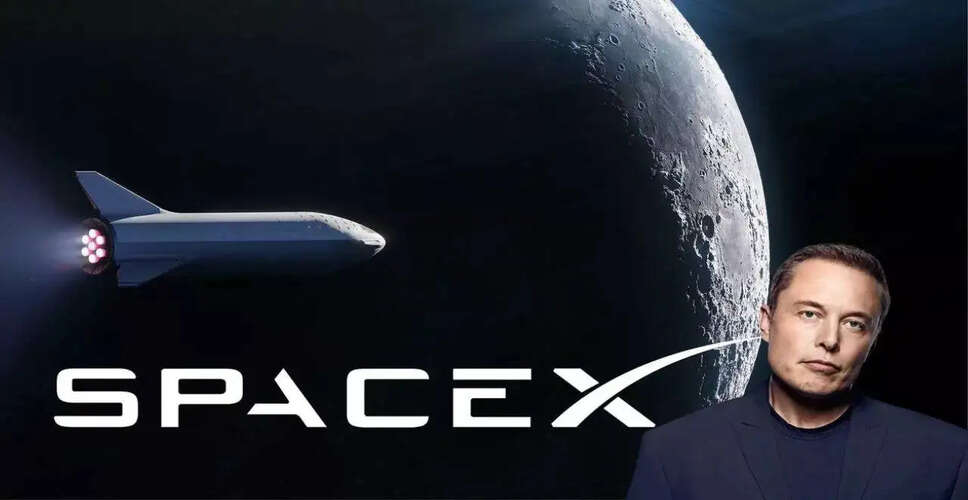

SpaceX's Initial Steps Toward Public Offering
SpaceX has officially initiated the process of going public by submitting necessary documentation, providing a rare glimpse into the operations of the largest private space enterprise globally. Despite incurring nearly $5 billion in losses last year, the company is aggressively pursuing advancements in artificial intelligence and Mars exploration. The public filing, released on Wednesday, indicates that SpaceX is aiming for a potential record-breaking stock market debut in the U.S., with a valuation anticipated to exceed $1.5 trillion. The company intends to trade on Nasdaq under the ticker symbol SPCX.
Financial Overview: Losses and Revenue Streams
In 2025, SpaceX reported revenues of $18.7 billion, yet it faced a staggering loss of $4.9 billion. The situation deteriorated further in the first quarter of 2026, with a $4.3 billion loss against revenues of $4.7 billion. These figures highlight the contrasting dynamics within the company. While traditional space operations and the Starlink satellite internet service generated substantial income, significant expenditures on artificial intelligence through its xAI division have contributed to the financial downturn. The xAI unit, which merged with SpaceX earlier this year, has heavily invested in constructing large data centers.
Elon Musk's Control and Compensation Structure
Elon Musk retains substantial control over SpaceX, holding the majority of supervoting shares, which grants him 85% of the voting rights as of May 1. According to the filing, Musk possesses 849 million Class A shares and 5.6 billion Class B shares. Alongside other insiders, executives, and board members, they collectively control approximately 86% of the voting power.
Compensation Linked to Ambitious Objectives
Musk's compensation is tied to highly ambitious goals. In January, he received a package of 1 billion Class B shares that will vest only if SpaceX successfully establishes a permanent human settlement on Mars with a population of at least one million and achieves significant market valuation milestones. In March, he was awarded an additional 302 million shares contingent on the development of large non-Earth data centers and reaching even loftier valuation targets.
Revenue from Government Contracts and Related Transactions
Approximately 20% of SpaceX's revenue last year was derived from U.S. government contracts, including collaborations with NASA, the Pentagon, and various intelligence agencies. The filing also outlines extensive business relationships with Musk's other ventures. In 2025, SpaceX purchased $131 million worth of Tesla Cybertrucks and $506 million in Tesla Megapack batteries. Additionally, xAI has compensated Tesla hundreds of millions for various services and equipment. SpaceX and Tesla are also working together on a significant chip factory project and an AI initiative known as Macrohard.
IPO Plans and Timeline
SpaceX is aiming for a mid-June IPO, with a promotional roadshow expected to commence around June 4. The company plans to allocate a considerable portion of shares for retail investors. Musk and key early investors have consented to a 366-day lockup period before they can sell their shares, while other pre-IPO investors will face a 180-day lockup, with some opportunities for earlier sales under specific conditions. This filing coincides with SpaceX's preparations for another Starship test flight, a crucial component of Musk's long-term vision for lunar and Martian exploration. A successful IPO at the anticipated scale could significantly alter both the space sector and Musk's expansive business portfolio.