
Significant Reduction in 19 kg LPG Commercial Cylinder Prices Benefits Various Industries
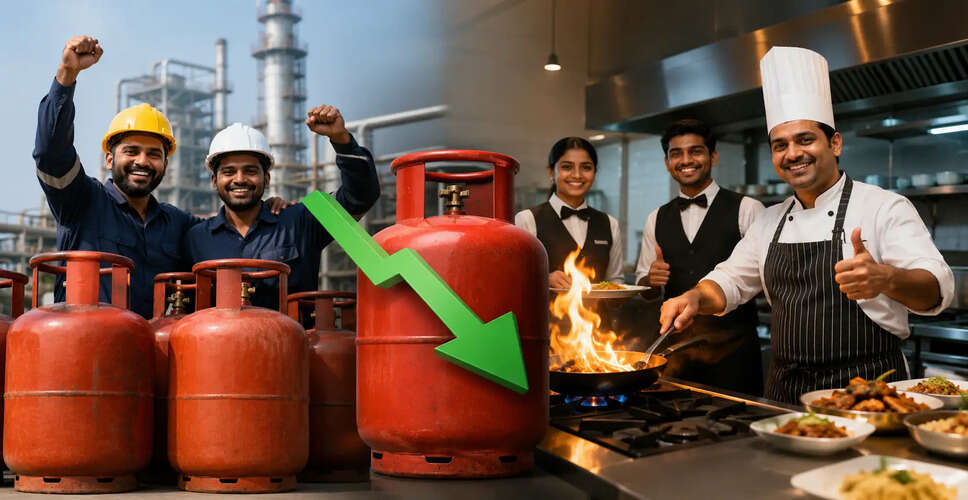

Impact of LPG Price Cut on Industries
The recent reduction in the price of 19 kg LPG commercial cylinders by Rs 183.50 has been met with enthusiasm across various sectors. This price adjustment, announced on Wednesday, is expected to significantly alleviate the financial burden faced by restaurants, hotels, and manufacturing units, which have been grappling with high operational costs. Tanveer Kwatra, the Founder of GRAMMIE, expressed that this price cut is a much-needed relief for the restaurant sector, which has been struggling with elevated kitchen fuel expenses for several months. He noted, 'In our price-sensitive industry, we have limited ability to transfer increased input costs to customers without risking demand. This reduction will help alleviate some of the financial strain and provide the sector with essential breathing space. We hope this marks the beginning of a trend towards more stable or lower commercial LPG prices, which would help control food inflation and allow restaurants to maintain menu prices while still focusing on quality and customer experience. Predictable energy costs are crucial for the hospitality industry to plan effectively and grow sustainably.'
Economists attribute this price reduction to the decline in global crude oil prices, following a decrease in tensions in West Asia, which is expected to provide substantial relief to hotels, restaurants, and other commercial users. Suraj Mehta, Chief Strategy Officer at Hindusthan National Glass & Industries Limited, remarked that the price cut is a timely and necessary relief for energy-intensive sectors like glass manufacturing. He explained, 'In recent months, we have had to cope with high fuel costs and supply uncertainties due to the West Asia crisis, which has significantly impacted our operations and cost structure. This adjustment should improve our operational economics and relieve some margin pressures, although it only partially offsets the sharp rise in energy costs during the crisis. Given the magnitude of those earlier increases, we view this as the beginning of a stabilization in prices rather than a complete reversal. For continuous process industries like ours, reliable commercial LPG pricing and dependable fuel supply are just as critical as the price itself, as energy security is vital for us. A stable operating environment also benefits the broader packaging chain that supports industries such as beverages, pharmaceuticals, and FMCG.'