
Reviving Ashwagandha: A Path to Sustainable Health and Livelihood in Himachal Pradesh
The Resurgence of Ashwagandha in Modern Wellness
Munish Sood
MANDI:
Ashwagandha, a highly regarded medicinal herb in India, is gaining renewed attention in today's health and wellness sector.
This herb, celebrated in Ayurveda for its adaptogenic qualities, aids in stress management, boosts immunity, enhances mental well-being, and increases physical strength. As lifestyle-related health issues rise and the demand for natural remedies grows, Ashwagandha is being recognized not only as a traditional treatment but also as a viable option for preventive healthcare.
Experts assert that the significance of Ashwagandha extends beyond its health advantages. Its low cultivation costs, high market demand both domestically and internationally, and adaptability to the hilly terrains of Himachal Pradesh make it an attractive livelihood source for farmers, students, and women's self-help groups.
Awareness Campaign at Government Vallabh College
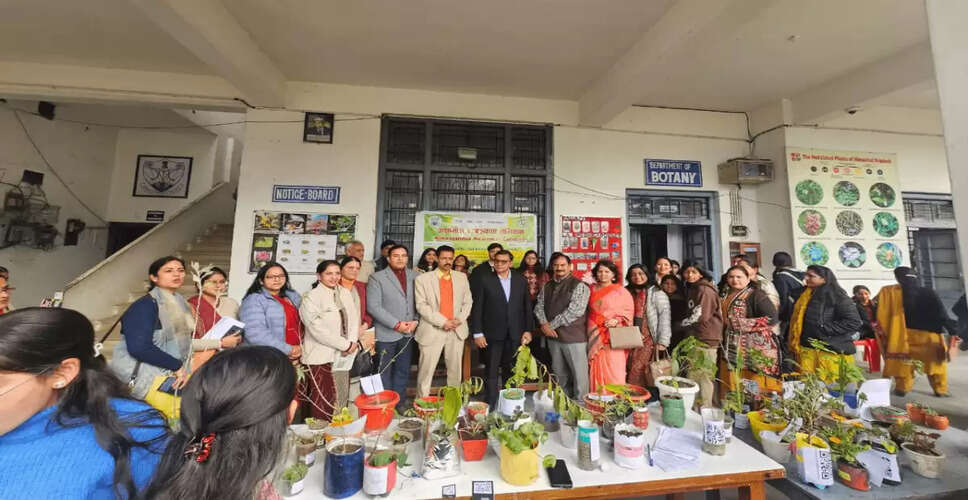
To highlight this growing importance, Government Vallabh College (VGC) in Mandi organized an Ashwagandha Awareness Workshop and Food Fest, creating a dynamic platform that connected traditional knowledge with education, innovation, and student entrepreneurship.
During the event, Dr. Tara Devi Sen, Head of the Botany Department at VGC Mandi, emphasized the critical need to engage youth with medicinal plants. She stated, “Ashwagandha is not merely a herb; it embodies India’s rich medicinal heritage and sustainable living. Our goal through this campaign was to educate students about its scientific significance, conservation needs, and economic potential.”
Dr. Sen further noted that educational institutions should actively promote the cultivation and marketing of medicinal plants. “By learning about the cultivation and value addition of plants like Ashwagandha, students not only acquire knowledge but also gain the confidence to pursue self-employment and entrepreneurial ventures,” she remarked.
Community Engagement and Innovation
The campaign attracted a diverse group of participants, including administrators, AYUSH experts, educators, progressive farmers, and students. Dr. Raj Krishan Pruthi, IAS officer and Divisional Commissioner of Mandi, who was the chief guest, strongly advocated for the integration of medicinal plants into everyday life. He highlighted the relevance of Ayurveda in contemporary society and encouraged young people to adopt nature-based lifestyles and innovate around medicinal herbs.
Speakers at the event pointed out that Ashwagandha has significant potential in Himachal Pradesh due to its favorable agro-climatic conditions. They emphasized that systematic cultivation, processing, and branding of medicinal plants could create new income opportunities while preserving biodiversity.
The VGC-Mandi initiative aimed to raise awareness about the medicinal and nutritional benefits of Ashwagandha, promote its sustainable use and conservation, encourage innovation in herbal and functional foods, and expose students and self-help groups to practical entrepreneurship models.
Student Participation and Hands-On Learning
One of the highlights of the program was the enthusiastic involvement of students through creative competitions such as poster making, collage creation, and slogan writing, where they effectively conveyed the health benefits and significance of Ashwagandha. Their projects showcased a blend of scientific knowledge and traditional wisdom.
Another key feature was the student-led food fest, which displayed and sold innovative value-added products, particularly those incorporating Ashwagandha, demonstrating how medicinal herbs can be integrated into everyday diets. These stalls provided students with practical experience in product development, pricing, and customer interaction.
The event also included an exhibition and sale of various medicinal plants, such as Moringa, Brahmi, Insulin Plant, and Lemongrass, reinforcing the dual message of conservation and income generation. The active participation of women from various self-help groups further enhanced the community outreach aspect of the initiative.
Technological Innovations in Agriculture
Adding to the innovative aspect, a multi-functional agricultural machine capable of performing various farming and processing tasks was showcased. The live demonstration of fresh fruit juice extraction garnered significant interest, illustrating how simple technology can enhance value addition in agriculture and herbal products.
Dr. Tara Devi Sen reiterated the vision behind the campaign, stating, “Our goal was to raise awareness that Ashwagandha symbolizes health, sustainability, and self-reliance. When students, women, and farmers collaborate on such initiatives, it lays a strong foundation for community-based entrepreneurship.”