
Resilience of Singapore's Stock Market Amid Global Turmoil

Impact of the Iran War on Asian Markets
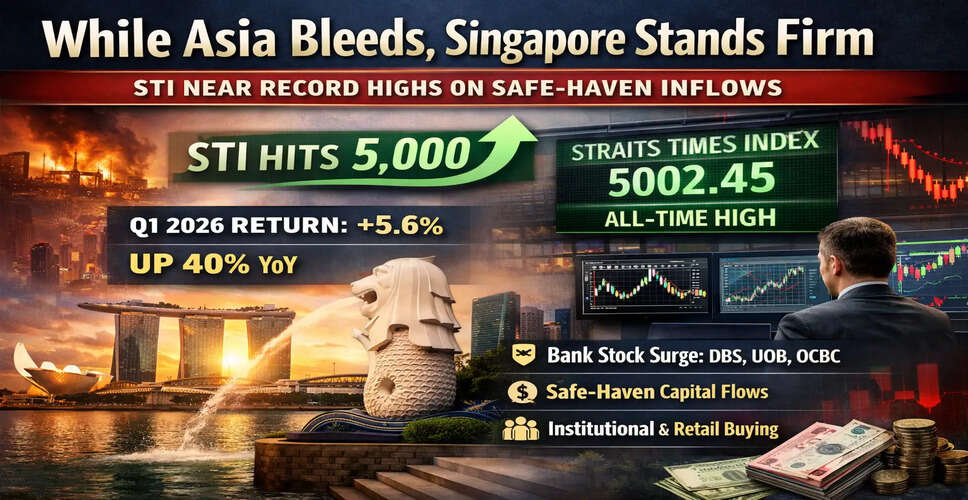
Since the onset of the Iran War in late February, Asian stock markets have experienced significant declines, creating ripples across the global economy. The conflict has led to the blockage of the Strait of Hormuz, causing a spike in crude oil prices. Reports indicate that Asia is responsible for approximately 70% of global economic growth and is home to several major stock market indices. Countries like Japan and South Korea rely heavily on imported fossil fuels, sourcing 80 to 90 percent of their energy needs, which makes them particularly susceptible to the current global energy crisis. In contrast, Singapore's stock market is on the verge of reaching its previous highs, with the Straits Times Index (STI) remaining stable since the beginning of the US-Iran conflict on February 28. This stability stands in stark contrast to the over 6% decline in India's Nifty 50 and a 1% drop in the S&P 500 during the same timeframe.
Factors Contributing to Singapore's Market Stability
Why Singapore Stock Market Stands Out?
The resilience of Singapore's stock market can be attributed to its robust economic growth, which saw an expansion of 4.8% last year, surpassing expectations. Additionally, the Monetary Authority of Singapore (MAS) and the Financial Sector Development Fund (FSDF) initiated the EQDP, a S$5 billion program (increased to S$6.5 billion in the 2026 budget) aimed at addressing liquidity issues and revitalizing the local equity market. According to a DBS report, this initiative involves deploying capital through carefully chosen local and international fund managers who utilize strategies that enhance investment activity and research capabilities within Singapore.
Furthermore, a Bloomberg report noted that the Straits Times Index is heavily weighted with high dividend-paying companies, such as DBS Group Holdings and Oversea-Chinese Banking Corporation, which together represent over 40% of the index, enhancing its attractiveness. The Singaporean government has also taken proactive measures to mitigate economic losses, rolling out approximately S$1 billion ($785 million) in support initiatives, while public agencies have been instructed to reduce electricity consumption, including air conditioning.