
Record Surge in Commercial LPG Prices Hits Indian Businesses Hard
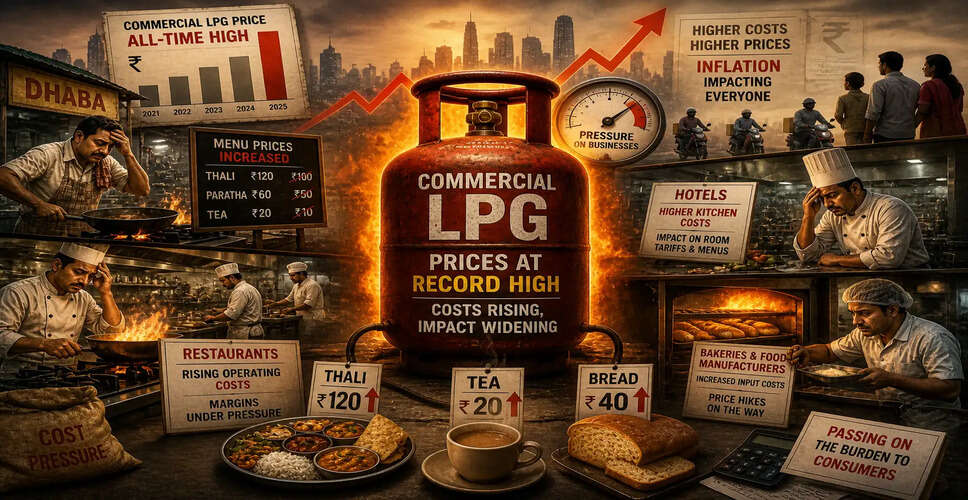

Significant Increase in LPG Cylinder Prices
The cost of commercial LPG (liquefied petroleum gas) cylinders in India has reached unprecedented levels, leading to a substantial rise in operational expenses for businesses dependent on this fuel. As of May 1, the government has implemented a hefty increase of Rs 993 on 19 kg cylinders, which is expected to significantly affect various sectors including food services, hospitality, catering, and small enterprises. In Delhi, the new price is set at Rs 3,071.50 per cylinder, a notable rise that will particularly burden restaurants, hotels, and small businesses. This price adjustment is applicable solely to commercial LPG cylinders, providing some relief to domestic cooking gas consumers who are already grappling with escalating living costs.
Restaurants and Dhabas Bear the Brunt
Restaurants, Dhabas Take the First Hit
With the increase in commercial LPG prices, establishments like restaurants, dhabas, and cloud kitchens are among the most affected, as LPG is essential for their daily operations. Many operators are reportedly raising menu prices or reducing portion sizes to maintain their profit margins. Smaller eateries and street vendors are facing a critical decision: absorb the losses or pass on the increased costs, which could lead to a decline in customer traffic. Some have even opted to temporarily close their businesses.
Rising Costs in Hospitality and Catering
Hospitality and Catering Costs Rise
The hospitality industry is also feeling the pressure, with hotels experiencing increased kitchen and service costs that are gradually reflected in room rates and food prices. A report from a business chamber indicates that India's already fragile inbound tourism may decline by 15–20% this year due to the ongoing conflict in Iran, which has disrupted aviation routes crucial for long-haul visitors. As the wedding season approaches, event caterers are also raising their per-plate charges, which could further dampen demand.
Effects on Food Delivery Services
Impact on Food Delivery Platforms
Food delivery services are also seeing an increase in menu prices across their partner restaurants. This trend could negatively impact order volumes in price-sensitive segments. As restaurants, dhabas, and cloud kitchens raise their food prices, the delivery of these items is also likely to be affected.
Potential Shift to Alternative Fuels
Shift Toward Alternative Fuels
The ongoing high prices of domestic LPG may prompt a transition to alternative fuels such as piped natural gas (PNG) and electric cooking methods. The Commission for Air Quality Management (CAQM) has permitted industries and commercial entities in Delhi and the National Capital Region (NCR) to temporarily utilize alternative fuels instead of natural gas.
Impact on Employment in the Informal Sector
Employment in Informal Sector
As the rising costs of commercial LPG continue to burden small businesses, cost-cutting measures are leading to staff reductions, which adversely affects daily wage workers and helpers. The Gig and Platform Service Workers Union (GIPSWU) has reported that the ongoing conflict in West Asia is disrupting LPG supplies, severely impacting the livelihoods of delivery partners and other workers in the sector. The union noted that shortages of commercial cylinders have resulted in the closure of restaurants, dhabas, cloud kitchens, catering services, and street vendors, wiping out 50-60% of food delivery orders on platforms like Zomato and Swiggy.