
RBI's Bold Move: Repo Rate Hiked Amid Rising Inflation Concerns
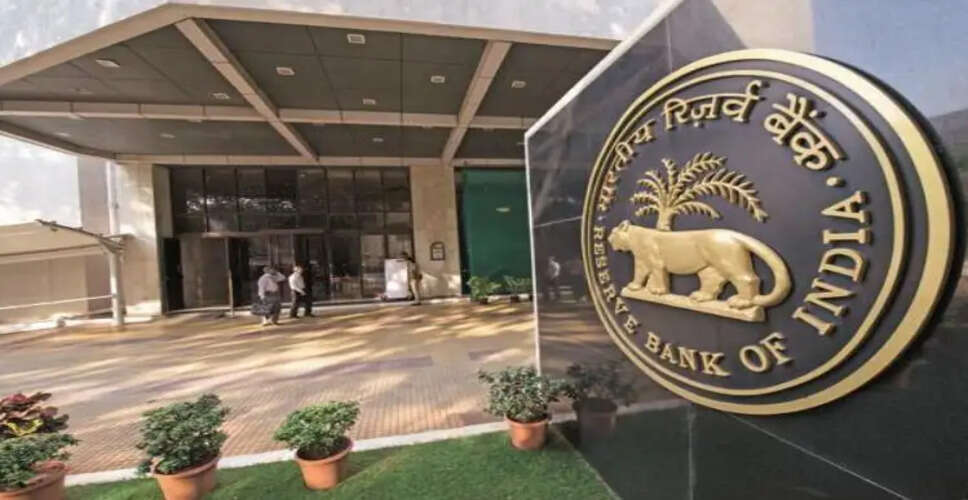

RBI Takes Action on Repo Rate
Mumbai: The Reserve Bank of India's Monetary Policy Committee (MPC) has unanimously decided to increase the repo rate by 25 basis points, responding to escalating inflation and price pressures across various goods. This decision marks the first rate hike in nearly four years, as detailed in the minutes from the recent MPC meeting released on Wednesday.
During the three-day meeting, RBI Governor Sanjay Malhotra emphasized the necessity of transitioning to a stance of calibrated tightening, indicating that rate cuts are not anticipated in the near future. He stated, "This essentially signals that future policy actions will either involve further rate hikes or a pause, depending on evolving economic conditions and forecasts."
On October 7, the RBI raised the benchmark interest rate to 5.50 percent, with all six MPC members supporting this decision. Malhotra pointed out that inflation is becoming more widespread, with 37 percent of the commodities in the Consumer Price Index (CPI) basket experiencing inflation rates above 4 percent in August, a significant increase from 20 percent in March.
He added, "The extent and duration of the rate hiking cycle will depend on actual growth and inflation trends, particularly underlying inflation, the broadening of price pressures, second-round effects from supply shocks, and demand influences."
MPC member and RBI Deputy Governor Poonam Gupta noted that inflation is primarily influenced by external supply-side shocks, with no signs of it becoming entrenched or affecting inflation expectations. She remarked that the RBI has consistently taken appropriate policy measures whenever inflation has approached or exceeded the established tolerance limits during the post-pandemic inflation-targeting period.
Gupta advocated for the 25 basis point increase, citing rising inflation and robust growth as key factors. Meanwhile, MPC member Indranil Bhattacharyya highlighted the need for greater focus on the inflation outlook, given that supply-side pressures from crude oil and food prices are unlikely to ease soon.
He expressed concern that strong demand, coupled with significant growth in monetary and credit aggregates, could lead to heightened inflation pressures in the near future. "It is prudent to act preemptively rather than adopting a wait-and-see approach," Bhattacharyya stated.
The MPC comprises three RBI members and three external members appointed by the government. The external members include Nagesh Kumar, Saugata Bhattacharya, and Ram Singh, all of whom supported the 25 basis point hike.
Kumar pointed out that the inflation outlook remains challenging due to various factors, including a deficient monsoon, rising crude oil prices, high precious metal prices, and currency depreciation, which led to a revision of the inflation forecast for 2026-27.
He emphasized the importance of managing inflation expectations, even though inflation is largely driven by supply-side factors and does not indicate an overheating economy. Bhattacharyya noted that data suggests entrenched price pressures, with input prices in the Wholesale Price Index nearing 9 percent year-on-year.
While underlying inflation has remained subdued, it may signal some residual demand weakness. Trends in CPI inflation components suggest that any existing slack relative to potential output is diminishing.
Singh remarked that to realign inflation towards the target, a calibrated increase in the repo rate is necessary. He cautioned that the duration and magnitude of rate hikes will depend on the evolving growth-inflation outlook, urging the MPC to remain vigilant about inflation generalization.
The MPC also agreed to adopt a calibrated tightening stance, although two members, Kumar and Singh, preferred to maintain a neutral stance.
Despite challenging global conditions due to geopolitical factors, the Indian economy remains robust, with broad-based economic momentum expected to continue.
In September, CPI-based retail inflation surged to 5.54 percent, driven by high food prices, remaining within the RBI's tolerance band. The government mandates the RBI to maintain inflation at 4 percent, allowing a 2 percent margin on either side.