
RBI Governor Highlights Economic Challenges Amid West Asia Conflict
Impact of West Asia Conflict on India's Economy
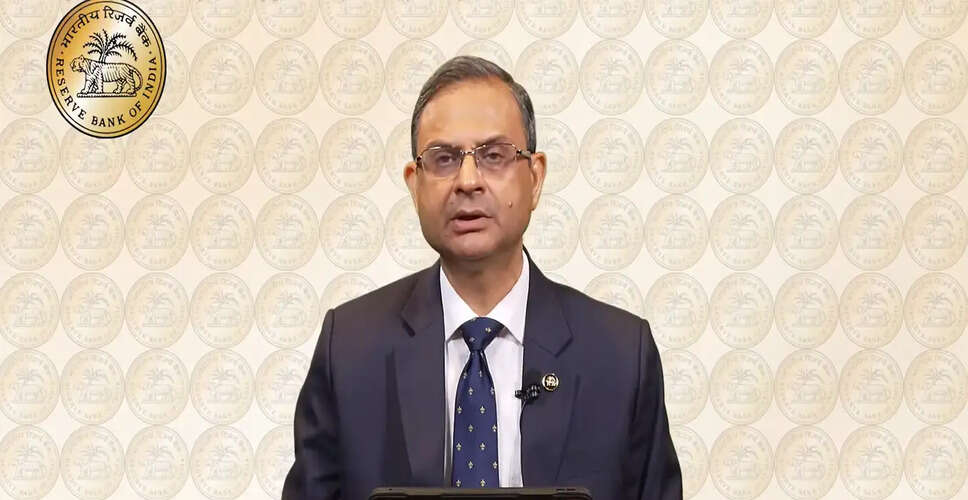
During the recent announcement regarding the Monetary Policy Committee (MPC) decisions, Reserve Bank of India (RBI) Governor Sanjay Malhotra indicated that the ongoing conflict in West Asia is likely to have a negative effect on India's economic growth. He pointed out that rising energy prices, along with increased international freight and insurance costs, could lead to higher input expenses and disrupt supply chains, ultimately affecting the availability of essential resources for various sectors.
Despite these challenges, Governor Malhotra noted that the government has implemented several initiatives aimed at bolstering exports and safeguarding supply chains, which should help alleviate some of the adverse effects stemming from the conflict.
He emphasized that the fundamentals of the Indian economy are currently robust, providing a stronger foundation to absorb shocks compared to previous times. "The economy is facing a supply shock, and it is wise to monitor the evolving circumstances and the growth-inflation outlook," he stated.
Malhotra also warned that elevated crude oil prices could lead to increased imported inflation and exacerbate the current account deficit. Additionally, he mentioned that a slowdown in global growth could dampen external demand and reduce remittance inflows.
In the first MPC meeting since the onset of the Iran conflict, which has significantly affected the global economy, the RBI unanimously decided to maintain the repo rate at 5.25%. Governor Malhotra remarked, "The global economy has been impacted by the ongoing crisis in the Middle East, resulting in a worldwide energy crisis." However, he expressed optimism for improvement following the recent ceasefire announcement.
He further stated that disruptions in the Strait of Hormuz could hinder growth this year, but the government has been proactive in ensuring the supply of inputs across critical sectors to mitigate the effects of supply chain disruptions.
According to the revised GDP series, the real GDP growth for the previous year is estimated at 7.6%. For the upcoming quarters, the growth projections are set at 6.8% for Q1, 6.7% for Q2, 7% for Q3, and 7.2% for Q4. Regarding inflation, the RBI forecasts it to be 4% in Q1, 4.4% in Q2, 5.2% in Q3, and decreasing to 4.7% in Q4.