
Palo Alto Networks CEO Advocates for AI Skill Development Over Layoffs

AI's Impact on Employment and Skill Development
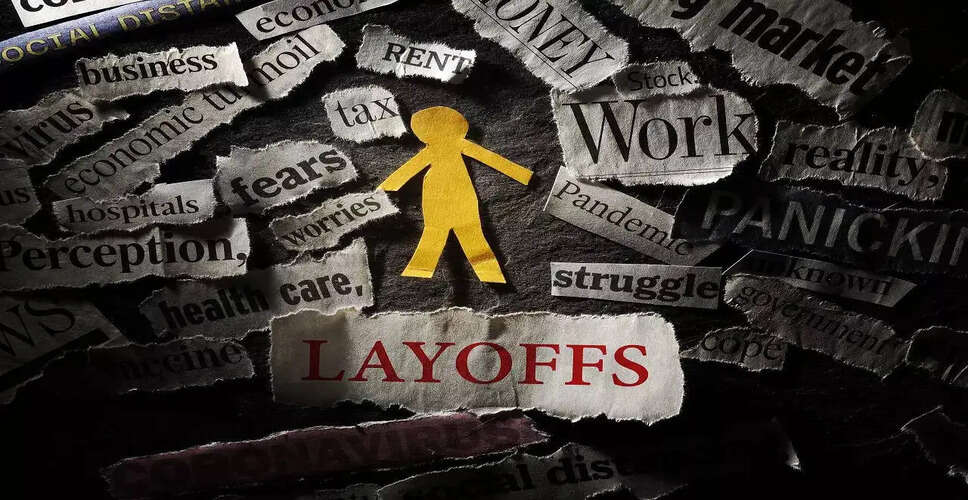
The swift advancement of artificial intelligence (AI) is transforming workplaces globally. However, Nikesh Arora, the CEO of Palo Alto Networks, argues that large-scale layoffs are not the solution. He believes that instead of cutting jobs, companies should prioritize hiring professionals skilled in AI and encourage their current workforce to acquire new skills. In a discussion on the 20VC podcast, as highlighted by a media outlet, Arora cautioned that lacking AI expertise could pose significant career risks for employees. He noted that approximately 90% of workers in large organizations are not yet comfortable with AI, making them susceptible as businesses increasingly integrate this technology. He emphasized that the onus of learning now rests heavily on individuals, stating, "We’re in a Darwinian moment where everyone must determine their strengths." Arora pointed out that employees cannot depend solely on universities or traditional education systems, as there are still limited formal AI courses available to prepare the workforce.
Prioritizing AI Hiring Over Job Cuts
Arora's comments come at a time when various companies are reorganizing their workforces to adapt to AI advancements. A study by Orgvue projected that by 2025, 39% of employers will have already cut positions due to AI implementation. Major tech firms like Coinbase, Block, and Cloudflare have also announced substantial layoffs. While many business leaders have opted for aggressive cost-cutting measures, Arora indicated that Palo Alto Networks is pursuing a different strategy. He referenced executives like Brian Armstrong and Jack Dorsey, stating, "They’ve realized there’s no way to redeem the situation. Instead of training existing staff, they prefer to hire new talent who can immediately contribute." In contrast, Palo Alto Networks is depending on natural employee turnover, with about 2% of its workforce leaving each month. These openings are being filled by candidates who already have AI skills, often identified through hackathons and specialized recruitment initiatives. Arora anticipates that this strategy will transform around 20% to 25% of the company's workforce within a year, aiming for most employees to become AI-literate over the next three years.
Tech Leaders Express Concerns Over AI Disruption
Arora's worries echo sentiments shared by other leading technology figures. Google CEO Sundar Pichai has previously stated that no profession is entirely safe from AI-related disruption, even acknowledging that his own role could eventually be impacted by technological advancements. Fiverr CEO Micha Kaufman has also encouraged professionals to proactively learn and utilize AI, warning that the technology is rapidly changing job landscapes. Similarly, Nvidia CEO Jensen Huang has suggested that employees are more likely to miss out on opportunities to colleagues who effectively harness AI rather than to the technology itself.
Arora Discusses AI's Influence on the Software Sector
Earlier this year, Arora addressed how AI might transform the software industry while discussing concerns regarding automation. When asked if AI threatens software companies, he remarked, "There’s a concern that AI is attacking the software industry by making it easier and faster to develop software, potentially decreasing the need for traditional software expenditures. This may hold true for certain subsectors. If your product is purely analytical and can be easily replicated using AI, there could be disruption. If your workflow can be automated by agents, there is a risk." Despite acknowledging that some software areas might face challenges, Arora dismissed the notion that cybersecurity would suffer collateral damage in the AI evolution. Instead, he advocates for organizations to invest in AI-capable talent and assist employees in adapting to the swiftly changing demands of the workplace, rather than relying solely on layoffs as a remedy.