
Pakistan's Stock Market Faces Major Decline Amid Rising Geopolitical Tensions
Significant Drop in Pakistan's Equity Market
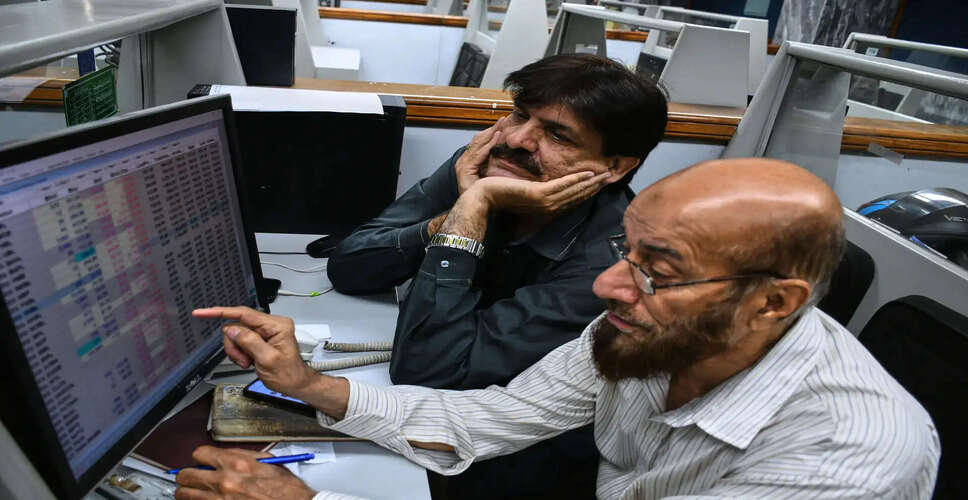
On March 2, Pakistan's stock market experienced a dramatic decline as geopolitical tensions escalated, shaking investor confidence. The downturn was triggered by recent military actions taken by the United States and Israel against Iran, which heightened uncertainty in regional markets. The KSE-30 Index saw a significant drop, plummeting by as much as 9.8% during intraday trading, marking one of its most severe single-day losses. Trading was halted for an hour due to the extent of the decline, and upon resuming, the index managed a slight recovery but ultimately closed down by 7.3% for the day.
This sharp decline briefly pushed the index into bear market territory, as it fell over 20% from its peak in January. This downturn follows a robust performance in 2025, where improved political stability and a wider investor base had driven local equities to nearly 50% annual gains. The sudden shift now poses a risk to the positive sentiment that had developed over the past year, as reported by Bloomberg.
Domestic Unrest Heightens Market Volatility
In addition to global tensions, internal unrest in Pakistan has further contributed to market instability. Pro-Iran demonstrations erupted in several cities, including Karachi, where protesters attempted to breach the US Consulate. These clashes reportedly resulted in approximately 30 deaths on Sunday. The worsening law-and-order situation has raised concerns regarding economic stability, foreign investment, and overall financial conditions.
Increased Tensions with Afghanistan
Adding to the uncertainty, relations between Pakistan and Afghanistan have deteriorated sharply. Pakistan has declared an 'open war' with Afghanistan following cross-border strikes that reportedly reached the Afghan capital. This escalation has reportedly resulted in hundreds of casualties. The convergence of these crises, including international military conflicts, domestic protests, and regional hostilities, has created a precarious environment for financial markets.