
Pakistan's Stock Market Faces Major Decline Amid Failed Ceasefire Talks

Significant Drop in KSE 100 Index
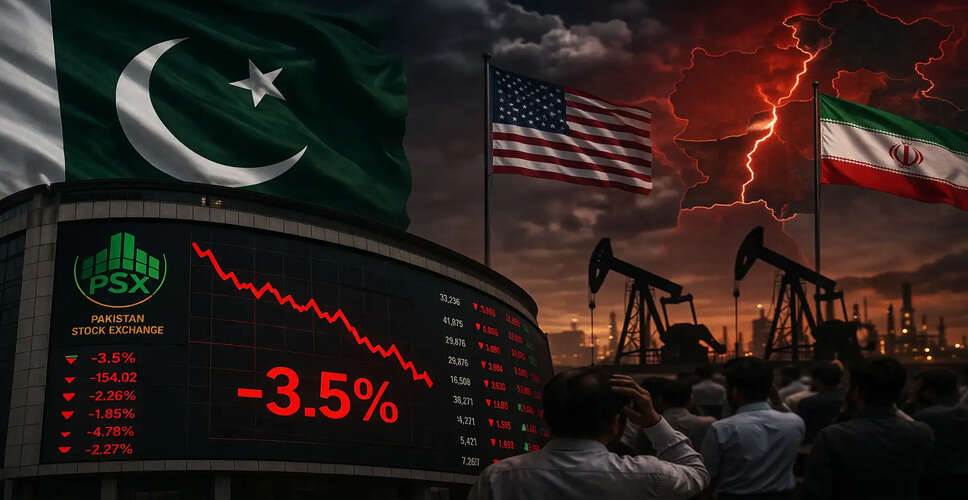
The stock market in Pakistan experienced a dramatic downturn on Monday, with the KSE 100 index plummeting nearly 6,000 points, a decrease of 3.5%, reaching a low of 161,638. This sharp decline followed unsuccessful ceasefire negotiations between Iran and the US, which were facilitated by Pakistan's Prime Minister Shehbaz Sharif and army chief Asim Munir.
Initially, the KSE-100 Index fell by 4,567.31 points (-2.73%) to 162,624.06 within just two hours of trading. Interestingly, the previous Wednesday, the index had seen a remarkable increase, soaring over 12,000 points, marking its largest intraday gain ever. This surge was attributed to a temporary ceasefire announcement between the US and Iran, which had alleviated geopolitical tensions and bolstered investor confidence in the region.
Despite the volatility during the day, the index managed to recover slightly, reducing its losses to 4,450.97 points (-2.66%) and stabilizing at 162,740.40, as reported by local media. However, following the failure of the Islamabad talks, US President Donald Trump declared a blockade on the Strait of Hormuz.
Trump stated, "Effective immediately, the United States Navy, the Finest in the World, will begin the process of BLOCKADING any and all Ships trying to enter, or leave, the Strait of Hormuz," shortly after US Vice President JD Vance confirmed that no agreement had been reached with Iran. The US Central Command announced that the blockade would be enforced against vessels from all nations entering or leaving Iranian ports and coastal areas, while still permitting ships traveling between non-Iranian ports to pass through the Strait of Hormuz. Since the onset of the conflict on February 28, Iran has effectively controlled the Strait of Hormuz.