
Oil Prices Plummet as Iran Keeps Strait of Hormuz Open During Ceasefire

Oil Market Reaction
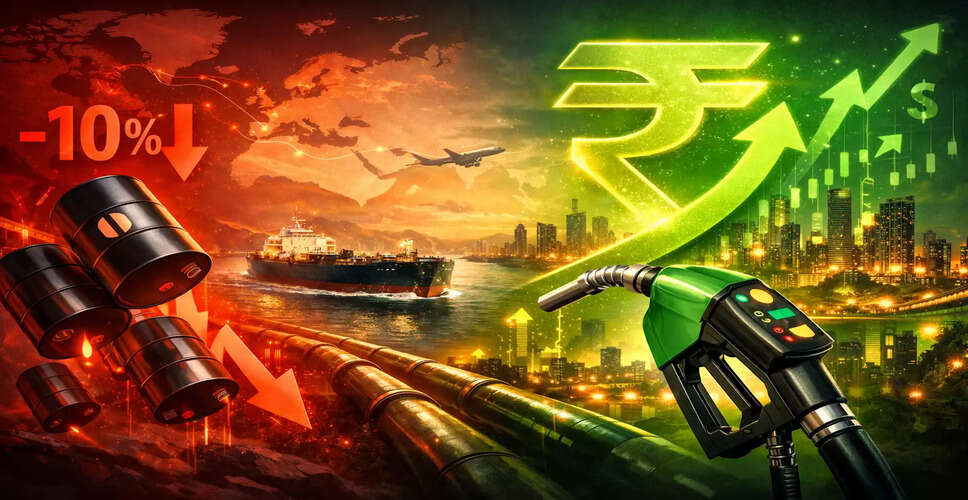
Oil prices have experienced a significant decline following Iran's declaration that the Strait of Hormuz will remain fully accessible for commercial shipping throughout the ceasefire period. This announcement has alleviated concerns regarding a potential long-term disruption in global oil supply. Brent crude prices have dropped below $90 per barrel, settling around $88, a decrease from over $98 as markets adjusted to the prospect of uninterrupted oil flow through this vital energy corridor. Iranian Foreign Minister Abbas Araghchi stated, "The passage for all commercial vessels through the Strait of Hormuz is declared completely open for the remaining period of ceasefire." Following this news, global markets responded positively, with the S&P 500 index rising by 1.2%. European indices, including the Cac in Paris and Dax in Frankfurt, both saw increases of approximately 2%, while London's FTSE 100 gained 0.7%.
A 10-day ceasefire, initiated by US President Donald Trump and agreed upon by Lebanon and Israel, commenced at midnight local time. Trump expressed optimism regarding the situation in Iran, describing it as "going along swimmingly" and suggesting a potential resolution could be on the horizon.
Implications for the Indian Economy
Impact on Indian Economy
The Indian economy has managed to remain resilient despite rising crude oil prices. The recent drop in oil prices is expected to provide a buffer for the economy. As India relies on imports for 89% of its crude oil needs, the restoration of shipping traffic through the Strait is crucial for ensuring a steady supply of Middle Eastern crude, which will help alleviate inflationary pressures in economies across Asia and Europe. S&P Global Ratings noted that India's strong macroeconomic and financial fundamentals are likely to mitigate the effects of a prolonged oil price shock.
Indian markets are anticipated to open positively on Monday, following a surge of over 300 points in GIFT Nifty late Friday, reflecting the significant decline in global crude oil prices. Vinod Nair, Head of Research at Geojit Investments Limited, commented on market expectations, stating, "Looking ahead, near-term direction hinges on Middle East peace progress, crude stability below $100, and foreign flow trajectory. Sustained de-escalation could ease inflation and currency pressures, improving risk appetite for import-sensitive markets like India. Q4 earnings and FY27 management guidance will shape sectoral leadership. Sentiment is constructive but markets will remain selective amid lingering global uncertainties."
For Monday, the Nifty is projected to open well above the 24,300 mark, potentially testing key technical resistance levels early in the session, with GIFT Nifty indicating a gap-up of over 300 points. While crude oil prices have dipped, the extent of relief for the Indian economy will depend on the durability of the ceasefire and the continued absence of renewed maritime tensions in the Gulf.
In a related development, the United States has extended a waiver allowing countries to purchase sanctioned Russian oil and petroleum products at sea for approximately one month. This waiver from the Trump administration comes just two days after officials indicated there were no plans to renew it, replacing the previous 30-day waiver that expired on April 11.
Recently, the head of the International Monetary Fund (IMF), Kristalina Georgieva, remarked that "India's growth rate is more than two times higher than the average global growth." She noted that there are no indications of a sharp slowdown in India's growth trajectory, even as the global economy faces challenges from geopolitical tensions and supply disruptions related to the West Asia conflict.
A report from Rubix Data Sciences highlighted that every $10 increase in crude prices adds approximately $13–14 billion to India's annual oil import bill, impacting inflation and external balances. India's total merchandise trade with West Asia reached USD 220 billion in FY2025, with imports significantly surpassing exports, leading to a structural trade deficit primarily driven by energy dependence.