
Oil Prices Exceed $100 Amid Rising Tensions in the Middle East
Surge in Oil Prices
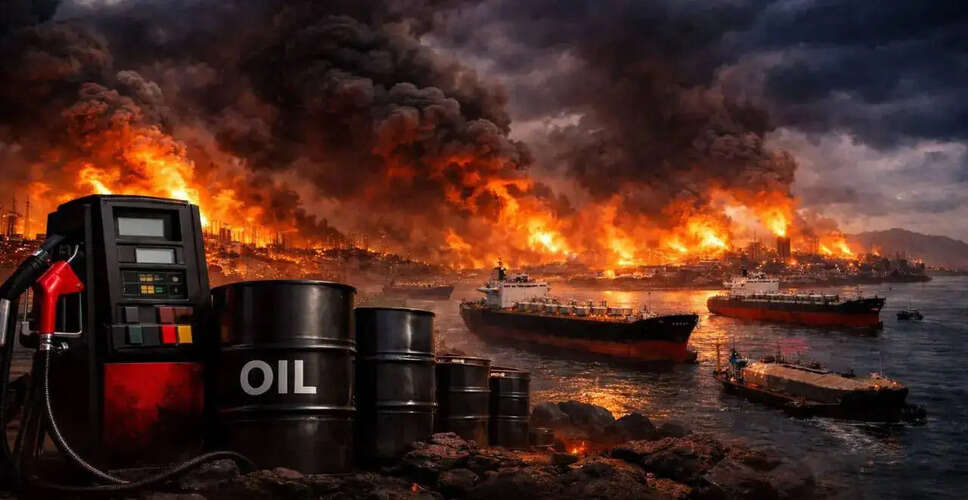
On Sunday, oil prices surpassed $100 per barrel for the first time since the onset of the Russian invasion of Ukraine. This increase is attributed to escalating conflicts involving Iran, which have raised concerns about potential disruptions to energy supplies from the Middle East. Brent crude, the global benchmark, saw a significant rise, reaching over $104 per barrel by early evening in New York. Similarly, West Texas Intermediate, the primary U.S. benchmark, also crossed the $100 mark, reflecting investor anxiety over the possibility of restricted oil movement in the region.
By approximately 6 PM Eastern Time, Brent futures had surged by about 12.6 percent to $104 per barrel, while West Texas Intermediate experienced a nearly 19 percent increase, reaching around $108. The rapid escalation in oil prices follows a substantial rise in recent days, with U.S. crude climbing approximately 35 percent last week alone, marking the largest weekly gain since futures trading began in 1983.
This price surge coincides with disruptions in the Persian Gulf energy market. Kuwait, the fifth-largest OPEC producer, announced it had initiated precautionary cuts to its oil production and refinery output due to perceived threats from Iran regarding the safe passage of vessels through the Strait of Hormuz. However, the Kuwait Petroleum Corporation did not disclose the extent of these reductions.
Additionally, Iraq, the second-largest OPEC producer, has seen its output from three major southern oil fields plummet by about 70 percent, dropping to approximately 1.3 million barrels per day, down from around 4.3 million barrels per day prior to the conflict. Meanwhile, the United Arab Emirates, OPEC's third-largest producer, stated it is carefully managing its offshore production levels to meet storage needs, while its onshore operations continue as usual.
Energy analysts indicate that Gulf producers are scaling back output partly due to a significant slowdown in oil exports through the Strait of Hormuz, a crucial waterway that accounts for about 20 percent of global oil consumption. Many tankers are now avoiding this route due to fears of potential Iranian attacks on vessels, resulting in oil accumulating in storage facilities across the region.
The ongoing conflict shows no signs of abating. Recently, Donald Trump claimed that the war was 'already won,' despite continued hostilities involving the United States, Israel, and Iran. Furthermore, Iran has appointed Mojtaba Khamenei as the new supreme leader following the death of his father, Ali Khamenei, early in the war.
American officials remain optimistic about the eventual resumption of shipping through the Strait of Hormuz. Chris Wright mentioned in a CNN interview that while normal traffic is not expected immediately, a return to regular shipping could occur within a few weeks, rather than months.