
Oil Prices Decline Amid Renewed US-Iran Negotiations

Market Update on Oil Prices
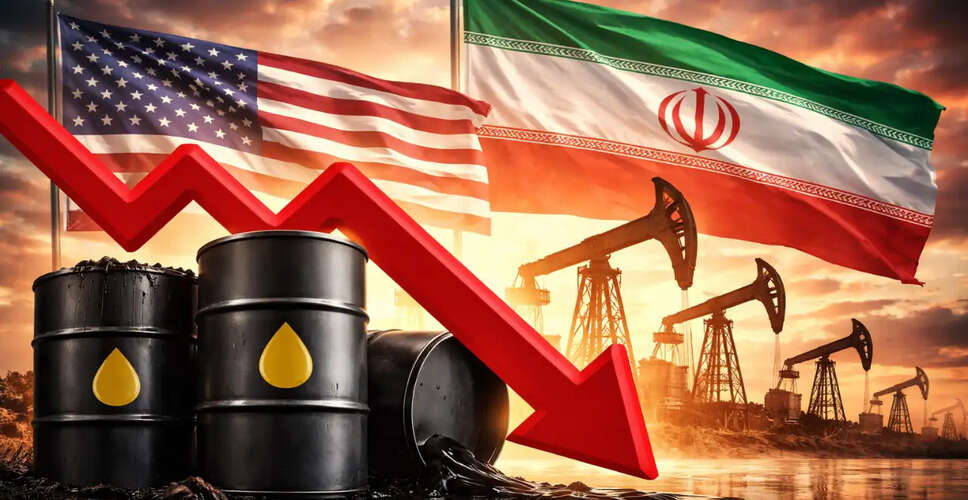
On Tuesday, oil prices experienced a downturn, reversing the gains made in the previous session. This shift followed reports indicating that the United States and Iran have agreed to initiate a second round of discussions in Islamabad, raising hopes for reduced tensions and increased oil supply. As of 0003 GMT, Brent crude futures fell by 95 cents, or 1%, settling at $94.53. Meanwhile, U.S. West Texas Intermediate (WTI) crude for May dropped by $1.54, or 1.72%, to $88.07, with the more active June contract also declining by $1.09, or 1.3%, to $86.37.
The decline in prices comes after a tumultuous Monday, where both benchmarks saw significant increases—Brent surged by 5.6% and WTI by 6.9%—following Iran's closure of the Strait of Hormuz and the U.S. seizure of an Iranian cargo ship, which heightened concerns over supply disruptions. However, the sentiment shifted positively as diplomatic efforts appeared to gain traction. An Axios report, citing three sources, revealed that Iran’s Supreme Leader Mojtaba Khamenei has authorized the negotiating team to engage in talks, which are anticipated to occur in Islamabad. Additionally, U.S. Vice President JD Vance is expected to attend, suggesting both parties are preparing to re-establish dialogue.
This development marks a notable change from earlier statements by Iran’s Foreign Ministry, which had indicated no discussions with Washington were scheduled for this week. A senior Iranian official mentioned to Reuters that Tehran is considering participation due to Pakistan's mediation efforts aimed at resolving the U.S. blockade. Market analysts are now speculating that this renewed engagement could lead to an extension of the current two-week ceasefire or even a more comprehensive agreement, potentially alleviating restrictions on oil supply.
Analysts at Citi expressed optimism, stating, “We continue to lean toward an MOU being signed and/or the ceasefire being extended this week, potentially evolving into a broader agreement.” However, they also noted the need to be prepared for a scenario of prolonged disruptions should negotiations not progress as hoped. Despite the positive outlook, uncertainty remains prevalent. An Iranian official emphasized that no final decisions have been made, while Foreign Minister Abbas Araqchi pointed out that ongoing U.S. violations of the ceasefire pose challenges to further discussions. Additionally, Iran’s chief negotiator and parliament speaker, Mohammad Baqer Qalibaf, reiterated that Tehran would not engage in negotiations under duress.
Meanwhile, global energy markets continue to feel the effects of disruptions. Shipping activities in the Strait of Hormuz, a critical passage for approximately one-fifth of the world’s oil supply, remained limited on Monday. Reports indicate that Kuwait has declared force majeure on oil shipments due to the blockade. Analysts caution that extended disruptions could lead to severe repercussions, with Citi estimating that if the Strait remains blocked for another month, total supply losses could reach 1.3 billion barrels, potentially driving prices up to $110 per barrel in the second quarter of 2026.
Rising prices have already begun to impact demand, with analysts from Societe Generale noting a 3% decline in oil demand thus far. They warned that the risk of larger losses increases the longer normalization is delayed, with full normalization not expected until late 2026. For now, markets are closely monitoring diplomatic developments, as the possibility of renewed U.S.-Iran talks presents a fragile yet vital hope for stability in global oil supply.