
Odisha's Bold Move: OERC Launches Review of Tata Power's Distribution Services
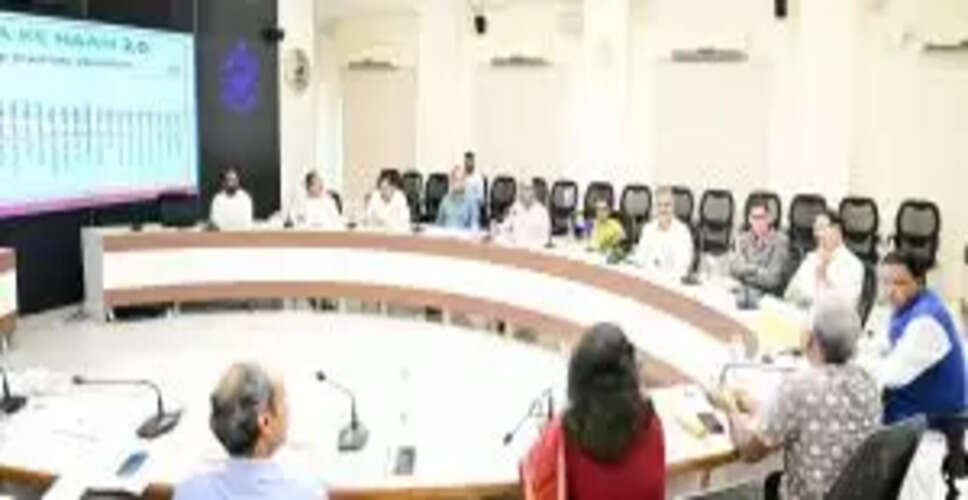
A New Era of Governance in Odisha
In a significant move towards enhancing transparency and consumer engagement, the Odisha Electricity Regulatory Commission (OERC) has initiated a suo motu inquiry to assess the performance of Tata Power's distribution companies operating in Odisha.
This inquiry, which falls under Regulation 9 (1) and (4) of the OERC (Conduct of Business) Regulations, 2004, represents a notable regulatory action.
On July 18, 2025, the Commission released a public notice inviting feedback from consumers and stakeholders regarding the quality of service and power supply over the last five years.
Consumers have until August 16 to provide their feedback, with a hearing scheduled for August 29. This initiative has been positively received by the public and policy analysts alike.
However, many experts emphasize that the success of this initiative hinges on the effective collection and utilization of the feedback received.
While the intention behind this proceeding is commendable, experts agree that the real challenge lies in its implementation, particularly in how the feedback is gathered, analyzed, and used to inform policy decisions.
If executed properly, this initiative could serve as a benchmark for democratic utility regulation in India, ensuring that the power sector genuinely reflects consumer voices.
Experts warn against relying solely on unstructured or emotionally driven complaints, noting that electricity services often go unnoticed until issues arise.
To prevent the feedback process from devolving into a mere complaint outlet, analysts recommend that the OERC create structured feedback forms, offer local language options, and conduct awareness campaigns, particularly in rural and semi-urban regions.
Responses lacking technical understanding may not yield useful data, they caution. Urban planner Piyush Ranjan Rout views this as a positive step towards inclusive governance, enhancing transparency and public trust.
For this initiative to be truly effective, feedback should be collected not only through formal hearings or postal submissions but also via social media and digital platforms, he noted.
Rout believes this exercise could reveal valuable insights regarding affordability, reliability, and environmental impact, aiding the Commission in making decisions that resonate with a diverse population.
Power sector analyst Anand Mohapatra pointed out the unprecedented nature of this development, stating, "For the first time since the OERC's establishment, a suo motu case has been initiated following the appointment of former Chief Secretary Pradeep Jena as Chairman. This is a bold and necessary intervention."
Mohapatra also raised concerns about the monopoly in power distribution, highlighting that Odisha is the only Indian state to have disinvested 51 percent of its distribution companies to a private entity.
He urged caution in interpreting the Electricity Act of 2003, arguing that while it promotes commercial principles and competitive tariffs, it does not explicitly prohibit monopolies.
Bhubaneswar resident Sudarshan Chhotoray echoed these concerns, stating, "The feedback system must prioritize and filter valid complaints; otherwise, the entire initiative could lose its credibility."